
Level 2 EV Charger Guide (2026): Speeds, Costs and How to Choose
Updated September 26, 2026 · 15 min read
Quick answer: a Level 2 EV charger is a 240-volt unit that charges an electric car 5-10x faster than a wall outlet — a full overnight charge for almost any EV. Expect $300-800 for the hardware, $500-2,000 for installation, and pick 40 amps unless your car can actually use 48.
Last updated: September 6, 2026.
No driveway? Our guide to apartment EV charging covers the options when installing at home is not possible.
Before you buy any charging hardware, check NACS adapter compatibility for your car – the port on the car decides which adapter you need.
Key takeaways
- A Level 2 EV charger delivers 3-19 kW on 240V — the sweet spot for home charging, refilling 250-450 km overnight.
- Most buyers should choose a 40A plug-in unit on a 50A circuit; 48A hardwired only pays off if your car’s onboard charger accepts 11+ kW.
- Total installed cost typically lands at $1,000-2,500; panel upgrades can add $1,500-4,000 more.
- Look for UL listing, Energy Star, a 23-25 ft cable, and either J1772 or NACS to match your car.
- Smart features (scheduling, load management) matter more than raw speed — off-peak charging can halve your cost per mile.
- A US federal 30C tax credit can cover 30% of hardware+install (up to $1,000) — it expires June 30, 2026 in current law.
What a Level 2 EV Charger Actually Is
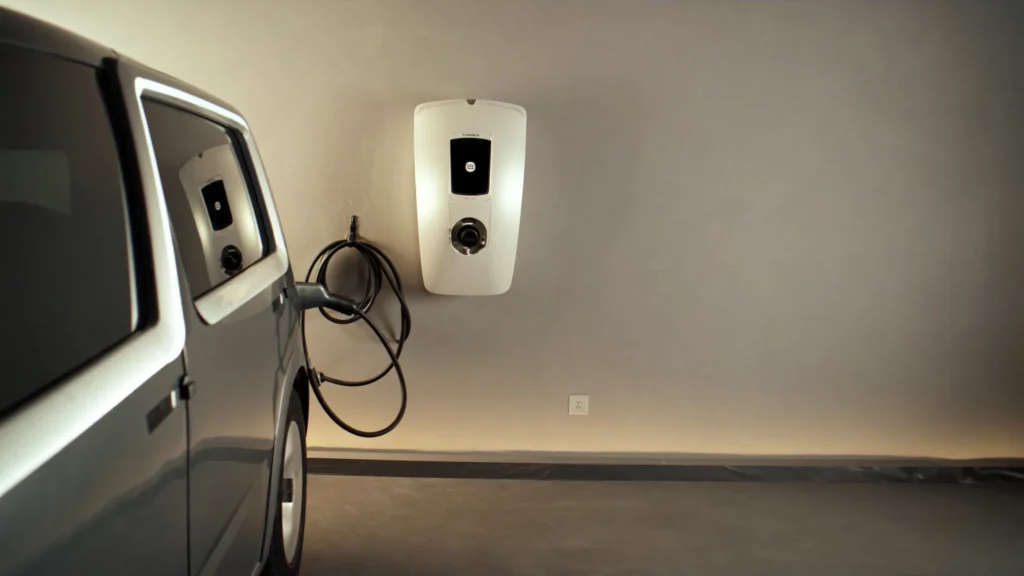
Charging “levels” describe power, not brands. Level 1 is a regular 120V outlet — about 1.4 kW, or 6-8 km of range per hour, fine for plug-in hybrids and light drivers. A Level 2 EV charger uses a 240V circuit, the same class of power as an electric dryer, and delivers between 3.3 and 19.2 kW. DC fast charging (sometimes called Level 3) is the highway-stop option at 50-350 kW — our Level 2 vs Level 3 charging guide covers when each makes sense. How many hours a full charge takes depends on the battery: our longest range electric cars table lists every 2026 EV’s EPA range and kWh per 100 miles, which is the figure that sets charge time.
| Charging level | Voltage | Power | Range added per hour | Best for |
|---|---|---|---|---|
| Level 1 | 120V | 1.2-1.8 kW | ~5-8 km | PHEVs, emergency top-up |
| Level 2 | 240V | 3.3-19.2 kW | ~20-60 km | Home, workplace, overnight |
| DC fast | 400-1000V | 50-350 kW | ~250-1,500 km | Road trips |
Technically the box on your wall is an EVSE (electric vehicle supply equipment) — the actual charger lives inside the car. That matters for one practical reason: your car’s onboard charger caps Level 2 speed. A car with a 7.2 kW onboard charger gains nothing from a 19 kW wall unit.
Level 2 EV Charger Speeds: Amps, kW and Real Charge Times
Speed scales with amperage. Here is the honest math for common Level 2 EV charger sizes (240V, minus typical losses):
| Charger amps | Power | Circuit required | 60 kWh battery, 10-80% | Range per hour |
|---|---|---|---|---|
| 16A | 3.8 kW | 20A | ~11 h | ~20 km |
| 32A | 7.7 kW | 40A | ~5.5 h | ~40 km |
| 40A | 9.6 kW | 50A | ~4.4 h | ~50 km |
| 48A | 11.5 kW | 60A (hardwired) | ~3.7 h | ~60 km |
Two practical notes. First, code requires the circuit to be rated 125% of continuous load — that is why a 40A Level 2 EV charger needs a 50A breaker. Second, the 40A-vs-48A debate that fills owner forums usually ends the same way: if you charge overnight, both finish long before morning; buy 48A only if your car accepts 11+ kW and you routinely need fast turnarounds.
What a Level 2 EV Charger Costs in 2026
| Cost item | Typical range | Notes |
|---|---|---|
| Hardware (quality 40-48A smart unit) | $300-800 | Premium brands trend $500-700 |
| Basic install (panel nearby, capacity free) | $500-1,000 | New 240V circuit + breaker |
| Complex install (long run, conduit) | $1,000-2,000+ | Distance is the big cost driver |
| Panel upgrade (if needed) | $1,500-4,000 | Load-management chargers can avoid this |
| Permit | $50-250 | Varies by city |
| US federal 30C credit | −30% up to $1,000 | Hardware+install; expires Jun 30, 2026 |
Full installation detail — quotes, permits, when a load-sharing unit saves you a panel upgrade — lives in our EV charger installation guide. Running-cost context: at a typical US home rate, a Level 2 EV charger refills a 60 kWh pack for roughly $8-10 — a fraction of fast-charging or gasoline, as the numbers on our EV statistics page show.
Before choosing a model, it is worth knowing whether the purchase pays for itself at all. That turns almost entirely on how much of your charging you already do at home on a standard outlet, and the answer ranges from under two years to never. Our home EV charger payback calculator works it out with your own numbers, without the expired federal credit that most tools still subtract.
How to Choose a Level 2 EV Charger: 7 Things That Matter
Ignore marketing wattage wars; these are the specs that actually change your ownership experience:
| # | Spec | What to look for |
|---|---|---|
| 1 | Amperage | 40A default; 48A only for 11+ kW onboard chargers |
| 2 | Connector | J1772 (universal via adapter) or NACS (Tesla + newer EVs) |
| 3 | Plug-in vs hardwired | Plug-in (NEMA 14-50) = portable, simpler; 48A must be hardwired |
| 4 | Cable length | 23-25 ft covers awkward parking; shorter cables cause daily annoyance |
| 5 | Safety certification | UL or ETL listed — non-negotiable; uncertified imports risk fire and insurance |
| 6 | Smart features | Scheduling for off-peak rates, energy tracking, load management |
| 7 | Outdoor rating | NEMA 4 for exposed locations |
On connectors: North America is mid-transition to NACS. A J1772 Level 2 EV charger still serves every car on the road via adapters, so nothing bought today strands you — but if your household is all-Tesla or new-NACS models, buying native NACS skips the dongle.
Installation: What to Expect
A straightforward install takes an electrician 2-4 hours: mount the unit, run a 240V circuit from the panel, fit the breaker, test. The real variables are distance (copper is expensive — a garage on the opposite side of the house from the panel can double the quote) and spare panel capacity. If your panel is full, ask about a load-management charger before paying for a panel upgrade: these units watch total household draw and throttle charging instead of demanding new capacity, commonly saving $1,500+.
Get two or three quotes; pricing spread for identical work is notoriously wide. Renters and apartment dwellers have real options too — from portable plug-in units used at a dryer outlet to lobbying for shared chargers; our EV charging at home guide covers those paths.
Using It Well: Charging Habits That Save Money and Battery
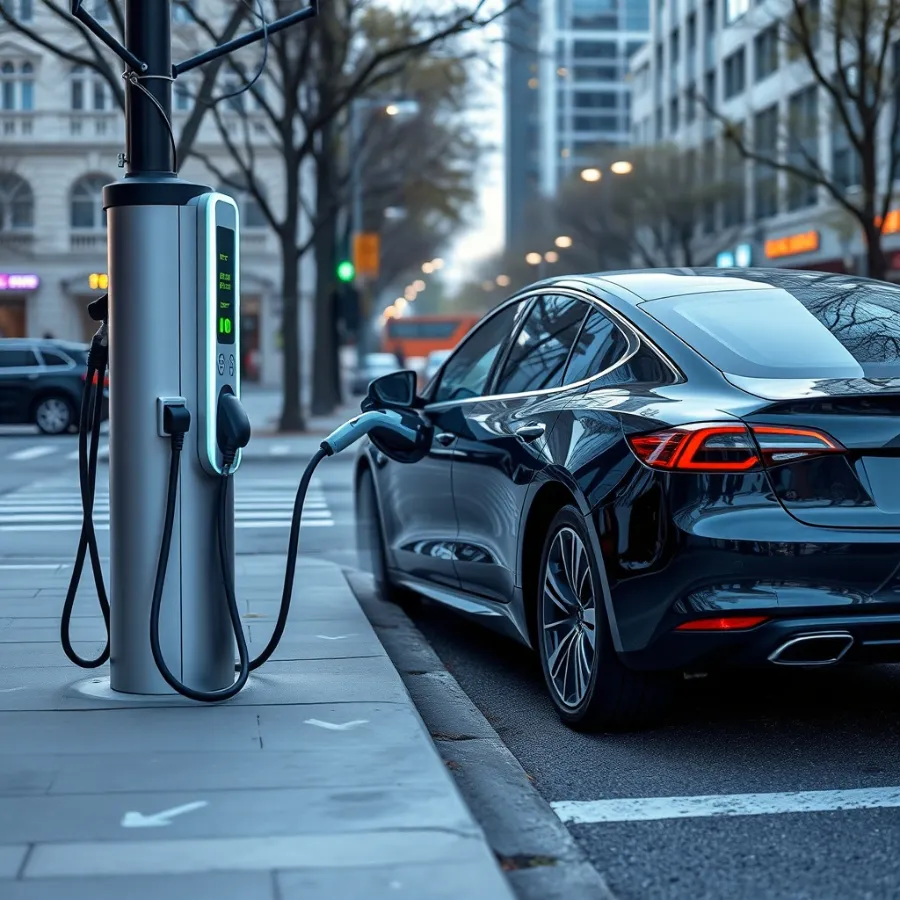
Owning a Level 2 EV charger changes charging from an errand into a default: plug in at night, leave full every morning. Three habits maximize the benefit. Schedule charging into off-peak windows — time-of-use rates commonly halve the per-kWh price, and every smart unit automates this.
Our charging and buying guides are collected on the guides index.
Set a daily charge limit of 80-90% for lithium-NMC packs (LFP packs tolerate 100%) — gentler on long-term battery health, as fleet degradation data in our EV battery health guide shows. And if your utility offers an EV rate or your region piles renewables into the night grid, overnight Level 2 charging is also the cleanest kWh you can buy — the grid-mix numbers are in EV charging and grid emissions.
Level 2 EV Charger vs the Alternatives
| Option | Upfront cost | Overnight full charge? | Verdict |
|---|---|---|---|
| Level 1 cord (included) | $0 | No (days for a big pack) | OK for PHEVs and <40 km/day |
| Level 2 EV charger at home | $1,000-2,500 installed | Yes, easily | Best ownership experience per dollar |
| Public Level 2 | $0 upfront | N/A | Top-ups while parked; slow per session |
| DC fast charging only | $0 upfront | N/A | 2-4x the per-kWh price; more battery stress |
The math is rarely close: for anyone with a driveway and a full-electric car, the home Level 2 EV charger pays for itself in convenience immediately and in energy savings within a few years.
Which Level 2 EV Charger Type Fits You: Four Buyer Profiles
Instead of a brand list that ages badly, match your situation to a category — every major manufacturer sells into each of these:
| Profile | Right Level 2 EV charger type | Why |
|---|---|---|
| Typical single-EV home | 40A plug-in smart unit, J1772 | Overnight-full every day, no hardwiring, portable if you move |
| Two-EV household | 48A hardwired with load sharing, or two 32A units on one circuit | Splits power automatically without a panel upgrade |
| All-Tesla / new NACS car | Native NACS 48A unit | No adapter; full 11.5 kW where the car supports it |
| Renter / mover | Portable 32-40A with NEMA 14-50 plug | Uses an existing dryer/range-style outlet; leaves with you |
Whatever the profile, the same three filters apply: UL/ETL listing, a cable long enough for your worst parking angle, and scheduling software you will actually use.
Wiring and Safety: The Part Worth Doing Right
A Level 2 EV charger draws continuous high current for hours — the most demanding routine load in most homes. That is why the safety details are not bureaucracy. The circuit must be dedicated (nothing else on the breaker) and sized at 125% of the charger’s continuous draw. Plug-in units belong on industrial-grade NEMA 14-50 receptacles — the $10 hardware-store version is a documented melt risk under daily EV duty; electricians now spec heavy-duty receptacles rated for continuous load.
GFCI rules differ for plug-in versus hardwired installs, which is one more reason hardwiring is standard at 48A. And permits exist because insurers ask questions after electrical fires: an unpermitted self-install can turn a $200 saving into a denied claim.
None of this should scare anyone off — millions of home units run flawlessly for years. It simply means the installation half of a Level 2 EV charger project deserves the same attention as the shiny box, and a licensed electrician’s quote is part of the real price.
Beyond the Garage: Workplace and Public Level 2 Charging
The same 240V technology powers most workplace and destination charging — hotel car parks, shopping centres, park-and-rides. Public Level 2 EV charger sessions make sense wherever the car sits for hours anyway: a workday tops up 250+ km, a cinema visit adds 80.
Pricing models vary (per kWh, per hour, or free as an amenity), and per-hour billing quietly punishes cars with slower onboard chargers — worth checking before plugging in. For drivers without home charging, a workplace Level 2 program plus occasional DC fast charging is a workable ownership pattern, and it is the pattern most city EV strategies now fund; the network-scale numbers are on our EV statistics page.
Troubleshooting: The Five Most Common Level 2 Issues
| Symptom | Most likely cause | Fix |
|---|---|---|
| Charging far slower than rated | Car’s onboard charger limit, or charger set to lower amps | Check the car’s kW spec; check the unit’s amperage setting |
| Breaker trips during charging | Undersized circuit or shared load | Electrician — never just fit a bigger breaker |
| Charging stops mid-session | Schedule/utility program pausing, or thermal derating | Check app schedules; shade a sun-exposed unit |
| Handshake fails / no charge | Dirty or worn connector, adapter mismatch | Inspect pins; test without adapter |
| Wi-Fi features stopped | Firmware or router change | Charging itself is unaffected; re-pair the app |
The reassuring pattern: genuine hardware failures are rare, and almost every “broken charger” report traces to settings, circuits, or the car. When a unit does die, warranty terms of 3 years are standard — one more reason the certified brands earn their price over grey-market imports.
The Bigger Picture: Why Home Level 2 Is the Backbone
Public fast-charging gets the headlines, but the quiet statistic is that most EV energy is delivered at home overnight — and that is by design. Every Level 2 EV charger added to a driveway removes a car from public-infrastructure demand, shifts its load to the grid’s emptiest hours, and locks in the cheapest, lowest-carbon kilometres the owner will ever drive.
It is the least glamorous purchase in the EV transition and arguably the highest-leverage one — which is why incentive programs from the US 30C credit to utility rebates keep targeting it, and why the first question every new EV owner should answer is not “which fast-charging network,” but “where does my 240V circuit go.”
Future-Proofing: V2H, Solar Pairing and What Not to Overbuy
Two genuinely forward-looking questions come up in every buying decision. The first is bidirectional charging — using the car to power the house (V2H) or feed the grid (V2G). Today’s answer: a standard Level 2 EV charger is one-directional, and true bidirectional systems are separate, pricier hardware sold around specific car models. If backup power matters to you, buy a normal unit now and let the bidirectional market mature.
Nothing about today’s purchase blocks tomorrow’s upgrade, and our V2G technology guide tracks which cars and boxes actually support it.
The second is solar. Charging from your own panels is the endgame for cost and carbon, and it needs no special charger — any smart unit with scheduling (or a solar-aware model that tracks export surplus) will do it. What actually matters is the electrical plumbing: if a solar install is in your plans, tell the electrician during the charger install so conduit and panel space get sized once instead of twice.
Before budgeting around a rebate figure from a round-up list, see our utility EV charger rebates check.
And the honest advice on overbuying: skip 80A/19 kW monsters unless a spec sheet proves your car can use them — almost no current EV can — and skip “future 350 kW home charging” fantasies entirely; residential service physically cannot deliver it. A well-installed 40-48A Level 2 EV charger is not a compromise; it is the correct tool, and it will still be the correct tool for the next car and the one after that.
Tesla owners have brand-specific options worth a dedicated look — our Tesla home charger guide compares the Wall Connector, Universal and Mobile Connector paths.
Away from home, the public network is the other half of the story — our EV charging stations guide compares the networks, prices and road-trip tactics.
One-Minute Recap
If you skimmed to the end: buy a 40A plug-in Level 2 EV charger with UL listing and a 23+ ft cable, have an electrician install a dedicated 50A circuit with a permit, schedule charging off-peak, and claim the 30C credit before June 30, 2026. Go 48A hardwired only if your car accepts 11+ kW. That is 90% of this guide in four sentences — the rest is the why, above.
Timing note: the federal 30C credit behind that 30% install saving expires June 30, 2026 — details and claiming steps in our EV tax credit guide.
Wondering what those charging sessions will cost where you live? Our EV charging cost by state table breaks down all 50 states.
Winter changes the charging math too — see our EV battery performance in cold weather guide for preheating and cold-charging habits.
For the full time tables behind these speeds, see how long electric car charging takes on every charger type.
Curious about ditching the cable entirely? Our wireless EV charging guide covers the pads, the efficiency cost and who they suit.
The engineering behind those speeds — 800V, silicon carbide, the road ahead — is in our fast charging technology guide.
Once your home charger is set, our electric car charging stations map guide covers the public side of the network.
Once your charger is installed, layer in automation — see our smart charging solutions guide for scheduling, load management and utility programs.
For the public DC-charging half of the picture, see fast charging explained.
Check which connector your charger needs — see our EV charging standards guide.
Once installed, you can source the electricity itself cleanly too — see our clean energy charging guide.
Frequently Asked Questions
Not sure where to start? See our complete EV charging at home guide.
Which level 2 ev charger should you actually buy?
Four units come up repeatedly, and on the numbers that matter they are closer than the marketing suggests. Every one of them delivers 11.5 kW or more, which is already above what most cars can accept. The real differences are how they mount, how long the cable is, and whether they can throttle themselves when the rest of the house is drawing power.
| Unit | Maximum output | Cable | Mounting | Connector |
|---|---|---|---|---|
| ChargePoint Home Flex | 50 A / 12 kW, adjustable to 16, 24, 32, 40, 48 or 50 A in the app | 23 ft | Hardwired or plugged into NEMA 6-50 or 14-50 | J1772 |
| Emporia Pro | 48 A / 11.5 kW hardwired, or 40 A / 9.6 kW as a plug-in | 25 ft | Either, depending on the version you order | J1772 |
| Grizzl-E Ultimate 48 A | 48 A / 11.5 kW, settable down to 40, 32, 24 or 16 A | 25 ft | Hardwired only | J1772 or NACS |
| Tesla Wall Connector | 48 A / 11.5 kW | 24 ft | Hardwired only | NACS; the Universal version adds a J1772 adapter |
Which one suits which situation
- You are renting, or might move. A plug-in unit on a NEMA 14-50 outlet comes off the wall with you. That rules out the hardwire-only options.
- Your panel is tight. Look for dynamic load management, which watches the whole house and backs the charger off rather than tripping the main. It is usually far cheaper than a panel upgrade — see our installation cost breakdown.
- The charger lives outdoors. Prioritise a sealed metal enclosure and a genuine outdoor rating over app features.
- You drive a Tesla and nothing else. The native NACS connector saves you handling an adapter every night.
- Your household has a Tesla and a non-Tesla. Either the Universal Wall Connector or a Grizzl-E in NACS trim, plus an adapter — see NACS adapters, what fits what.
The amperage trap. A 50 A unit is not meaningfully faster than a 48 A one, because the limit is usually the car. Most mainstream EVs cap their onboard AC charger at about 11.5 kW, which 48 A already supplies. Paying for more amps buys nothing unless your car can take it, and it pushes you into heavier wire and a bigger breaker. We worked the wiring numbers through in 40 amp vs 48 amp home chargers.
A note on how this list is made: these are specification comparisons, not endorsements. There are no affiliate links on this page and no manufacturer has paid for a mention. Specifications are taken from the manufacturers’ own datasheets and were last checked on 3 September 2026 — check current figures before buying, because models change.
What is a Level 2 EV charger?
A Level 2 EV charger runs on 240 volts (like a dryer outlet) and delivers 3-19 kW, adding roughly 20-60 km of range per hour. It is the standard home and workplace charging solution, sitting between a slow 120V Level 1 cord and DC fast charging.
How fast is a Level 2 EV charger?
Typical home units deliver 7.7-11.5 kW (32-48 amps), fully charging most EVs overnight in 6-10 hours. Exact speed depends on the charger amperage, your circuit, and the car\u0027s onboard charger limit.
How much does a Level 2 EV charger cost?
Hardware runs $300-800 for quality units; professional installation typically adds $500-2,000 depending on panel capacity and wiring distance. Total installed cost commonly lands between $1,000 and $2,500.
Do I need a 40 amp or 48 amp charger?
48A (11.5 kW) charges ~20% faster but requires a 60A circuit and usually hardwiring. 40A (9.6 kW) works on a 50A circuit with a plug. If your car\u0027s onboard charger caps at 11 kW or less and you charge overnight, 40A is nearly always enough.
Can I install a Level 2 EV charger myself?
Only the plug-in type, and only if a proper 240V outlet already exists. New circuits, panel work, and hardwired units are electrician jobs — permits are commonly required, and DIY mains work risks fire and voided insurance.
Does a Level 2 EV charger work with every EV?
In North America, chargers with the J1772 connector work with every EV (Teslas via the included adapter), and NACS-connector units work with Teslas and newer NACS-equipped models. Adapters bridge both directions.
Choosing between two of the most common Level 2 amperages? See our dedicated 40 vs 48 amp EV charger comparison for the breaker, wire and real-world charging speed differences.
Sources and Further Reading
- US DOE — Charging at Home (AFDC)
- ENERGY STAR — Certified EV Chargers
- IRS — Alternative Fuel Refueling Property Credit (30C)
Hardware is only part of the cost. The federal credit that used to offset it ended in mid-2026 — see our breakdown of the EV charger tax credit and what still pays before you buy.
Before you commit to hardware, it is worth knowing what the electricity will actually cost you. Our free EV charging cost calculator uses your state rate and your own charging mix.
Every figure on this page is dated and linked to its source. How we verify · Editorial policy · Report a correction
Related Posts
Leave a Comment
Your comment will be published after it has been approved. Please send comments that do not contain slang words.