EV Charging Cost by State (2026): All 50 States Compared
Last updated: September 6, 2026 Renters pay a different price entirely – see apartment EV charging for what public charging costs over a year. Quick…

Carbon zero solutions covers the technologies and strategies used to cut emissions toward net zero: carbon capture and storage, direct air capture, industrial decarbonisation, low-carbon materials, corporate net-zero targets and offsetting. Each article sets out how the approach works, its current cost and scale, verified results where they exist, and the credible criticisms – so readers can tell genuine mitigation from greenwashing. Start with what carbon zero means and industrial decarbonization technologies.

Last updated: September 6, 2026 Renters pay a different price entirely – see apartment EV charging for what public charging costs over a year. Quick…
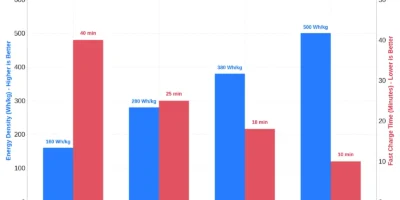
Last updated: September 1, 2026 Quick answer: A solid state battery replaces the flammable liquid electrolyte in today’s lithium-ion cells with a solid ceramic, sulfide…

Underground carbon storage places captured carbon dioxide deep beneath the surface, keeping it away from the atmosphere.

EV tax credits by country vary enormously in structure and generosity — some governments offer direct point-of-sale rebates, others use tax credits claimed at filing, and a few have scaled back incent
Scope 1, 2, 3 emissions are the standard framework companies use to categorize their greenhouse gas footprint: Scope 1 covers direct emissions from sources a company owns or controls, Scope 2 covers i

The carbon footprint of a material refers to the total amount of greenhouse gas emissions produced throughout its life cycle, including production, transportation, use, and disposal.

Quick answer: Urban transport emissions typically make up 20-30% of a city’s total carbon footprint, and within that, private cars usually account for the largest single share — often 50-70% of transport emissions despite…

Quick answer: The carbon footprint of remote work is almost always lower than commuting to an office, but not by as much as intuition suggests — studies typically find full-time remote workers cut their work-related footprint by…

When assessing the carbon footprint of public transit, it is essential to consider factors such as the type of fuel used, vehicle efficiency, and passenger occupancy rates.

Polyester, the most common fast fashion fabric, is essentially a plastic made from petroleum — its production carries a meaningfully higher carbon footprint than cotton or wool per unit, and it doesn’t biodegrade at the end of…