
Carbon Footprint Of Plastic Packaging
Updated September 18, 2026 · 6 min read
Packaging sits inside a wider industrial picture: see carbon emissions by industry and our EV statistics hub.
Table of Contents
- Introduction
- Understanding Carbon Footprint
- Impact of Plastic Packaging
- Alternatives to Plastic Packaging
- Regional Comparison
- Life Cycle Analysis
- Sustainable Packaging Practices
- Future Trends in Packaging
- Frequently Asked Questions
Introduction
Plastic packaging is ubiquitous in our daily lives, from food containers to product packaging. However, the production, use, and disposal of plastic materials have significant implications for our carbon footprint and the environment. Understanding the carbon footprint of plastic packaging is essential for making informed decisions about sustainability.
Understanding Carbon Footprint
The carbon footprint of a material refers to the total amount of greenhouse gas emissions produced throughout its life cycle, including production, transportation, use, and disposal. For plastic packaging, this includes the emissions from extracting raw materials, manufacturing processes, and the release of greenhouse gases during decomposition.
Factors Affecting Carbon Footprint:
- Raw material sourcing
- Production processes
- Transportation methods
- End-of-life disposal
Carbon Footprint = Sum of Emissions from Production + Transportation + Use + Disposal
Impact of Plastic Packaging
Plastic packaging contributes significantly to carbon emissions due to the energy-intensive processes involved in its production and the long-term environmental impact of plastic waste. Single-use plastics, in particular, have come under scrutiny for their high carbon footprint and detrimental effects on ecosystems.
- Non-biodegradable nature of plastics
- Microplastic pollution in oceans
- Landfill emissions from plastic waste
- Resource depletion for plastic production
Alternatives to Plastic Packaging
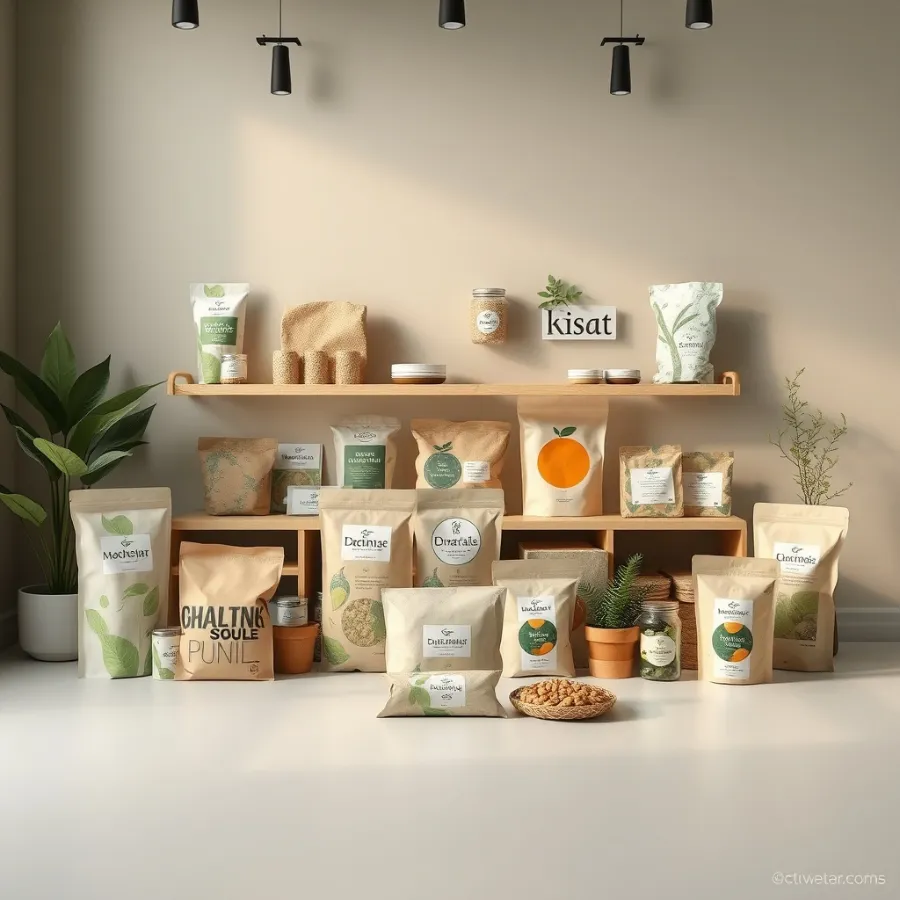
As awareness of the environmental impact of plastic packaging grows, there is a shift towards sustainable alternatives. Biodegradable packaging materials, such as compostable plastics and plant-based polymers, offer a more eco-friendly option with lower carbon footprints.
Examples of Sustainable Packaging Materials:
- Biodegradable plastics
- Recycled paper and cardboard
- Reusable containers
- Plant-based packaging
Regional Comparison
- US: The US has seen a growing trend towards sustainable packaging solutions, with regulations and consumer demand driving the adoption of eco-friendly materials.
- EU: In the EU, stringent environmental policies have led to a focus on reducing plastic waste and promoting circular economy practices in packaging.
- China: China’s rapid industrial growth has raised concerns about plastic pollution, prompting initiatives to improve recycling and develop biodegradable alternatives.
- India: India is grappling with the challenge of managing plastic waste effectively, with increasing interest in sustainable packaging solutions to mitigate environmental impact.
Life Cycle Analysis
Conducting a life cycle analysis of packaging materials involves assessing the environmental impacts at each stage of the product’s life cycle. This holistic approach helps identify areas for improvement and guides decision-making towards more sustainable practices.
| Stage | Impact | Mitigation Strategies |
|---|---|---|
| Raw Material Extraction | High energy consumption | Use recycled materials |
| Manufacturing | Emissions from production | Optimize manufacturing processes |
| Use Phase | Carbon footprint during use | Promote reuse and recycling |
| End-of-life | Waste generation and disposal | Implement proper recycling programs |
Sustainable Packaging Practices
Adopting sustainable packaging practices involves a holistic approach to reduce the carbon footprint of packaging materials. This includes using eco-friendly materials, minimizing waste, and promoting circular economy principles to create a more sustainable packaging ecosystem.
Future Trends in Packaging
The future of packaging is evolving towards more sustainable and innovative solutions to minimize the environmental impact of materials. From biodegradable alternatives to advanced recycling technologies, the packaging industry is undergoing a transformation towards a greener future.
Packaging Carbon Footprint by Material: The Comparison That Surprises
Intuition says plastic must be the worst packaging choice for the climate — but lifecycle studies keep finding a more complicated picture. Per unit of product protected, lightweight plastic often carries a LOWER manufacturing-and-transport carbon footprint than heavier alternatives, while losing badly on end-of-life and ocean impact:
| Material | Production footprint (per kg) | Weight per package | The catch |
|---|---|---|---|
| Plastic (PET/HDPE) | ~2–3 kg CO2e | Very light | Low recycling rates, persistence, ocean leakage |
| Glass | ~0.8–1.2 kg CO2e | 10–20x heavier | Weight multiplies transport emissions; needs many reuses to win |
| Aluminum (virgin) | ~8–12 kg CO2e | Light | Energy-hungry to make — but excellent when recycled |
| Aluminum (recycled) | ~0.5–1 kg CO2e | Light | ~95% energy saving vs virgin — recycling rate is everything |
| Paper/cardboard | ~0.7–1.1 kg CO2e | Moderate | Water/land use; fails when wet-strength coatings block recycling |
Figures are directional lifecycle estimates (they vary by study, region, and energy mix), but the pattern is consistent: the greenest package is the lightest one that gets genuinely recycled or reused — not automatically the one that feels most natural.
Why “Plastic vs Glass” Usually Goes the Wrong Way Round
A single-use glass bottle typically needs to be reused several times before its climate footprint drops below a single-use plastic bottle’s, because glass is heavy to melt and heavy to truck. That’s why deposit-return systems matter so much: they turn glass’s weakness into strength through guaranteed reuse loops. Meanwhile plastic’s climate advantage evaporates at end-of-life — most of it is landfilled or incinerated, and incineration returns its fossil carbon straight to the atmosphere.
How to Actually Shrink Your Packaging Footprint
- Prioritize less over “better”: concentrated products, refills, and right-sized boxes beat any material swap.
- Reuse beats material identity: a glass jar reused ten times outperforms every single-use option.
- Recycle where it counts most: aluminum first (95% energy saving), then paper, then plastics by local rules.
- Watch the composite trap: plastic-lined cups and foil-laminate pouches usually recycle nowhere.
Frequently Asked Questions
Is plastic packaging really worse than glass for the climate?
Per single use, plastic usually has the lower carbon footprint because it is so light. Glass wins only with genuine reuse loops. Plastic’s real damage is persistence and leakage, not its CO2 per bottle.
What is the carbon footprint of plastic packaging overall?
Producing common packaging plastics emits roughly 2–3 kg CO2e per kg of material, before transport and end-of-life. Globally, plastics production and disposal account for a few percent of emissions — meaningful, but smaller than food or transport choices.
Which packaging material is best for the environment?
The least packaging, then reused packaging, then light material that your local system actually recycles. Material rankings flip depending on reuse and recycling reality, so the system matters more than the substance.
Does recycling plastic packaging help much?
Where high-quality recycling exists, yes — it roughly halves the footprint versus virgin plastic. But global plastic recycling rates remain low, which is why reduction and reuse rank higher.
Related guides: How Sustainable Material Science Is Eliminating Plastic in Manufacturing, How To Calculate Your Carbon Footprint and National Carbon Footprint Rankings.
Frequently Asked Questions
How can I reduce the carbon footprint of plastic packaging?
One way to reduce the carbon footprint of plastic packaging is to choose reusable or biodegradable alternatives that have lower environmental impacts.
What are the benefits of sustainable packaging practices?
Sustainable packaging practices not only reduce carbon emissions but also contribute to resource conservation, waste reduction, and overall environmental protection.
Is plastic packaging the only contributor to carbon emissions in the packaging industry?
No, the packaging industry has various materials that contribute to carbon emissions, including paper, glass, and metal. However, plastic packaging has garnered significant attention due to its widespread use and environmental impact.
How do regional differences impact the carbon footprint of packaging materials?
Regional differences in infrastructure, regulations, and consumer behavior can influence the carbon footprint of packaging materials. Understanding these variations is crucial for developing tailored sustainability strategies.
TAGS: plastic packaging, carbon emissions, sustainable materials, environmental impact, recycling
chemical recycling of plastic is worth a closer look for the full picture.
transient electronics reducing e-waste is worth a closer look for the full picture.
Sources and Further Reading
- IEA – Data and Statistics
- IPCC – Assessment Reports
- Our World in Data – CO₂ and Greenhouse Gas Emissions
Every figure on this page is dated and linked to its source. How we verify · Editorial policy · Report a correction
Related Posts


1 Comment
"Insightful read on plastic packaging's carbon footprint. Eye-opening info for eco-conscious consumers."
Leave a Comment
Your comment will be published after it has been approved. Please send comments that do not contain slang words.