
Apartment EV Charging (2026): How to Own an EV Without a Garage
Updated September 18, 2026 · 9 min read
Last updated: 3 September 2026
The short answer
Apartment EV charging works when you stop trying to replicate a garage and build a routine instead. For most renters that means one or two Level 2 sessions a week somewhere you already go, topped up by a standard wall outlet when you can reach one. The people who struggle are the ones relying on DC fast charging for everyday miles, which costs three to four times what home charging does.
Key takeaways
- Home charging averages about 17.65 cents per kWh. Public Level 2 runs 25-35 cents and DC fast charging 35-60 cents.
- Living on DC fast charging costs a typical driver $600-$900 more per year at 12,000 miles.
- A normal 120-volt outlet adds roughly 40-50 miles overnight – enough for most commutes, and the most underrated option in apartment EV charging.
- Right-to-charge laws in California, Colorado, Connecticut, Florida, Illinois, New York, Oregon and Washington DC stop a landlord from refusing a reasonable install in your assigned space.
- From 1 January 2026, California’s CALGreen code requires a low-power Level 2 receptacle at every assigned parking space in new multifamily construction, up from roughly 40% EV-ready coverage under the 2022 code.
What apartment EV charging actually costs
The cost gap is the whole argument. Charging at home is the cheapest electricity most people ever buy; fast charging on the road is the most expensive. Where you land between those two decides whether an EV saves you money.
Cost per kWh by charging type
| Charging type | Typical price per kWh | Cost to add 200 miles* | Best used for |
|---|---|---|---|
| Home Level 1 or Level 2 | About $0.1765 | About $10.60 | Baseline if you can reach an outlet |
| Public Level 2 | $0.25 – $0.35 | $15.00 – $21.00 | Weekly top-ups while parked anyway |
| DC fast charging | $0.35 – $0.60 | $21.00 – $36.00 | Road trips and emergencies |
| Workplace charging | Often free or subsidised | $0 – $12.00 | The single best substitute for home |
*Assumes roughly 60 kWh to cover 200 miles at typical efficiency.
Run the annual version and the picture sharpens: a renter who fast-charges everything pays $600-$900 a year more than a neighbour with a driveway. That is the real penalty for apartment EV charging done badly – and it is avoidable.
The five options, ranked by what actually works
Ignore the order these usually get listed in. Ranked by cost per mile and reliability, the hierarchy for apartment EV charging looks like this.
Apartment charging options compared
| Option | Speed | Cost | Reliability | Effort to set up |
|---|---|---|---|---|
| Workplace Level 2 | 15-30 mi/hour | Free to low | High if assigned | Ask facilities |
| Standard 120V outlet near your space | 40-50 mi overnight | Lowest | High | Landlord permission, cable route |
| Destination Level 2 (gym, grocery, library) | 15-30 mi/hour | Low to moderate | Varies by site | None |
| Curbside or lamppost charging | Level 2 typically | Moderate | Growing but patchy | None where it exists |
| DC fast charging | 100-250 mi in 20-40 min | Highest | High | None |
Notice that the slowest option sits second. A 120-volt outlet feels inadequate until you do the arithmetic: 40-50 miles added while you sleep covers the average US daily drive twice over. Apartment EV charging fails far more often from bad math than from bad infrastructure.
Your legal right to install a charger
Renters routinely assume the answer is no. In several states the law says otherwise.
California Civil Code section 1947.6 requires a landlord to approve a tenant’s request to install EV charging in their designated parking space, with the tenant covering the cost, insurance and removal obligations. Colorado, Connecticut, Florida, Illinois, New York, Oregon and Washington DC have comparable right-to-charge provisions, though each defines covered buildings and residents differently – check your own state rather than assuming California’s terms apply.
What right-to-charge laws typically require of you
| Obligation | What it usually means |
|---|---|
| Pay all costs | Equipment, installation, electricity and eventual removal |
| Use a licensed electrician | Permitted work meeting local code |
| Carry liability insurance | Often a named-insured requirement for the landlord |
| Meter your own usage | A submeter or a smart charger that reports kWh |
| Restore the space | Return parking to original condition when you leave |
The practical move is to arrive with a written proposal that already answers these five points. A landlord refusing a fully specified, tenant-funded request in a right-to-charge state is on weak ground; a landlord facing a vague question is simply going to say no.
What changed on 1 January 2026
California’s updated CALGreen code now requires every assigned parking space in new multifamily construction to include a low-power Level 2 receptacle, meaning a 20-amp circuit per space. The 2022 code required roughly 40% EV-ready coverage, so this is a step change rather than an increment.
It only applies to new construction, which is the frustrating part if you live in a 1980s building. But it matters for two reasons: newer rentals will increasingly advertise charging as standard, and building codes in other states habitually follow California’s lead within a few years. If you are choosing between apartments and plan to keep an EV, the construction year is now an apartment EV charging spec.
How much charging do you actually need?
Most apartment EV charging anxiety comes from planning for the worst week of the year instead of the average one. The average US driver covers about 37 miles a day, which is well inside what a single overnight Level 1 session or one weekly Level 2 stop delivers.
Daily miles versus what each option covers
| Your daily driving | Level 1 overnight only | One weekly Level 2 stop | Verdict |
|---|---|---|---|
| Under 30 miles | Covers it comfortably | Covers it | Either works alone |
| 30-45 miles | Covers it on most nights | Needs a second stop some weeks | Combine both |
| 45-70 miles | Falls behind | Two stops a week | Level 2 anchored routine |
| Over 70 miles | Not viable | Three or more stops | Workplace charging or reconsider |
Read that table before shopping for a car with a bigger battery. Range solves range anxiety; it does not solve charging access, and a larger pack simply takes longer to fill from the same slow source.
Curbside charging: the option that changes everything
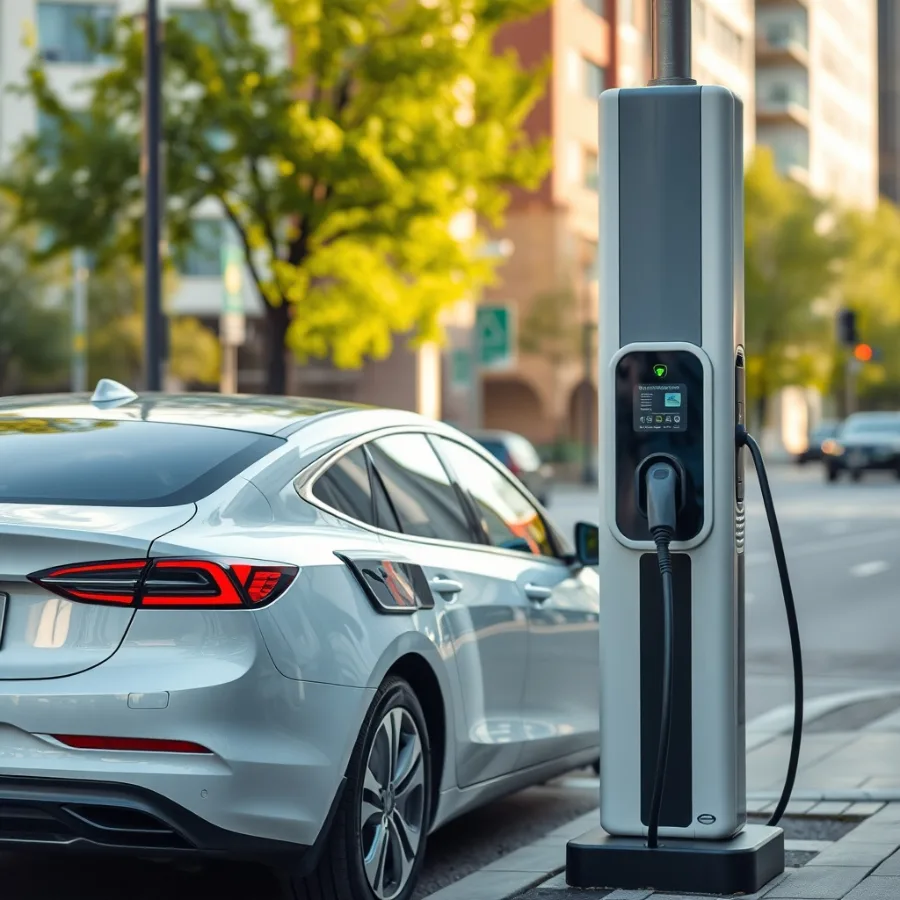
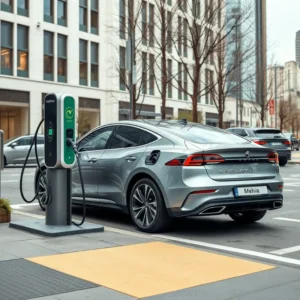
The structural fix for apartment EV charging is not more fast chargers. It is treating the kerb as shared infrastructure – lamppost-mounted units, bollard chargers and metered curbside stations that let people who park on the street charge overnight at Level 2 prices.
Deployment is uneven. Some cities have hundreds of lamppost points; most have none. It is worth checking your own municipality’s transport department rather than a national charging app, because pilot programmes frequently do not appear in the usual apps for months after installation.
Curbside charging: what to look for
| Feature | Why it matters |
|---|---|
| Level 2 rather than Level 1 | Overnight becomes a full charge, not a top-up |
| Per-kWh billing, not per-hour | Per-hour pricing punishes slow-charging cars |
| Residential permit integration | Prevents the bay being taken all day by commuters |
| Cable length and bay layout | Decides whether your port side even reaches |
Building a routine that works
The renters who report no problems almost always follow the same pattern, whether or not they can name it.
- Anchor one reliable weekly session. Pick a Level 2 charger somewhere you already spend 60-90 minutes – gym, grocery run, weekend errands.
- Use Level 1 opportunistically. If any outlet is reachable from your space, even occasionally, it changes the maths.
- Charge to 80% for daily use. Charging above 80% is slow on DC and unnecessary for commuting.
- Keep DC fast charging for trips. Treat it as travel cost, not fuel cost.
- Have a backup site. One broken charger should not break your week.
For most people the combination of Level 2 once or twice a week plus occasional Level 1 covers 80-90% of their driving needs – which is the entire practical case for apartment EV charging without a home installation.
Talking to your landlord: what actually gets a yes
Landlords say no to ambiguity, not to charging. A request that already answers cost, liability, metering and removal is a different conversation from asking whether apartment EV charging is allowed.
- Lead with the low-power option. A 20-amp Level 2 receptacle is far cheaper to install than a 48-amp circuit and covers overnight charging comfortably.
- Bring a quote, not a question. A licensed electrician’s written estimate moves the discussion from hypothetical to specific.
- Offer submetering. The objection is usually “who pays for the electricity”, and a smart charger that reports kWh answers it.
- Mention property value. Charging is becoming a listed amenity, and new-build competitors will have it by code.
- Ask about reassigning your space. Sometimes the cheapest install is 15 feet from where you currently park.
What to check before you buy the car
Do this in the week before purchase, not after delivery.
- Walk the parking area at night. Where are the outlets, and whose circuit are they on?
- Map three Level 2 chargers within your normal routine, not within a radius. Distance is irrelevant if it is not on a route you already drive.
- Ask your employer. Workplace charging turns the whole problem into a non-issue and is often free.
- Check your state’s right-to-charge status and read your lease’s alterations clause.
- Ask the property manager what they have already been asked. Buildings that have refused before often have a policy; buildings that have never been asked frequently say yes.
If you want the hardware side in detail, our Level 2 EV charger guide covers what to install if permission comes through, and the EV charging cost by state breakdown shows what electricity actually costs where you live.
When an EV genuinely does not fit
Honesty matters more than encouragement here. Apartment EV charging becomes a bad deal in three situations: you have no assigned space and no workplace charging; your area has no Level 2 infrastructure on routes you already use; or you regularly drive more than about 60 miles a day with only fast charging available. In those cases a plug-in hybrid or a conventional hybrid is the better financial answer until curbside charging arrives in your neighbourhood. Our comparison of EV maintenance cost versus gas covers the other half of that decision.
Frequently asked questions
Can you own an EV without a garage?
Yes, and most apartment EV charging routines rely on two habits rather than one installation: a weekly Level 2 session somewhere you already spend an hour, plus opportunistic use of a standard outlet. The people who struggle are those using DC fast charging for daily miles, which costs three to four times more than charging at home.
How much more does apartment EV charging cost?
Living entirely on DC fast charging typically adds $600 to $900 a year for a mid-size EV driven 12,000 miles. Home electricity averages about 17.65 cents per kWh, public Level 2 runs 25 to 35 cents, and DC fast charging 35 to 60 cents.
Is a regular wall outlet enough for an EV?
More often than people expect. A standard 120-volt outlet adds roughly 40 to 50 miles overnight, which covers the average daily drive of about 37 miles with room to spare. It is the cheapest form of apartment EV charging and the most frequently dismissed.
Can my landlord refuse to let me install a charger?
In right-to-charge states, generally not if the request is reasonable and you cover the costs. California Civil Code 1947.6 requires landlords to approve tenant installations in a designated space, and Colorado, Connecticut, Florida, Illinois, New York, Oregon and Washington DC have comparable laws with different definitions of covered property.
What changed for apartment buildings in 2026?
From 1 January 2026 California’s CALGreen code requires a low-power Level 2 receptacle at every assigned parking space in new multifamily construction, replacing the roughly 40% EV-ready requirement in the 2022 code. It applies to new builds only, but other states typically follow California’s building code within a few years.
How often would I need to charge?
Under 30 miles a day, a single weekly Level 2 session or nightly Level 1 covers it. Between 45 and 70 miles a day you need an anchored Level 2 routine, usually two stops a week. Above 70 miles a day, apartment EV charging only works comfortably if you have workplace charging.
Is curbside charging available where I live?
It varies enormously by city and is worth checking with your municipal transport department rather than a charging app, since pilot deployments often take months to appear in national apps. Look for Level 2 rather than Level 1, per-kWh billing rather than per-hour, and bay rules that stop commuters occupying the space all day.
Sources
- US DOE Alternative Fuels Data Center – Charging at home: Level 1 and Level 2 charging speeds and equipment.
- California Civil Code 1947.6: tenant right to install EV charging in a designated parking space.
- California Building Standards Commission – CALGreen: multifamily EV-ready requirements effective 2026.
If most of your charging happens away from home, the cost gap is worth quantifying — our free EV charging cost calculator lets you set the home/public split directly.
Every figure on this page is dated and linked to its source. How we verify · Editorial policy · Report a correction
Related Posts

Leave a Comment
Your comment will be published after it has been approved. Please send comments that do not contain slang words.