
NACS Adapter Compatibility (2026): Which One Your EV Needs
Updated September 11, 2026 · 9 min read
Last updated: 3 September 2026
The short answer
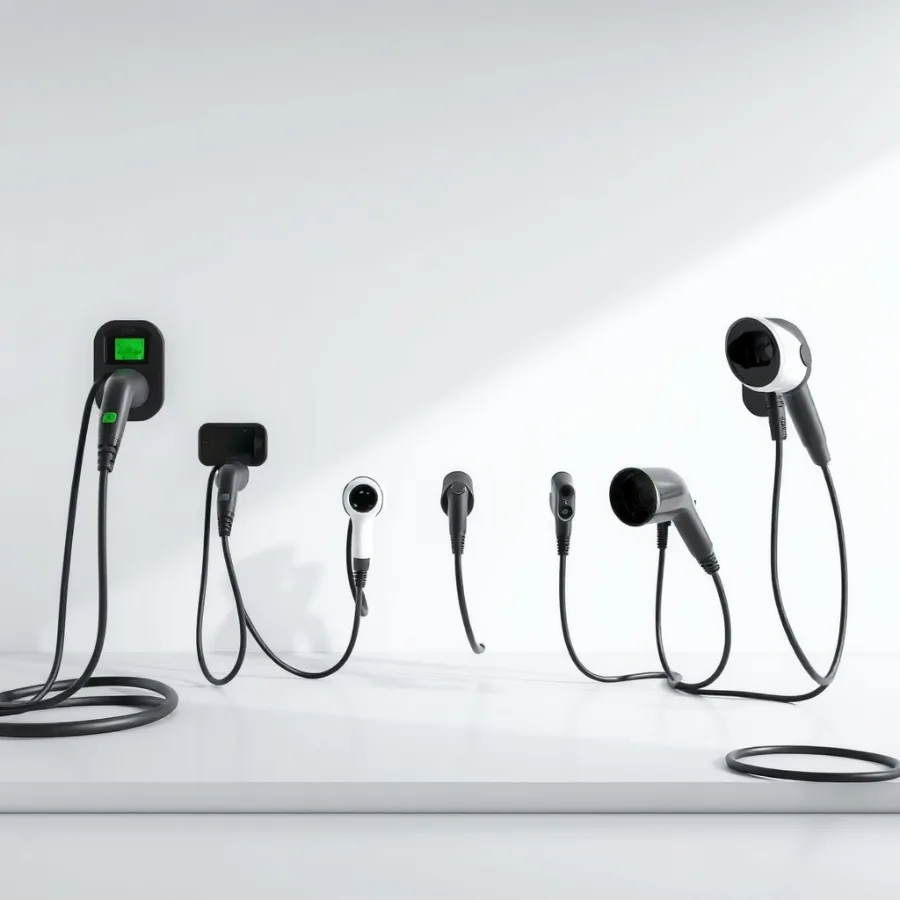
Which NACS adapter you need depends on which plug your car was built with, not which car you own. A CCS1 car needs a CCS1-to-NACS adapter to use a Tesla Supercharger. A car built with a native NACS port needs the opposite adapter – NACS-to-CCS1 – to use Electrify America, EVgo and most other fast chargers. Getting this backwards is the single most common mistake, and it strands people at 20% battery.
Key takeaways
- North America had over 42,000 Supercharger stalls by Q2 2026, and more than 27,500 stalls globally are open to non-Tesla EVs.
- Native NACS ports arrived first on Rivian R1T/R1S (2026 MY), Hyundai Ioniq 5/6/9, Kia EV9 and the Cadillac Optiq – GM’s first native-NACS model.
- Ford’s Mustang Mach-E and F-150 Lightning still ship with CCS1; the first native-NACS Ford is the upcoming midsize electric pickup.
- The free-adapter era is over: Hyundai, Kia and Genesis closed their giveaway on 30 September 2025. Ford and Rivian sell theirs at roughly $200, GM at about $225.
- Volkswagen Group brands remain the notable holdout for practical Supercharger access, despite having announced NACS adoption.
The two adapter directions, and why it matters
“NACS adapter” is used loosely for two opposite products. Buying the wrong one is the reason so many drivers arrive at a charger they cannot use.
Which NACS adapter do you actually need?
| Your car’s port | Charger you want to use | Adapter needed | Common name |
|---|---|---|---|
| CCS1 (most 2021-2025 EVs) | Tesla Supercharger | CCS1 car to NACS plug | NACS adapter / Supercharger adapter |
| Native NACS (2025-2026 models) | Electrify America, EVgo, ChargePoint DC | NACS car to CCS1 plug | CCS adapter |
| Native NACS | Tesla Supercharger | None | Plug and charge |
| CCS1 | Magic Dock Supercharger | None (adapter built into the stall) | Magic Dock |
| Any | Level 2 AC (J1772 or Tesla wall unit) | J1772/NACS AC adapter | AC adapter (low power) |
The AC case is worth separating out. AC adapters are cheap, low-power devices for home and destination charging. A DC NACS adapter carries 150-250 kW and is engineered very differently – never assume one covers both jobs. If you are still choosing home hardware, our Level 2 EV charger guide covers the AC side properly.

Native NACS port by brand: the 2026 picture
The transition is happening model by model, not brand by brand, which is why a compatibility question can only be answered at the model-year level.
Who ships a native NACS port
| Brand | Native NACS models | Still CCS1 | Notes |
|---|---|---|---|
| Rivian | R1T and R1S, from 2026 MY | Pre-2026 R1 | Quad-motor R1s include a complimentary CCS DC adapter |
| Hyundai | Ioniq 5 (2025+), Ioniq 6, Ioniq 9 | Older Ioniq and Kona models | Refreshed lineup charges at Superchargers without an adapter |
| Kia | EV9 (2026 NACS-ported) | Most other Kia EVs | Free CCS1-to-NACS adapter offered on NACS-ported cars |
| GM / Cadillac | Cadillac Optiq and Optiq-V | Escalade IQ and most GM EVs | GM-approved adapter unlocks 23,500+ Supercharger stalls |
| Ford | None yet | Mustang Mach-E, F-150 Lightning | First native-NACS Ford is the upcoming midsize EV pickup |
| Volkswagen Group | None in market | ID.4, Audi, Porsche | NACS adoption announced; access remains the gap |
Note what this implies for used buyers: a 2024 Ioniq 5 and a 2026 Ioniq 5 need opposite adapters. Check the port on the actual car, not the badge.
What a NACS adapter costs in 2026
The free-adapter phase was a launch promotion, and it has largely ended. Current pricing splits into automaker adapters and third-party units.
NACS adapter pricing and availability
| Source | Typical price | Status |
|---|---|---|
| Hyundai / Kia / Genesis | Free (programme closed) | Giveaway ended 30 September 2025 |
| Toyota / Lexus | Complimentary via dealer | For existing EV owners |
| Ford | About $200 | Sold, no longer free |
| Rivian | About $200 | Sold; included on quad-motor R1 |
| GM | About $225 | Never offered free |
| Third-party DC adapters | $175-$240 | Typically rated 150-250 kW |
Price is not the whole story. An automaker NACS adapter is validated against that car’s battery management and is the version dealers will support in a warranty conversation. A third-party adapter can be excellent, but check its continuous current rating rather than its peak, and confirm it is certified for DC use.
How much charging network does an adapter unlock?
The practical answer is: most of the network, and the reliable part of it. Tesla closed Q2 2026 with 8,704 fast-charging stations and 82,357 connectors globally, with more than half the stalls in North America. Over 27,500 stalls worldwide were open to non-Tesla EVs as of March 2026, and roughly 70-80% of US Superchargers accept other brands.
Network context for adapter buyers
| Metric | Figure | Period |
|---|---|---|
| Supercharger connectors, global | 82,357 | Q2 2026 |
| Supercharger stalls, North America | Over 42,000 | Q2 2026 |
| US Supercharger stations | Approaching 3,200 | Q2 2026 |
| Stalls open to non-Tesla EVs, global | Over 27,500 | March 2026 |
| Share of US Superchargers open to all EVs | Roughly 70-80% | 2026 |
That density is why a $200 NACS adapter changes road-trip planning more than any other accessory. For where the other networks sit, see our EV charging stations guide.
Five practical rules before you buy
- Look at the car’s inlet, not the brand. Two model years of the same nameplate can need opposite adapters.
- Separate AC from DC. A cheap J1772 adapter will not carry Supercharger current, and DC units are not interchangeable with AC ones.
- Check the app before you drive. Supercharger access is enabled per brand in the Tesla app or the automaker’s app; the NACS adapter alone does not authorise a session.
- Watch the cable reach. Supercharger cables were designed around Tesla port placement; some CCS1 cars need to occupy two stalls, which is a courtesy problem as much as a technical one.
- Keep the opposite adapter in the car. Native-NACS owners are the new stranded group – without a CCS adapter they cannot use Electrify America or EVgo at all.
Charging speed with a NACS adapter: what actually limits it
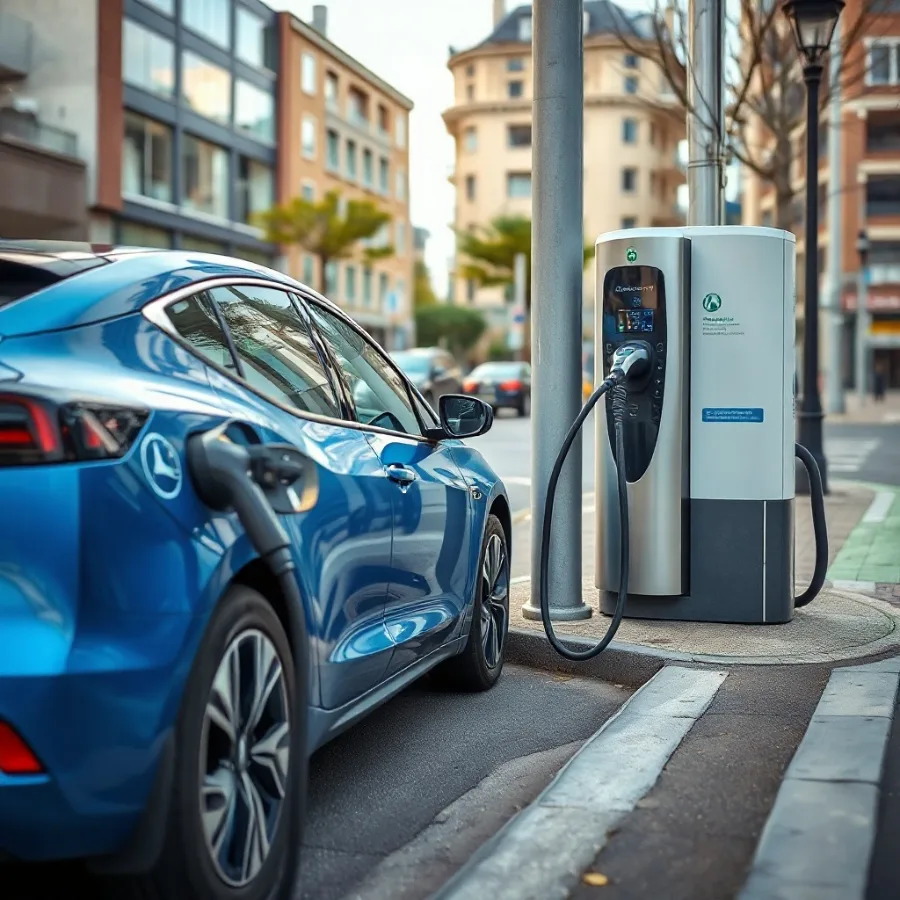
A correctly rated NACS adapter does not slow charging down. The limiting factor is almost always the vehicle’s own charge curve and the state of charge you arrive at, not the connector in between. A car that peaks at 150 kW will not go faster because the stall can deliver 250 kW.
Where an adapter does cost time is thermal. A unit rated 150 kW continuous, used on a hot day near its ceiling, protects itself by reducing current. This is why the continuous rating matters more than the headline peak when you compare NACS adapter options.
What determines your real charging speed
| Factor | Effect on speed | Can an adapter change it? |
|---|---|---|
| Vehicle charge curve | Dominant – sets the peak and the taper | No |
| Arrival state of charge | Large – charging above 60% is much slower | No |
| Battery temperature and preconditioning | Large in cold weather | No |
| Stall power sharing | Moderate on busy older sites | No |
| Adapter continuous rating | Small, unless under-rated or hot | Yes – buy for continuous, not peak |
Common NACS adapter mistakes
- Buying the wrong direction. A native-NACS car at an Electrify America stall needs a NACS-to-CCS1 adapter, not the Supercharger adapter everyone talks about.
- Assuming access is automatic. Supercharger sessions are authorised per brand through an app. The hardware fitting is only half of it.
- Using an AC adapter for DC. They are different products with different current ratings and safety design.
- Ignoring port placement. Supercharger cables are short and designed around Tesla inlet positions.
- Leaving it at home. The most common failure mode is a driver who owns the right NACS adapter and is not carrying it.
How to check whether you need a NACS adapter in three minutes
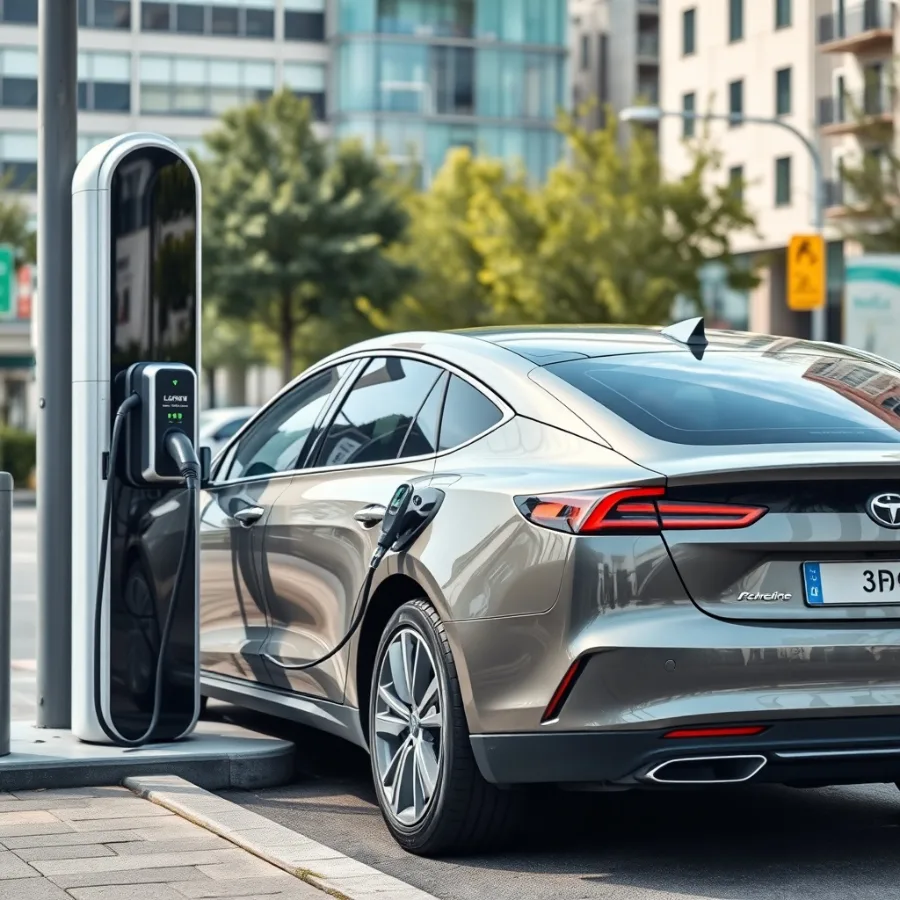
- Open the charge flap and look at the inlet. A CCS1 inlet has a J1772 top section with two large DC pins below it. A NACS inlet is a single small round connector with five contacts. This one look answers most of the question.
- Match the inlet to the network you use. CCS1 inlet plus Supercharger plans means you need a CCS1-to-NACS adapter. NACS inlet plus Electrify America or EVgo plans means you need the reverse.
- Check brand authorisation in the app. Open the Tesla app and look for your make under non-Tesla charging. If your brand is not listed, a NACS adapter will not open a session.
- Confirm the DC rating. Compare the adapter’s continuous rating against your car’s peak DC acceptance; anything at or above your peak is sufficient.
- Decide the source. Automaker units cost more but are validated for the car; third-party units are cheaper and vary in build quality.
That sequence prevents the two expensive mistakes: buying a NACS adapter for a car that already has a native NACS port, and assuming hardware compatibility equals network access.
What to expect next
The direction of travel is clear. As more 2026 and 2027 models ship with native NACS inlets, the CCS1-to-NACS adapter becomes a used-car accessory and the NACS-to-CCS1 adapter becomes the one new owners need. Volkswagen Group brands are the significant gap left in practical Supercharger access despite having committed to the standard. If you are buying a used EV in the next two years, treat the port and the included NACS adapter as part of the price. Our guide to EV depreciation rates covers how quickly a hardware detail like this shows up in resale value.
Frequently asked questions
Do I need a NACS adapter if my car has a NACS port?
Not for Tesla Superchargers – a native NACS car plugs in directly. You do need the opposite adapter, NACS to CCS1, to use Electrify America, EVgo and most other DC fast chargers, because those networks still run CCS1 cables.
How much does a NACS adapter cost in 2026?
Automaker units run roughly $200 from Ford and Rivian and about $225 from GM. Third-party DC adapters cost around $175 to $240 and are typically rated for 150 to 250 kW. Hyundai, Kia and Genesis gave adapters away until 30 September 2025, and Toyota and Lexus owners can still get complimentary units through dealers.
Which 2026 EVs have a native NACS port?
Rivian R1T and R1S from the 2026 model year, Hyundai Ioniq 5, Ioniq 6 and Ioniq 9, the Kia EV9, and the Cadillac Optiq and Optiq-V, which were GM’s first native-NACS models. Ford’s Mustang Mach-E and F-150 Lightning still ship with CCS1.
Does a NACS adapter slow down charging?
Not if it is rated for your car’s peak DC power. Charging speed is set by the vehicle’s charge curve, its state of charge and battery temperature. An adapter only becomes the bottleneck when its continuous rating sits below what the car draws, or when it heats up near its limit and reduces current.
Can any EV use a Tesla Supercharger with an adapter?
No. Access is authorised per brand through the Tesla app or the automaker’s app, so the fitting alone is not enough. Volkswagen Group brands remain the notable holdout, while Ford, GM, Rivian, Hyundai, Kia and Toyota vehicles are supported.
How many Superchargers can a non-Tesla EV use?
More than 27,500 stalls globally were open to non-Tesla vehicles as of March 2026, out of 82,357 connectors worldwide. North America alone passed 42,000 stalls in the second quarter of 2026, and roughly 70 to 80 percent of US Superchargers accept other brands.
Is a NACS adapter safe to leave plugged in?
Adapters are designed for the session, not for storage. Remove the adapter after charging, keep it in its case out of road spray and grit, and inspect the contacts periodically – a damaged or dirty DC contact is a heat problem, not just a connection problem.
Sources
- Tesla – Supercharging other EVs: which non-Tesla vehicles are supported and how access is authorised.
- Rivian – NACS transition: native NACS on 2026 R1 vehicles and the included CCS adapter.
- Hyundai – EV charging and NACS: native NACS inlets across the refreshed Ioniq lineup.
Every figure on this page is dated and linked to its source. How we verify · Editorial policy · Report a correction
Related Posts
Leave a Comment
Your comment will be published after it has been approved. Please send comments that do not contain slang words.