
EV Emissions Renewable Energy: The Real 2026 Picture
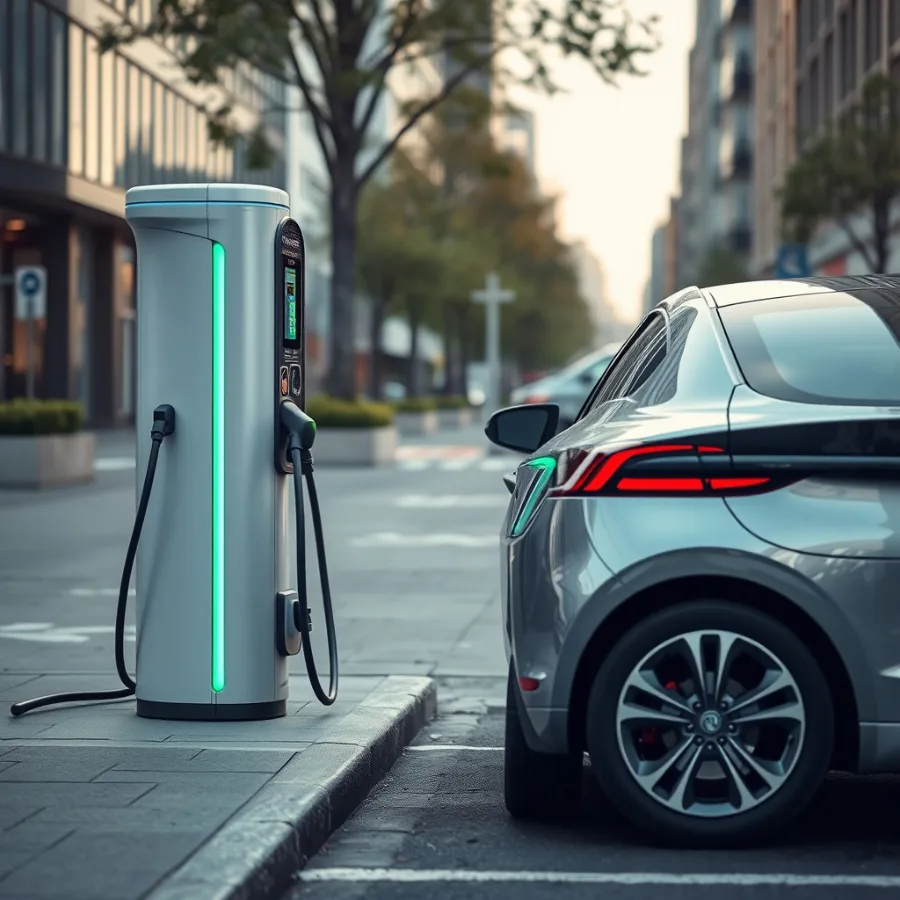
Updated September 18, 2026 · 5 min read
Last updated: September 1, 2026
Charging on renewables starts at home: see our Level 2 EV charger guide and EV charging cost by state.
EV emissions renewable energy, quick answer: EVs are zero at the tailpipe but not zero overall — they depend entirely on how the electricity that charges the car was generated. On a coal-heavy grid, an EV’s effective emissions can approach a moderately efficient gas car’s; on a renewable-heavy or nuclear grid, they drop to a small fraction of it. Nearly every study finds an EV beats a comparable gas car on lifecycle emissions in every US grid region today — the renewable energy question changes HOW MUCH it wins by, not WHETHER it wins.
Key takeaways
- An EV’s real-world emissions are only as clean as the grid charging it — “zero emissions” describes the tailpipe, not the full picture.
- Even on the dirtiest US grids, EVs still beat comparable gas cars on lifecycle emissions, just by a smaller margin.
- Grids get cleaner every year as renewable energy scales, meaning an EV bought today keeps getting cleaner to drive without you doing anything.
- Pairing an EV with home solar or a green electricity plan maximizes the renewable energy benefit directly.
EV Emissions Renewable Energy: Why “Zero” Needs a Footnote
An EV genuinely emits nothing from its tailpipe — no CO2, no NOx, no particulates while driving. But the electricity it consumes came from somewhere, and that somewhere ranges from zero-carbon (solar, wind, hydro, nuclear) to carbon-intensive (coal, and to a lesser extent natural gas). EV emissions, honestly measured, means counting the power plant’s emissions per kWh and multiplying by how much electricity the car used — a real number that varies enormously by location and time of day, not the marketing shorthand of “zero.”
How Much the Grid Actually Changes the Math
| Grid type | Typical generation mix | EV emissions vs comparable gas car |
|---|---|---|
| Renewable/nuclear-heavy (e.g., Pacific Northwest, parts of California, France-style grids) | Hydro, wind, solar, nuclear dominant | EV emits a small fraction of the gas car’s lifecycle total |
| Mixed grid (most of the US average) | Natural gas plurality, growing renewables, some coal/nuclear | EV emits roughly half or less of the gas car’s total |
| Coal-heavy grid (parts of the Midwest, some international grids) | Coal significant share | EV still typically beats the gas car, but by a much narrower margin |
The consistent finding across independent studies (DOE, ICCT, university lifecycle analyses): even on the dirtiest realistic grid mix, an EV still produces less lifecycle CO2 than a comparable gasoline car, because gasoline’s own supply chain (extraction, refining, distribution) carries its own substantial upstream emissions that get overlooked when people only picture the tailpipe.
The Trend That Matters More Than Today’s Snapshot
A gas car’s tailpipe emissions are fixed for its entire life — the engine burns the same fuel the same way in 2026 and 2036. An EV’s emissions, by contrast, fall automatically as the grid it charges from adds renewable energy capacity, which has been happening steadily across nearly every major grid worldwide. This means an EV purchased today is not just cleaner now — it gets cleaner every year it’s driven, without the owner doing anything. Our charging and grid emissions guide covers the practical angle: charging during cleaner hours amplifies this effect further.
EV Emissions Renewable Energy: How to Maximize the Benefit Yourself

- Pair with home solar. Rooftop solar plus EV charging is close to the cleanest possible combination available to an individual household today, and the two purchases reinforce each other financially as well as environmentally.
- Choose a green electricity plan. Many utilities and retail providers offer renewable-matched plans — a straightforward way to increase the renewable energy share behind your charging without installing anything.
- Charge during cleaner hours. Grid cleanliness often varies by time of day (commonly cleaner midday with solar, sometimes cleaner overnight with wind) — scheduling charging can meaningfully shift your effective EV emissions without any hardware change.
- Track your specific region. Grid cleanliness varies enormously by location; checking your own grid operator’s generation mix gives a far more accurate personal number than any national average.
For the complete lifecycle number, not just the driving phase, see our electric car carbon footprint guide.
Home-office energy use follows the same grid-cleanliness logic — see our carbon footprint of remote work guide.
EV Emissions Renewable Energy FAQ
Are EV emissions really zero?
Only at the tailpipe. The electricity charging the car comes from a grid mix that ranges from zero-carbon renewables to coal, so an EV’s real lifecycle emissions depend on where and when it’s charged – though they still beat a comparable gas car nearly everywhere.
Do EVs pollute more than gas cars on a coal-heavy grid?
No, generally not – independent studies consistently find EVs beat comparable gas cars on lifecycle emissions even on the dirtiest realistic grid mixes, because gasoline’s own upstream supply chain carries significant emissions people often overlook.
Does an EV get cleaner over time?
Yes, automatically. As the grid adds renewable energy capacity, the same EV’s effective emissions fall year over year without the owner doing anything – a gas car’s tailpipe emissions, by contrast, stay fixed for its entire life.
Does pairing an EV with solar panels actually help?
Significantly. Home solar plus EV charging is close to the cleanest realistic combination available to an individual household, and the financial case reinforces the environmental one since you avoid both gasoline and much of your electricity cost.
Can I check how clean my specific grid is?
Yes – most grid operators and utilities publish real-time or average generation mix data. Checking your own region gives a far more accurate picture of your EV’s actual emissions than any national average.
Does charging time of day affect EV emissions?
Often yes – grid cleanliness commonly varies by hour depending on solar and wind output. Scheduling charging for cleaner windows can meaningfully reduce your effective EV emissions without any additional purchase.
Related Guides on ZeroCarbonDrive
- EV charging and grid emissions — the timing-based deep dive
- EV vs gas car lifecycle emissions — the full comparison
- Renewable energy and EVs — the solar-pairing deep dive
If you want the cost version of this calculation rather than the emissions version, the EV charging cost calculator uses average residential electricity prices for all 50 states and compares the result against petrol.
Sources and Further Reading
Every figure on this page is dated and linked to its source. How we verify · Editorial policy · Report a correction
Related Posts

Leave a Comment
Your comment will be published after it has been approved. Please send comments that do not contain slang words.