
Fast Charging Explained (2026): The Complete Beginner Guide
Updated September 16, 2026 · 5 min read
Last updated: September 1, 2026
Most charging still happens at home. Our Level 2 EV charger guide and EV charging stations guide cover both sides.
Fast charging explained, quick answer: it means DC (direct current) charging delivered by a public station, bypassing your car’s onboard AC charger to push power straight into the battery at much higher speeds — typically 10% to 80% in 18-45 minutes, versus hours on a home charger. It uses different connectors (CCS or NACS in the US) and different hardware than home charging, and it costs more per kWh in exchange for the speed.
Key takeaways
- Fast charging is DC power delivered directly to the battery, skipping the car’s onboard AC converter that limits home-charger speed.
- Speed depends on three things at once: the station’s power rating, your car’s charging curve, and the battery’s state of charge.
- NACS (Tesla’s connector) is becoming the US standard as more automakers adopt it; CCS remains widespread on existing infrastructure.
- Fast charging is for road trips and top-ups, not daily routine — it costs more and, used constantly, ages a battery somewhat faster than AC charging.
Fast Charging Explained From the Ground Up
Every EV charging port accepts two fundamentally different kinds of power. AC (alternating current) — what comes out of a home wall socket — must pass through the car’s own onboard converter, which limits speed to whatever that converter is rated for (commonly 7.4-11 kW). DC (direct current) skips that converter entirely: the charging station itself does the conversion and pushes power straight into the battery, which is what allows the dramatically higher speeds — 50 kW to 350+ kW — that “fast charging” refers to.
This is the single most important thing fast charging explained boils down to: it is not a faster VERSION of home charging, it is a fundamentally different DELIVERY METHOD that requires dedicated, expensive hardware you will never install in a garage.
The Numbers: What Fast Charging Actually Delivers
| Station power | Typical 10-80% time | Where you find it |
|---|---|---|
| 50 kW | ~50-60 minutes | Older public sites, some urban locations |
| 150 kW | ~25-35 minutes | Common highway network standard |
| 250-350 kW | ~18-25 minutes | Newest high-power corridors |
The advertised peak number is not what you get for the whole session — see the charging curve section below for why. For the full time tables by charger type including home AC options, see our electric car charging time guide.
Connectors: CCS, NACS and the Transition
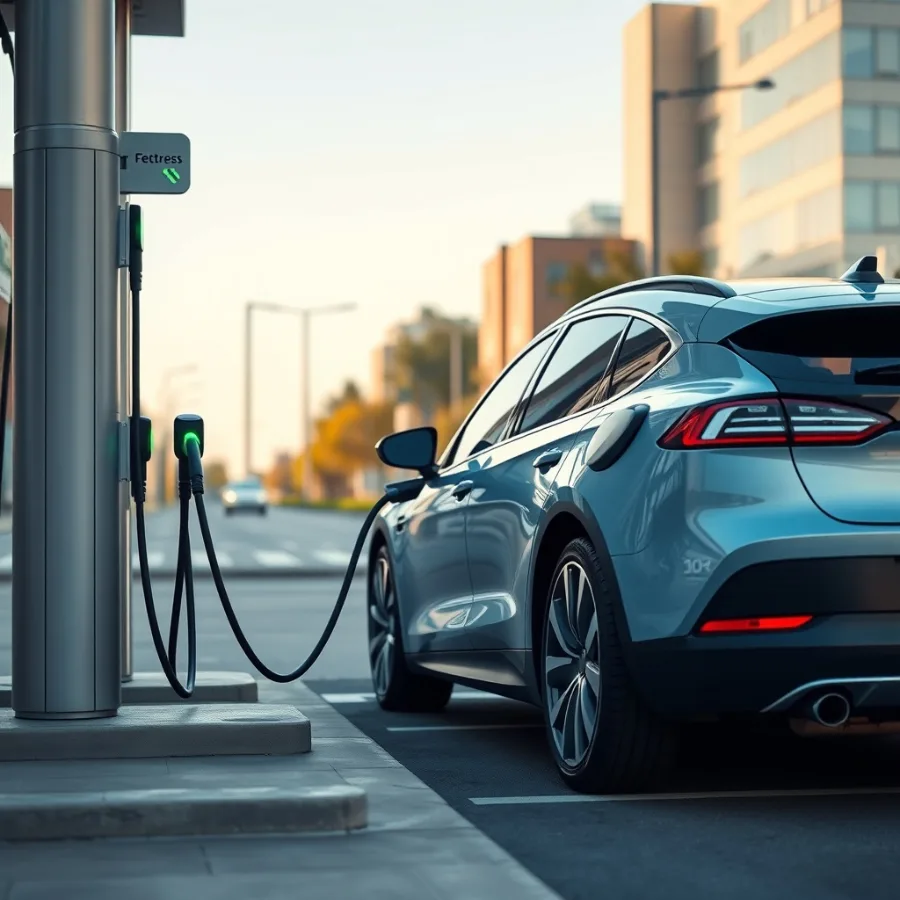
Fast charging in North America runs through one of two connector standards today:
- CCS (Combined Charging System) — the long-standing standard most non-Tesla EVs originally shipped with, still widely deployed across public networks.
- NACS (North American Charging Standard) — Tesla’s connector, now being adopted industry-wide as automakers add native NACS ports or ship CCS-to-NACS adapters, opening Tesla’s Supercharger network to other brands.
The practical result of this transition: check which connector your specific car uses before assuming any given station works, and expect adapters to bridge the gap for a few more years while the industry consolidates around NACS.
Why Speed Isn’t Constant: The Charging Curve
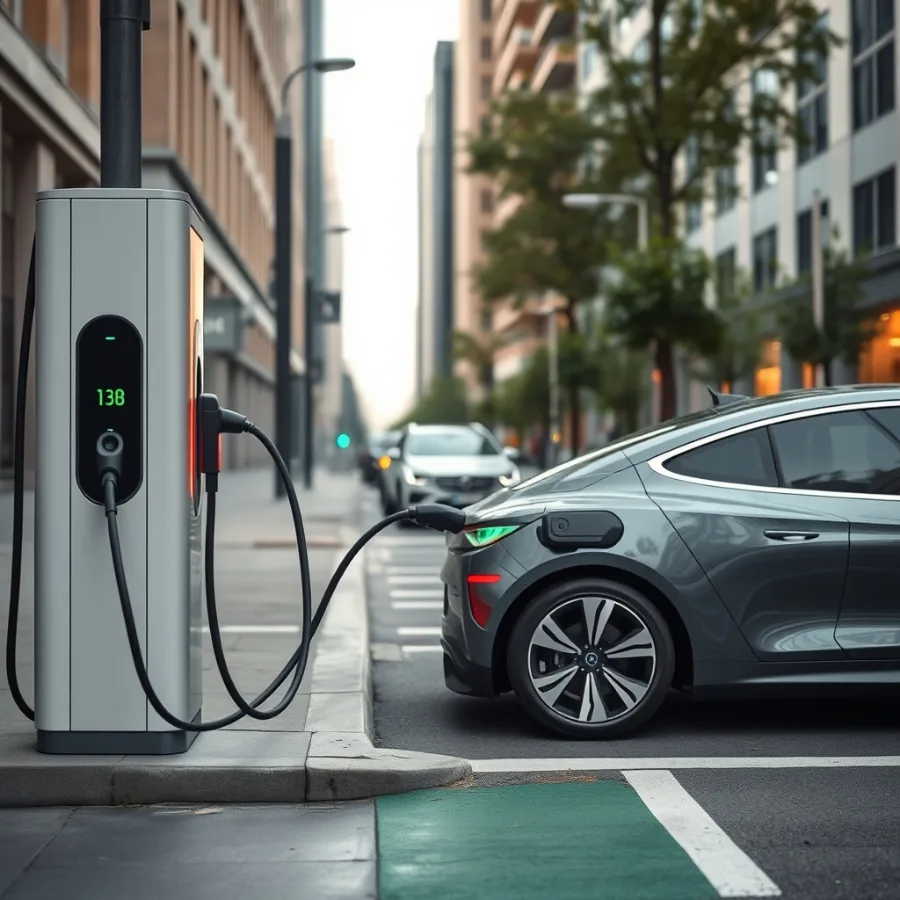
A battery’s charge acceptance rate falls as it fills — the same reason a glass fills fastest when nearly empty and slows near the brim. Fast charging explained honestly means understanding that the advertised “350 kW” number is a brief peak, usually reached only at low state of charge, with real average speed across a 10-80% session running well below the headline figure. This is why every experienced EV driver follows the same rule: charge to 80%, not 100%, on a road trip — the last 20% takes disproportionately long and barely moves the needle on total trip time saved.
When to Use Fast Charging (and When Not To)
| Situation | Recommendation |
|---|---|
| Road trips beyond one charge | Fast charging is the right tool — that’s what it’s built for |
| Daily commuting with home access | Use home AC charging instead — cheaper, gentler on the battery |
| No home charging available | Fast charging becomes a routine necessity — budget for higher per-mile cost |
| Emergency top-up | Fast charging’s whole purpose — a quick partial charge to reach your real destination |
Occasional fast charging does not meaningfully harm a modern battery with good thermal management. A routine built almost entirely on fast charging, day after day, ages a pack somewhat faster than AC charging would — the difference between the exception and the rule.
For the connector details behind DC fast charging, see our EV charging standards guide.
What you’ll actually pay per session is covered in our public EV charging cost guide.
One cost that never appears in a per-kWh comparison: the networks also charge for the minutes after the electricity stops. Tesla now starts that clock at 80 percent when a site is busy, and EVgo adds a fixed fee to every session that is larger if you pay by card. We read what all three actually publish about EV charging idle fees — and none of them publishes a national rate.
Fast Charging Explained: FAQ
- NACS adapters and what fits what — which cars need one and which do not.
- 40 vs 48 amp home chargers — why the faster one is often wasted.
- The Tesla Wall Connector, explained — including non-Tesla use.
- EV road trip calculator — how many charging stops a long drive really needs, and what it costs against petrol.
What is the difference between fast charging and regular charging?
Fast charging uses DC power delivered directly to the battery by dedicated public station hardware, bypassing the car’s onboard AC converter that limits home-charging speed. It is a different delivery method, not simply a faster version of home charging.
How long does fast charging actually take?
Most modern EVs go from 10% to 80% in 18-45 minutes depending on the station’s power, the car’s charging curve, and battery temperature. The last 20% takes disproportionately longer, which is why drivers typically stop at 80%.
Is NACS or CCS the right connector for me?
Check your specific car – it depends on the model and year. The industry is transitioning toward NACS (Tesla’s connector) as the emerging US standard, with CCS-to-NACS adapters bridging the gap for cars that shipped with the older standard.
Why does fast charging slow down near the end?
To protect the battery cells from lithium plating, which would permanently reduce capacity. Charging speed tapers as the pack fills – universal behavior across every EV and fast charger, not a fault of either.
Does fast charging damage the battery?
Occasional use on a modern EV with good thermal management causes little measurable harm. Relying on it as your primary daily charging method, rather than the exception for trips, ages a pack somewhat faster than home AC charging.
Can I fast charge at home?
Not practically – DC fast charging hardware requires industrial-grade power infrastructure and costs far beyond residential installation. Home charging uses AC through a Level 1 or Level 2 charger instead, which is slower but far cheaper and sufficient for overnight use.
Related Guides on ZeroCarbonDrive
- Fast charging technology — the advanced engineering (800V, silicon carbide) behind these speeds
- Electric car charging time — the full time tables for every charger type
- Fast vs slow charging — when to use each
Sources and Further Reading
Every figure on this page is dated and linked to its source. How we verify · Editorial policy · Report a correction
Related Posts

Leave a Comment
Your comment will be published after it has been approved. Please send comments that do not contain slang words.