
eVTOL Explained (2026): Air Taxis, Certification Reality and What Flies Today

Updated September 2, 2026 · 8 min read
Last updated: September 1, 2026.
Quick answer: an eVTOL is an electric aircraft that takes off vertically like a helicopter and cruises like a plane — the machine behind “air taxis.” In 2026 they are certified and carrying paying passengers in China (EHang), while US leaders Joby and Archer sit in the final stages of FAA certification, targeting late-2026/2027 service.
Key takeaways
- An eVTOL replaces a helicopter’s single turbine rotor with 6-12 electric motors — 60-65% quieter, zero in-flight emissions, mechanically far simpler.
- China leads on paper and pavement: EHang’s EH216-S is type-certified (CAAC) and flying ticketed passengers; demo flights have reached Thailand and Mexico.
- US status, honestly: no FAA type certificate yet — Joby is in the final TIA stage (850+ piloted flights logged), Archer closed Phase 3 of 4 in May 2026.
- Realistic missions: 40-160 km hops — airport shuttles first, metro networks later.
- Infrastructure is the quiet bottleneck: purpose-built vertiports remain rare outside Dubai/China build-outs.
- The market prize: analysts project tens of billions in annual air-taxi revenue by the mid-2030s — if certification, batteries and public acceptance all deliver.
What an eVTOL Is — and Why It Is Not a Helicopter
| Factor | eVTOL | Helicopter |
|---|---|---|
| Propulsion | 6-12 independent electric motors | One turbine + main rotor + gearbox |
| Noise footprint | ~60-65% quieter; blends into city noise at altitude | Defines “helicopter loud” |
| In-flight emissions | Zero | Jet-A exhaust |
| Mechanical complexity | Low — few moving parts per motor | High — transmission is maintenance-intensive |
| Failure logic | Redundant rotors; several can fail flyably | Single-rotor dependency (autorotation as backup) |
| Range today | 40-160 km | 400-800 km |
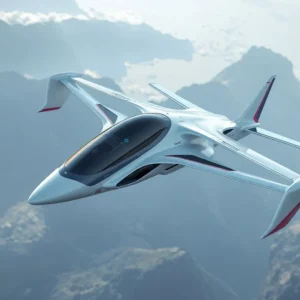
The design split inside the eVTOL world matters too: multicopters (EHang) are mechanically simplest but range-limited; lift-plus-cruise and tilt-rotor designs (Joby, Archer, Beta) add wings that carry the aircraft efficiently in forward flight, buying the range that makes airport-shuttle economics work. The battery physics underneath both — and why range stops near 160 km for now — is the same story told in our electric aircraft guide.

The 2026 Scoreboard: Who Actually Flies
| Program | Aircraft | Certification status (Sept 2026) | Passengers? |
|---|---|---|---|
| EHang (China) | EH216-S, pilotless, 2 seats | Type certified (CAAC) | Yes — ticketed sightseeing routes; regulators still gating full scale-up |
| Joby (US) | S4 tilt-rotor, pilot + 4 | Final FAA stage (TIA); conforming aircraft flying since March 2026 | Not yet in the US; 850+ piloted test flights |
| Archer (US) | Midnight, pilot + 4 | FAA Phase 4 of 4 (closed Phase 3 May 2026) | Not yet; late-2026/2027 target |
| Beta (US) | ALIA (CTOL + VTOL) | Certification path via cargo/CTOL first | Cargo ops with UPS partners |
| Volocopter (EU) | VoloCity multicopter | EASA path, post-restructuring | Demo flights |
The honest headline: the eVTOL era has started, but only in China. US certification is close enough to plan around and far enough that “air taxis next month” headlines deserve skepticism — a nuance most coverage flattens.
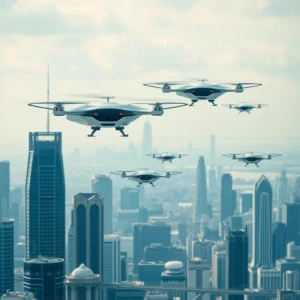
Why Cities Want eVTOL Networks
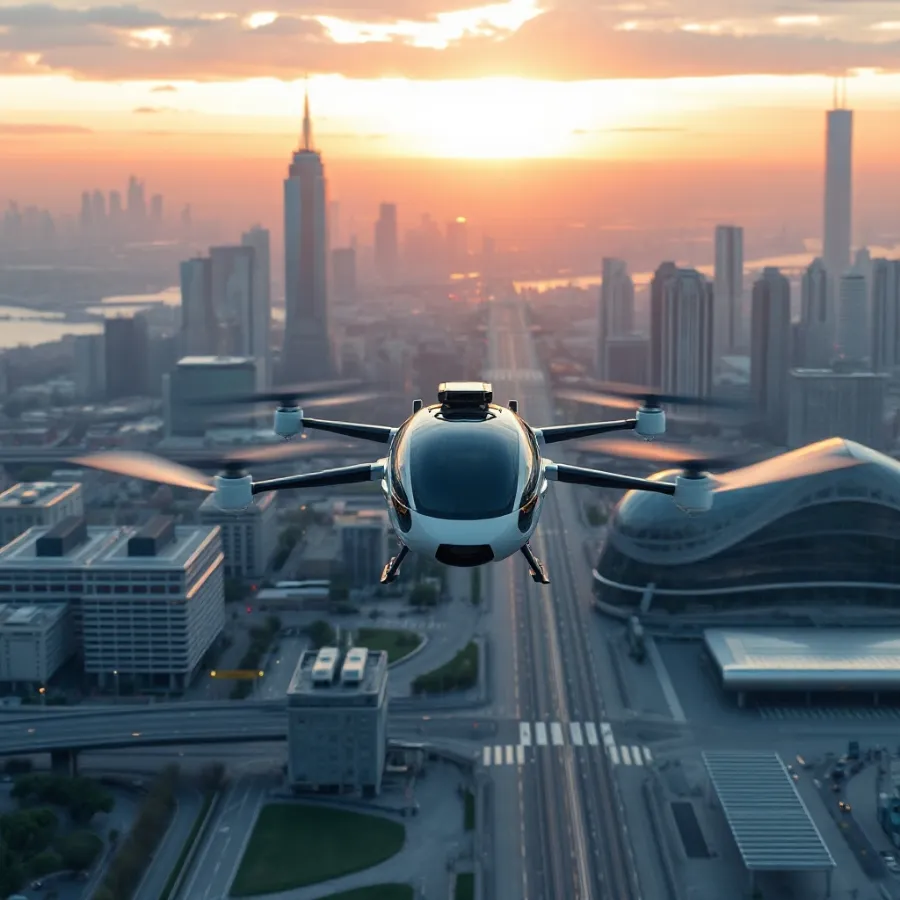
Three forces pull this technology into cities. Time: a 60-90 minute airport crawl becomes a 10-15 minute hop, which is why nearly every launch route announced anywhere is an airport shuttle. Noise politics: heliports failed urban expansion because of sound; an eVTOL’s noise signature is the difference between community vetoes and rooftop approvals. And climate accounting: zero in-flight emissions let cities add air mobility without adding to the transport-emissions problem tallied on our aviation emissions statistics page — provided the electricity is clean, the same grid caveat that applies to every EV.
The Hard Parts Nobody Should Skip
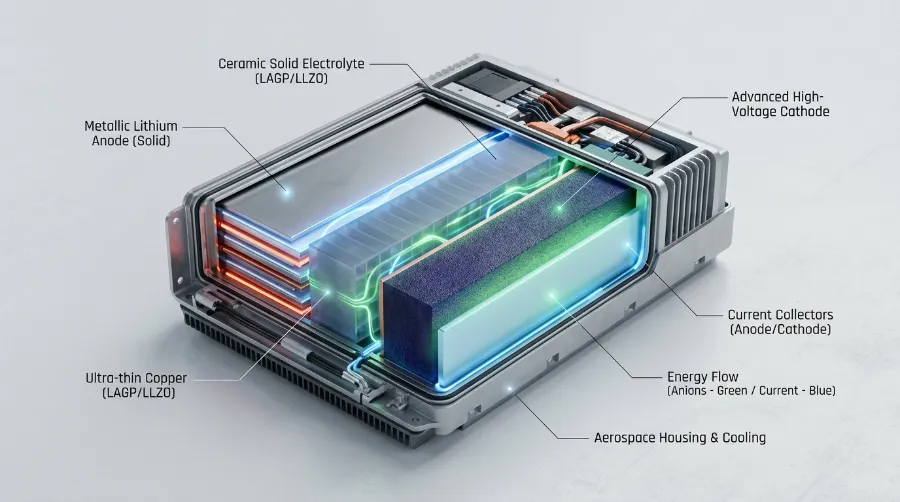
Batteries set the mission. Vertical takeoff devours power — an eVTOL draws near-maximum output during lift-off and landing, exactly when battery sag is most dangerous, which is why certification scrutiny concentrates on cells and why energy density improvements translate directly into new viable routes. The chemistry race behind that is covered in our solid-state battery comparison.
Vertiports barely exist. Aircraft without landing infrastructure are demonstrations, not networks. Dubai and Chinese cities are building dedicated vertiport corridors; US buildout remains embryonic, and charging those pads pulls megawatt-class power — the same grid engineering story as our megawatt charging explainer.
Public acceptance is earned in silence. Surveys keep finding the same pattern: support rises with exposure, and noise complaints — not crashes — killed the last urban aviation wave. Every quiet flyover is marketing; every route starts as a proof of civility.
eVTOL vs the Alternatives It Must Beat
| Mission | eVTOL case | Incumbent’s case |
|---|---|---|
| Airport shuttle (20-40 km) | 10-15 min, premium fare | Car/train: cheaper, slower, congestion-exposed |
| Metro-to-metro (100-250 km) | Future winged eVTOLs | High-speed rail wins where it exists |
| Medical/organ transport | Speed + rooftop access — early real market | Helicopters: range, but cost and noise |
| Sightseeing | EHang’s proven first market | Helicopters at 3-5x operating cost |
| Regional 300+ km | Not an eVTOL mission | Hydrogen and hybrid electric aircraft |
What a Flight Actually Feels Like
Passengers who have flown the demo circuits describe the same sequence. Boarding feels like a premium rideshare: rooftop or pad-side, no terminal, minutes not hours. Takeoff is the surprise — a smooth vertical rise with a sound closer to a large drone than any helicopter, conversation-level inside the cabin. Cruise runs low and scenic, 300-600 meters up at highway-beating speeds, and the landing reverses the takeoff with computer-managed precision.
The pilot (where there is one) manages systems more than stick-and-rudder — fly-by-wire computers translate simple inputs into coordinated rotor commands, which is also what makes the eventual pilotless economics plausible. EHang skipped the pilot from day one; Western certification philosophy adds one first and automates later. Same destination, different regulatory roads.
The Economics: Why Investors Care
The business case rests on three numbers. Direct operating cost: electric propulsion plus mechanical simplicity target per-mile costs at a fraction of helicopters — the same maintenance logic that powers EV-vs-gas savings, applied to aircraft. Utilization: an air shuttle flying 20+ short hops daily amortizes its purchase price the way taxis, not private planes, do. And fleet scale: manufacturers plan automotive-style production lines (Archer’s Georgia factory, Joby’s Ohio plans with Toyota process expertise) rather than hand-built aviation batches.
The bear case deserves equal print: certification delays burn cash (both US leaders have spent years longer than early roadmaps promised), vertiport buildout needs public-private money that arrives slowly, and the launch market — premium airport shuttles — is real but narrow. The sector’s own history warns against dates taken on faith; the technology no longer does.
Spec Sheet: The Leading Aircraft Compared
| Aircraft | Type | Seats | Cruise speed | Design range |
|---|---|---|---|---|
| Joby S4 | Tilt-rotor (6 props) | Pilot + 4 | ~320 km/h | ~160 km |
| Archer Midnight | Lift + cruise (12 rotors) | Pilot + 4 | ~240 km/h | ~80 km (20-min missions by design) |
| EHang EH216-S | Multicopter (16 rotors) | 2, pilotless | ~130 km/h | ~30-40 km |
| Beta ALIA-250 | Lift + cruise | Pilot + 5 | ~270 km/h | ~250 km (CTOL config) |
| Volocopter VoloCity | Multicopter (18 rotors) | Pilot + 1 | ~110 km/h | ~35 km |
Read the table as strategy, not just specs: multicopters trade range for mechanical simplicity and the fastest certification paths; winged designs bet longer development on missions that actually replace car trips. Both bets are rational — they simply target different first markets.
Reading the News Without Getting Fooled
This sector generates more press releases per aircraft than any in aviation, so three filters keep coverage honest. Distinguish type certification (the aircraft design is approved — the milestone that matters) from first flights, “airworthiness” letters, and memoranda of understanding, which are progress but not permission. Treat route announcements without certified aircraft as intentions. And watch conforming-aircraft flight counts and phase numbers — the metrics regulators themselves use — rather than order-book totals, which are largely refundable options. Applied to 2026: EHang’s CAAC certificate is real permission; Joby’s TIA flights and Archer’s Phase 4 entry are genuinely late-stage; everything else in the category is earlier than its marketing.
Beyond Taxis: The Quieter First Markets
Passenger hype obscures where early revenue actually lands. Defense logistics: the US military’s interest in quiet, low-signature vertical lift has funded much of the sector (Beta and Joby both fly for military programs). Cargo and medical: organ transport, time-critical parts, island and offshore resupply — missions where speed premiums are already paid to helicopters at triple the operating cost. Emergency response: a machine that lands anywhere, quietly, without refueling infrastructure is a natural disaster-relief tool. These unglamorous routes build the flight hours, maintenance data and public familiarity that passenger service will inherit.
Why Now: The Decade That Made It Possible
Vertical-flight dreams are a century old; three curves crossed recently to make them buildable. Battery energy density passed the threshold where 20-minute missions plus reserves became certifiable — the EV industry’s cost-and-chemistry ride documented across our EV statistics page did the heavy lifting. Electric motors got power-dense and cheap enough to sprinkle a dozen across an airframe. And flight-control computing matured to coordinate them with airliner-grade redundancy. None of these existed together in 2010; all are commodity engineering in 2026 — which is why the question finally shifted from “can it fly” to “when does the paperwork clear.”
Timeline: What to Expect and When
| Window | Realistic milestone |
|---|---|
| Late 2026-2027 | First FAA type certification (Joby or Archer); first US commercial routes follow |
| 2027-2028 | Dubai/Middle East scheduled networks; Chinese scale-up beyond sightseeing |
| 2028-2030 | Multi-city US/EU airport-shuttle networks; fares drift down from launch premiums |
| 2030s | Winged eVTOL regional hops; integration with electric fixed-wing per our aviation cluster |
Every date above tracks certification reality rather than press releases — this page updates as the FAA and CAAC milestones land, per our editorial policy.
 electric aviation propulsion systems" />
The cargo cousins of these aircraft are already flying at scale — see our drone delivery guide for the networks proving the technology.
For the two US companies leading the certification race, see our Joby Aviation vs Archer Aviation status guide.
The rules making certification possible at all are covered in our FAA regulations guide.
For the full industry map — regulation, players, timeline — see our urban air mobility hub guide.
Frequently Asked Questions
What is an eVTOL?
An eVTOL (electric vertical takeoff and landing aircraft) uses battery-powered electric motors and multiple rotors to take off like a helicopter, then cruise like a small plane. Most designs carry 1-5 people over 20-160 km — the aircraft behind the “air taxi” concept.
How is an eVTOL different from a helicopter?
Three ways: many small electric rotors instead of one giant turbine-driven rotor (60-65% quieter, no single point of rotor failure), zero in-flight emissions, and dramatically simpler mechanics — no gearbox, no jet fuel, far lower projected maintenance.
Are eVTOL air taxis flying passengers in 2026?
In China, yes — EHang\u0027s pilotless EH216-S holds CAAC type certification and flies ticketed sightseeing routes. In the US, not yet: Joby is in the FAA\u0027s final Type Inspection Authorization stage and Archer closed Phase 3 in May 2026, pointing to late-2026/2027 service at the earliest.
How far can an eVTOL fly?
Current designs realistically cover 40-160 km per charge — city-to-airport and metro-hop missions. Winged designs (Joby S4, Archer Midnight) reach farther than multicopter types (EHang) because wings generate lift in cruise.
How much will an eVTOL flight cost?
Operators target Uber-Black-class pricing at launch (a few dollars per seat-mile), falling toward premium ride-share levels as fleets scale. Early routes will be airport shuttles where time saved justifies the fare.
Are eVTOLs safe?
The design logic is redundancy: 6-12 independent motors mean multiple failures remain flyable, and certification demands airliner-class safety targets. The honest caveat is track record — the category is accumulating its first million passenger miles, which is exactly what current pilot programs exist to prove.
Sources and Further Reading
Related Posts
Leave a Comment
Your comment will be published after it has been approved. Please send comments that do not contain slang words.