
Urban Air Mobility (2026): The Complete Guide to Flying Taxis
Updated September 2, 2026 · 5 min read
Last updated: September 1, 2026
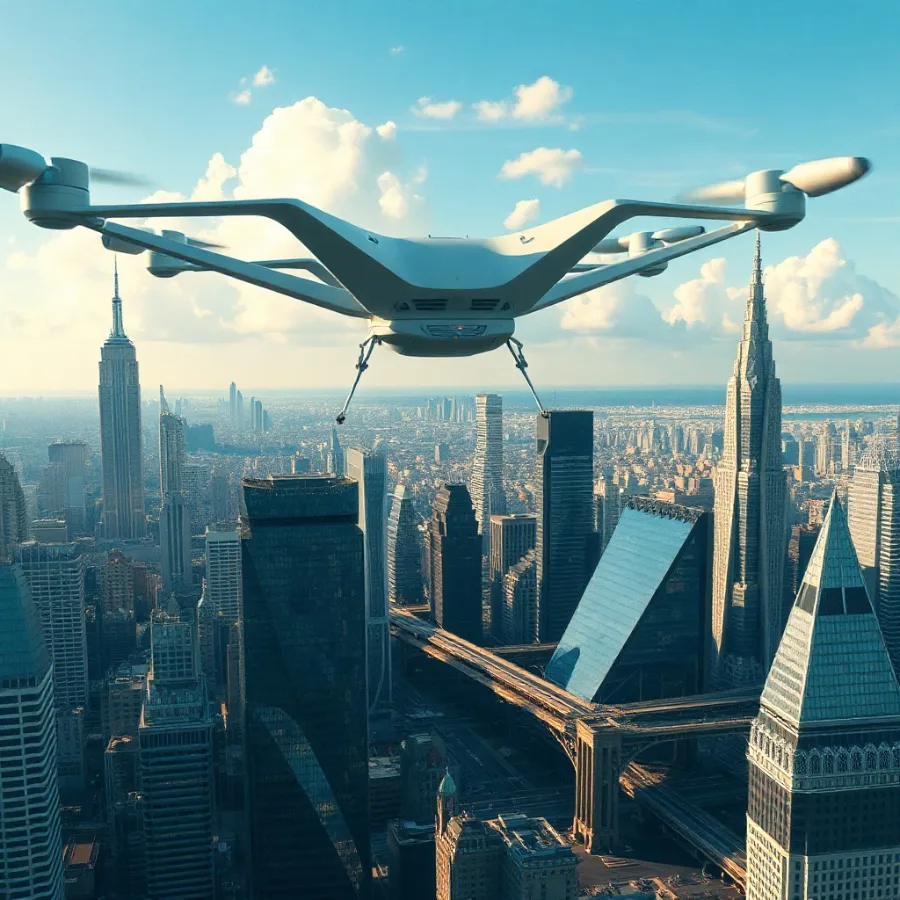
Quick answer: Urban air mobility (UAM) — electric aircraft moving people and cargo over cities, bypassing ground traffic — has moved from concept to regulated industry in 2026. The FAA finalized rules creating a new “powered-lift” aircraft category, Joby Aviation is in the final stage of aircraft certification with passengers targeted this year, drone delivery already operates at real scale, and China’s EHang is flying paying passengers today. This page is the map: what UAM actually means, who is closest to flying you, and the honest timeline.
Key takeaways
- Urban air mobility covers two distinct layers: passenger air taxis (eVTOLs) and cargo drones — cargo is years ahead in real-world deployment.
- US regulation is no longer the bottleneck — the FAA’s powered-lift rules are finalized; aircraft-level certification is now the pacing item.
- China leads on passenger operations today (EHang, ticketed flights); the US leads on aircraft development scale (Joby, Archer).
- The realistic near-term picture is limited routes and high prices, expanding gradually — not overnight mass adoption.
What Urban Air Mobility Actually Means

Urban air mobility is the umbrella term for using small, electric (or hybrid-electric) aircraft to move people and goods through urban airspace — typically vertical-takeoff aircraft (eVTOLs) flying short hops between rooftop or ground-level “vertiports,” avoiding street-level congestion entirely. It splits cleanly into two tracks that move at very different speeds:
| Track | What it moves | 2026 status |
|---|---|---|
| Passenger air taxis (eVTOL) | People, on-demand short urban/regional hops | Final certification stages (US); commercial ops (China) |
| Cargo/delivery drones | Packages, medical supplies, food | Operating at real scale today — see our drone delivery guide |
Most public attention goes to passenger air taxis because they are the more dramatic vision, but cargo drones are the part of urban air mobility that already works, at volume, today.
The Global Race: Who Is Actually Closest?

| Player | Region | Status |
|---|---|---|
| EHang | China | CAAC-certified, running ticketed passenger operations — currently the world’s furthest-along passenger UAM operator |
| Joby Aviation | US | FAA Stage 5 (final certification stage), conforming aircraft flying, targeting 2026 passengers |
| Archer Aviation | US | Completed FAA Phase 3 of 4, roughly a year behind Joby — see our Joby vs Archer guide |
| Various European/Gulf programs | EU, UAE | Certification and pilot programs underway, generally trailing the US and China leaders |
The honest read: China currently leads on getting real passengers airborne; the US leads on aircraft engineering scale and investment. Neither has “won” urban air mobility outright — the industry is still establishing whose regulatory and operational model becomes the template others follow.
The Regulatory Foundation Making This Possible
Urban air mobility could not scale without rules for exactly this kind of aircraft, and the US spent years building that foundation: a Special Federal Aviation Regulation created “powered-lift” as a genuinely new aircraft category, with its own pilot certification and operating rules — the full breakdown is in our FAA regulations guide. That framework, finalized in 2025, is what let the FAA’s eVTOL Integration Pilot Program begin selecting participants in 2026, moving the industry from “the rules don’t exist yet” to “the rules exist, now prove the aircraft.”
Why Urban Air Mobility Matters for Emissions

This site covers urban air mobility for a specific reason: it is a genuine decarbonization lever, not just a novelty. Electric aircraft on short urban hops produce zero direct emissions and, unlike long-haul aviation (where batteries remain too heavy), the short distances involved play directly to battery-electric strengths. The larger climate case is indirect but real: successful UAM could shift some car trips — especially time-sensitive ones — off congested roads entirely, and drone delivery specifically already demonstrates measurable per-package energy savings over van delivery for the right package profile.
The honest caveat: passenger air taxis at current pricing will serve premium point-to-point trips (airport transfers, executive travel) long before they meaningfully dent everyday commuting — the emissions case for cargo drones is currently much stronger and more immediate than for passenger UAM.
The Honest Timeline
- Now-2026: Cargo drone delivery scales further; Joby targets first US passengers; EHang continues Chinese operations.
- 2027-2028: Archer and other US/international players reach certification; route networks expand beyond initial pilot cities.
- 2029-2032: Pricing begins falling from premium-only levels as fleets and vertiport infrastructure scale; broader metro coverage.
- 2030s+: Genuine mainstream adoption question — dependent on cost, noise acceptance, and whether autonomous operation (removing the pilot cost) matures alongside the aircraft.

Every date carries real uncertainty — this industry has slipped timelines before, and will again. The trend line, unlike five years ago, is now consistently forward: rules exist, aircraft fly, and paying passengers exist somewhere in the world today.
Explore the Full Urban Air Mobility Cluster
This page is the hub; each linked guide goes deep on one piece:
- eVTOL air taxis explained — the aircraft technology and global certification landscape
- Joby Aviation vs Archer Aviation — the US certification race in detail
- FAA regulations for eVTOLs — the powered-lift rulebook
- Drone delivery — the cargo side, already at scale
- Connected vehicles — the ground-based V2X technology UAM traffic management builds on
Ground congestion is one reason cities look to the skies — see our urban transport emissions guide for the full breakdown.
This fits into the bigger future mobility picture — see our future mobility guide for how all the pieces connect.
Urban Air Mobility FAQ
hyperloop development is worth a closer look for the full picture.
What is urban air mobility?
The use of small electric or hybrid-electric aircraft – passenger eVTOLs and cargo drones – to move people and goods through city airspace, bypassing ground traffic. It splits into passenger air taxis (still reaching commercial scale) and cargo drones (already operating widely).
Who is closest to flying passenger air taxis?
China’s EHang is currently furthest along, running CAAC-certified ticketed operations. In the US, Joby Aviation leads the certification race, in the FAA’s final Stage 5 with passengers targeted for 2026.
Is urban air mobility actually good for the environment?
For cargo drones, clearly yes on a per-package basis for the right delivery profile. For passenger air taxis, the case is real but more limited near-term – they will likely serve premium point-to-point trips before meaningfully reducing everyday car commuting.
What is the biggest obstacle to urban air mobility today?
Aircraft-level certification, not regulation – the FAA’s powered-lift rules for pilots and operations are already finalized. Individual aircraft models like Joby’s and Archer’s still need to complete their own multi-stage certification before commercial passenger service.
When will regular people be able to afford an air taxi ride?
Not soon. Early service will be premium-priced for point-to-point routes like airport transfers. Meaningful price drops depend on fleet scale, vertiport infrastructure buildout, and potentially autonomous operation removing pilot costs – realistically a 2029-2032+ conversation.
How is urban air mobility different from regular helicopters?
eVTOLs are electric (zero direct emissions, far quieter), purpose-built for short urban hops rather than adapted general aviation aircraft, and fly under an entirely new FAA ‘powered-lift’ category with its own certification framework designed for this use case.
Sources and Further Reading
Related Posts

Leave a Comment
Your comment will be published after it has been approved. Please send comments that do not contain slang words.