
Connected Vehicles and Intelligent Infrastructure: The 2026 Guide
Updated September 3, 2026 · 9 min read
Last updated: September 1, 2026
If you are weighing a connected EV purchase, our guides to Chinese electric cars and the cheapest electric cars cover what is actually on sale today.
Quick answer: Connected vehicles are cars, trucks and buses that exchange data with each other (V2V), with roadside infrastructure (V2I) and with networks (V2N) — collectively called V2X. The payoff is fewer crashes, smoother traffic and lower emissions: US regulators have long estimated that mature V2X could address a large share of multi-vehicle crashes involving unimpaired drivers, and signal-timing projects routinely cut corridor delays by double digits.
Key takeaways
- The technology fight is over: cellular C-V2X won the 5.9 GHz band in the US after the FCC’s 2020 reallocation; the old DSRC/802.11p standard survives mainly in Europe and Japan.
- USDOT published a national V2X deployment plan in 2024 with phased targets for equipping intersections and highways into the 2030s.
- For EVs specifically, connected vehicles unlock smart charging, eco-routing and platooning — efficiency gains that stack on top of the electric drivetrain’s.
- The hard problems left are boring ones: funding roadside units, certifying security credentials and earning driver trust on data privacy.
What Are Connected Vehicles, Exactly?
A connected vehicle is any vehicle that sends and receives data about its position, speed and intentions. The industry sorts the connections into four buckets, and the umbrella term for all of them is V2X — vehicle-to-everything:
| Type | Talks to | Example in daily driving |
|---|---|---|
| V2V (vehicle-to-vehicle) | Other cars and trucks | A car five vehicles ahead brakes hard; yours warns you before you can see it |
| V2I (vehicle-to-infrastructure) | Traffic lights, work zones, toll gantries | Dashboard countdown to the next green light; work-zone speed warnings |
| V2P (vehicle-to-pedestrian) | Phones, e-bikes, wheelchairs | Alert for a cyclist about to cross behind a parked bus |
| V2N (vehicle-to-network) | Cloud services over cellular | Live hazard maps built from other drivers’ airbag and wiper data |
The distinction that matters: most “connected car” features sold today (streaming, remote start, over-the-air updates) are V2N conveniences. The safety revolution lives in V2V and V2I, which need low-latency direct radio links — and that is where the standards war happened.
DSRC vs C-V2X: How the Standards War Ended
For two decades the US reserved the 5.9 GHz band for DSRC (Dedicated Short-Range Communications, based on Wi-Fi-style 802.11p). Deployment stayed stuck in pilots, so in 2020 the FCC reallocated the band: the lower portion went to Wi-Fi, and the remaining upper 30 MHz was assigned to C-V2X (cellular V2X), which does the same direct car-to-car messaging using cellular radio technology — no cell tower or subscription required for the safety messages themselves.
| DSRC (802.11p) | C-V2X (direct mode) | |
|---|---|---|
| Radio basis | Wi-Fi family | 4G/5G sidelink |
| US status | Sunset after FCC 2020 decision | The US standard going forward |
| Where it lives on | Europe (VW Car2X on the Golf/ID models), Japan | US corridors, China (largest deployment base) |
| Upgrade path | Dead end | Evolves with 5G releases (higher bandwidth, sensor sharing) |
The practical consequence for buyers: early DSRC-equipped cars (a few Toyota and GM models from the 2017–2019 era in the US) ended up orphaned, while C-V2X hardware is only now arriving in production vehicles. Connected vehicles are therefore mostly a story about the NEXT car you buy, not the one in your driveway.
What Intelligent Infrastructure Actually Does
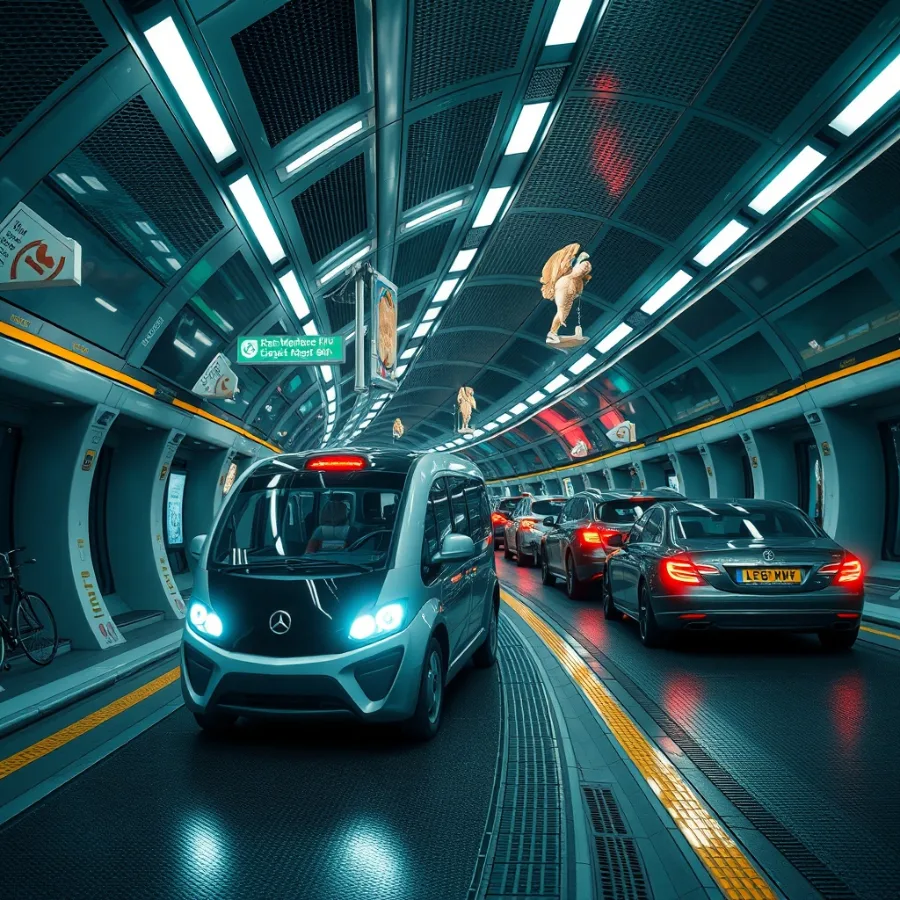
The roadside half of the system — intelligent infrastructure — is less glamorous than the cars but delivers the earliest wins:
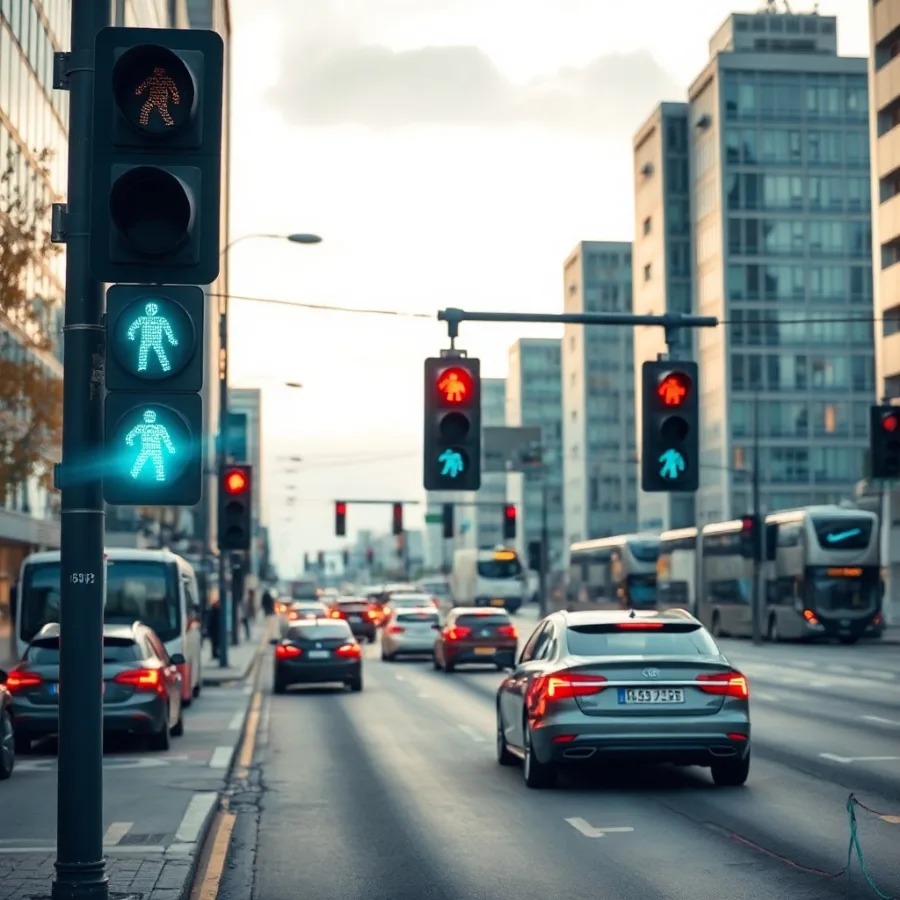
- Signal priority and timing. Intersections broadcasting signal phase (SPaT) let vehicles time arrivals for green waves. Cities running adaptive-signal projects have reported corridor travel-time cuts in the 10–25% range, with matching fuel and emission savings from fewer stops.
- Transit and emergency priority. Buses running late get a few extra seconds of green; fire trucks get intersections cleared ahead of arrival — both are live in multiple US deployments today.
- Work-zone and hazard broadcasting. Roadside units warn approaching connected vehicles about lane closures, ice or stopped queues — the exact scenarios behind chain-reaction highway crashes.
- Data for planning. Anonymized connected-vehicle traces show planners where near-misses cluster, replacing guesswork about which intersections need redesign before people are hurt.
Utah’s DOT has been the pace-setter, running C-V2X along interstate and transit corridors, with Georgia, Michigan and Texas operating major smart-corridor programs of their own. USDOT’s 2024 national deployment plan set phased goals to push V2X from these islands to nationwide coverage over the next decade.
Why Connected Vehicles Matter for Safety
Cameras and radar — the sensors behind today’s driver-assistance — see only line-of-sight. V2X sees through the truck ahead, around the blind corner and past the crest of the hill, because the information travels by radio rather than by light. That is why regulators keep coming back to it: NHTSA’s long-standing analysis holds that V2V plus V2I could address the large majority of multi-vehicle crash scenarios involving unimpaired drivers — the crashes that better airbags cannot prevent, only survive.
The realistic caveat: those benefits scale with adoption. A warning system helps little when only 2% of vehicles broadcast. This chicken-and-egg is precisely what the deployment plan and intersection-equipping targets are designed to break — infrastructure first, so that even the first connected vehicles gain value from day one.
The EV Connection: Where Connected Meets Electric
Connected vehicles and EVs multiply each other’s benefits, which is why this site covers both:
- Smart charging. A networked EV can shift charging into the cheapest, cleanest grid hours automatically — the mechanics are in our charging and grid emissions guide, and the money side in EV charging cost by state.
- Eco-routing and eco-approach. Routing that accounts for elevation, signals and traffic cuts consumption a few percent; signal-timing information (eco-approach) trims the stop-and-go that hurts range most in the city.
- Truck platooning. V2V-coordinated close following reduces aerodynamic drag; DOE-supported testing has measured combined fuel savings in the mid-single digits for two-truck platoons — worth real money and real carbon at fleet scale.
- Range confidence. Live charger-status data (a V2N service) is quietly one of the best cures for range anxiety — knowing the charger ahead is free and working changes trip math more than 20 extra miles of range.
The Honest Obstacles
| Obstacle | Why it’s hard | State of play |
|---|---|---|
| Funding roadside units | Cities must buy hardware whose benefits accrue to drivers | Federal grants cover pilots; long-term funding unsettled |
| Security (SCMS) | Every message needs cryptographic trust without exposing identity | Credential-management system operational, scaling up |
| Privacy | Position broadcasts could enable tracking if misdesigned | Rotating pseudonym certificates are the standard answer |
| Fleet turnover | Average US vehicle is 12+ years old | Full V2V benefit arrives a decade after mandates begin |
| Spectrum squeeze | 30 MHz is a third of the original allocation | Enough for safety messaging; rich sensor-sharing needs 5G-era additions |
None of these is a technology problem — the radios work. They are governance and economics problems, which historically move slower than silicon but do move: the FCC decision, the deployment plan and state corridor programs are all post-2020 developments that ended a decade of stalemate.
What Connected Vehicles Look Like From the Driver’s Seat
Strip away the acronyms and connected vehicles change five ordinary moments of a drive:
- The light you never guess about. Audi’s Traffic Light Information — running in US cities since 2016 — shows a countdown to green and a speed recommendation that catches the wave. It’s the oldest consumer V2I feature and still the best demo of the idea.
- The braking you can’t see. Electronic emergency brake light: a car several positions ahead brakes hard, and every connected vehicle behind it gets the alert simultaneously — the anti-pileup message, and the reason V2V uses direct radio instead of the cloud (latency of milliseconds, not seconds).
- The intersection that watches for you. Left-turn assist and intersection-movement assist warn when oncoming traffic is closing faster than it looks — the two scenarios that dominate fatal urban crashes.
- The work zone that introduces itself. Instead of a sign 200 meters ahead, the zone broadcasts itself a kilometer out, with lane-level guidance.
- The hazard report you never filed. Modern fleets already pool anonymized wiper, ABS and airbag events into live hazard maps — Mercedes and BMW run such data-sharing in Europe. Nobody presses a button; the fleet is the sensor.
None of this drives the car. Connected vehicles and autonomous vehicles are cousins, not synonyms: connectivity feeds information to whoever is driving — human or computer. That separation is why V2X benefits arrive years before robotaxis do.
Where Deployment Actually Stands (US, 2026)
| Layer | Status | What to watch next |
|---|---|---|
| Spectrum & rules | Settled — 30 MHz at 5.9 GHz for C-V2X, FCC waivers granted to early deployers | Final long-term technical rules |
| National strategy | USDOT deployment plan published Aug 2024, phased targets to the mid-2030s | Funding cycles that pay for intersections |
| State corridors | Utah furthest along; Georgia, Michigan, Texas, Colorado active | Multi-state interstate corridors |
| Vehicles | C-V2X hardware entering production models this decade; aftermarket units serve fleets | First high-volume model with V2X standard |
| Security | Credential management system (SCMS) operational | Cross-vendor certificate interoperability at scale |
The honest summary: connected vehicles in the US are past the “will it happen” phase and deep in the “who pays for which intersection” phase. That’s slower than a product launch but faster than the previous decade, when the spectrum question froze everything.
Autonomous fleets will need to charge without hands — the state of that technology is in our wireless EV charging guide.
This is one pillar of the bigger future mobility shift — see our future mobility guide.
Connected Vehicles FAQ
data privacy in smart mobility is worth a closer look for the full picture.
robotaxis market projections is worth a closer look for the full picture.
Is my current car a connected vehicle?
If it has an app for remote start or gets over-the-air updates, it is network-connected (V2N). Almost no cars on US roads today have the direct V2V/V2I radios that enable crash-avoidance messaging – that hardware is only now entering production models.
Do connected vehicles require a cellular subscription?
The safety messages do not: C-V2X direct mode is car-to-car radio in the reserved 5.9 GHz band, working with no tower or SIM. Convenience features like live traffic and streaming do ride on regular cellular service.
Can connected vehicles be hacked or tracked?
Messages are signed through a security credential system so receivers can trust them without learning who sent them, and vehicles rotate pseudonym certificates to frustrate tracking. No system is unhackable, but V2X was designed post-Snowden with privacy as a requirement, not an afterthought.
What happened to DSRC?
The FCC reallocated most of its spectrum in 2020 and the US moved to cellular-based C-V2X. Europe and Japan still run 802.11p-based systems – Volkswagen ships it on ID and Golf models there – so the two worlds currently do not interoperate.
Do connected vehicles reduce emissions?
Yes, indirectly: smoother signal timing, less stop-and-go, eco-routing and truck platooning each shave a few percent of energy use. The gains stack with electrification – a connected EV charges on cleaner hours and wastes fewer kWh in traffic.
When will V2X be standard on new cars?
USDOT’s 2024 deployment plan lays out phased infrastructure targets into the 2030s, and automakers have announced C-V2X models for the US market this decade. A reasonable expectation is optional on premium models now, spreading toward standard equipment as intersections get equipped.
Related Guides on ZeroCarbonDrive
- EV statistics 2026 — the fleet all this connectivity will steer
- EV charging stations guide — the V2N service EV drivers already rely on
- Transport decarbonization — where smart traffic fits in the bigger picture
Charging is the part of the connected-vehicle experience drivers touch most often, and it remains fragmented. Our guide to NACS adapter compatibility covers which adapter each car actually needs.
Sources and Further Reading
Related Posts

Leave a Comment
Your comment will be published after it has been approved. Please send comments that do not contain slang words.