
Megawatt Charging For Trucks
Updated September 18, 2026 · 9 min read
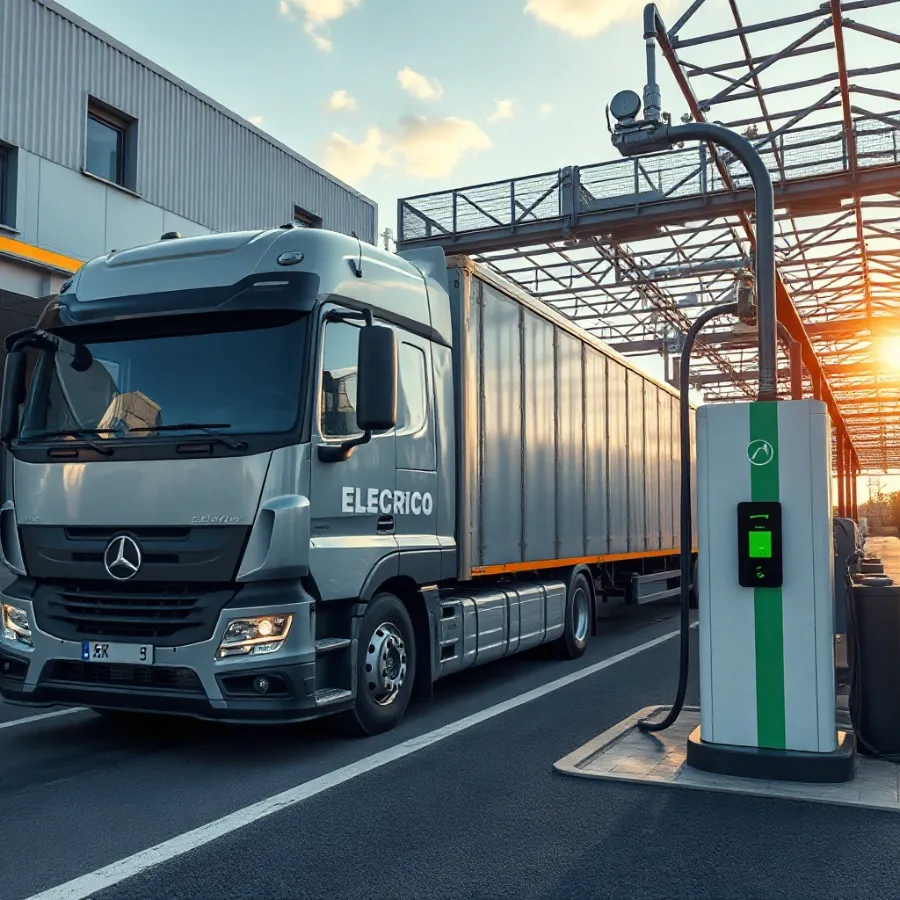
Megawatt charging for trucks is emerging as a practical answer to one of road freight’s hardest questions: how can a battery-electric vehicle recover hundreds of kilometers of range during a normal driver break? By delivering power at megawatt scale, the technology can dramatically reduce charging time compared with conventional fast chargers.
The shift matters because heavy trucks carry large battery packs and operate under strict schedules. A charger designed for passenger cars may need several hours to replenish them. A Megawatt Charging System, commonly called MCS, aims to complete much of that task in roughly 30 to 45 minutes under suitable conditions.
The concept is moving beyond laboratory trials. Truck manufacturers, charging networks, logistics companies and standards organizations are now testing MCS equipment in depots, ports and major freight corridors.
Basic Concepts and Definitions
A megawatt equals one million watts. In charging terms, a one-megawatt station can theoretically transfer 1,000 kilowatt-hours of energy in one hour. Real sessions deliver less because charging speed changes with battery temperature, state of charge and vehicle limits.
MCS is a dedicated direct-current charging system developed primarily for heavy commercial vehicles. Its connector, communication protocol and thermal management are designed for substantially higher current than the Combined Charging System used by most electric cars and many early electric trucks.
The commonly referenced technical target reaches up to 1,250 volts and 3,000 amperes. Multiplying those values produces a theoretical peak of 3.75 megawatts. Initial commercial sites often operate closer to 750 kilowatts or one megawatt because grid capacity, truck hardware and battery protection remain practical constraints.
Charging power and delivered energy should not be confused. Power describes the transfer rate, while energy describes the amount stored. A truck receiving an average of 800 kilowatts for 30 minutes gains approximately 400 kilowatt-hours before charging losses are considered.
From Early Fast Charging to the MCS Standard
Early battery-electric trucks often relied on CCS chargers rated between 150 and 350 kilowatts. That approach works for urban delivery vehicles returning to a depot overnight, but it is less suitable for long-haul trucks with battery capacities that may exceed 600 kilowatt-hours.
The industry responded through cooperation led by CharIN, the association that also supported CCS development. Manufacturers and charging specialists created a connector intended to handle high voltage, several thousand amperes and the demanding duty cycles found in commercial transport.
Public demonstrations accelerated during the early 2020s. Companies including ABB, MAN, Daimler Truck, Volvo Trucks and major component suppliers conducted high-power charging trials. Some tests passed the one-megawatt threshold, showing that a truck could receive meaningful driving range during a regulated rest period.
Standardization remains essential as deployment expands. International and regional work covers connector dimensions, electrical safety, digital communication and automatic charging authorization. A common interface allows a truck from one manufacturer to use compatible infrastructure from another provider without a proprietary adapter.
How Megawatt Charging Delivers Power Safely
An MCS session begins with a physical connection and a digital handshake. The station and truck exchange information about voltage, current limits, battery condition and insulation status before substantial power flows. If either side detects an unsafe value, charging is reduced or stopped.
High current creates heat because electrical resistance converts part of the energy into thermal loss. The charging cable and connector therefore use liquid cooling. Temperature sensors monitor critical contact points, while the station adjusts current to keep equipment within its approved operating range.
The truck’s battery management system plays an equally important role. It calculates how much power the cells can accept without excessive heat, accelerated degradation or voltage imbalance. Peak output is usually available only during part of the session, not from beginning to end.
This behavior creates a charging curve. A warm battery at a low state of charge may initially accept very high power, then taper as it approaches full capacity. For that reason, operators usually measure performance by average charging power and energy delivered rather than by the highest number briefly displayed.
Grid Connections and Charging-Site Design
A truck stop with several MCS bays can demand as much electricity as a factory or small community. Four trucks charging simultaneously at one megawatt create a four-megawatt load before lighting, cooling and other services are counted. A standard commercial grid connection may not support that requirement.
Site developers begin with a utility capacity study. The assessment examines nearby substations, feeder limits, connection costs and construction schedules. In constrained areas, a new high-voltage connection or substation may take several years to permit and build.
Battery storage can reduce pressure on the grid. A stationary battery charges when demand and electricity prices are lower, then supports vehicles during busy periods. Solar panels may contribute energy, although their variable output rarely powers continuous megawatt charging alone.
Layout also matters. Long combinations need wide turning areas, drive-through bays and enough overhead clearance. Designers must protect equipment from collisions while avoiding cable positions that force drivers into traffic. Good sites also consider drainage, lighting, security and accessible emergency shutoffs.
Fleet Operations and Real-World Use Cases
MCS creates the greatest value when charging fits naturally into freight operations. Long-haul drivers already take mandatory breaks, making those pauses useful charging windows. A truck that receives 400 to 600 kilowatt-hours during a stop may continue its route without a lengthy operational delay.
To turn these speeds into a real itinerary, the EV road trip calculator estimates stops and time plugged in for a given distance.
Depot charging follows a different pattern. Vehicles parked overnight usually do not need megawatt power, so lower-rate chargers can be cheaper and gentler on batteries. A depot may combine several overnight units with one high-power charger for unexpected assignments or rapid daytime turnaround.
Ports and logistics terminals are strong early use cases because trucks repeatedly travel predictable routes. High vehicle utilization makes charger investment easier to justify. Shared hubs can also serve several carriers rather than leaving expensive equipment unused at a single private depot.
Public networks are beginning to place high-power charging near European freight corridors and major industrial areas. Milence and other operators have announced or opened truck-focused hubs, while manufacturers continue route trials. These projects help test queue management, payment systems, connector durability and winter performance in everyday service.
Costs Battery Health and Commercial Viability
Megawatt equipment costs more than a passenger-car charger, but the station itself is only one part of the investment. Grid upgrades, transformers, switchgear, civil works, cooling systems, permits and land can raise the total project cost substantially.
The business case depends on utilization. A charger serving only one truck each day may struggle to recover its capital cost. A busy freight hub can distribute that cost across many sessions, although simultaneous charging may increase demand charges and require a stronger electrical connection.
Battery health is another concern. High-power charging can accelerate degradation when cells are very cold, very hot or nearly full. Modern trucks limit current automatically and may precondition the battery before arrival. Operators can also preserve battery life by using MCS only when schedules require it.
Total cost of ownership should include electricity tariffs, maintenance, financing, driver time and vehicle productivity. Faster charging may be worthwhile even when energy costs more because the truck can spend additional hours carrying cargo. Route-planning tools and [fleet electrification] analysis help operators compare those trade-offs accurately.
All three of our free calculators (charging cost, road trip, charger payback) and the EPA efficiency table live on the tools page.
Expert Recommendations and Tips
Model energy demand before selecting equipment: The operator should calculate route consumption, payload effects, seasonal changes and required turnaround time instead of purchasing the highest-rated charger automatically.
Request a grid study early: Utility connection work often takes longer than charger delivery, so capacity, reinforcement costs and permitting should be investigated during the first planning stage.
Compare average and peak charging power: A station advertised at one megawatt may reach that output briefly, while the energy delivered during a complete session depends on the truck’s charging curve.
Use dynamic load management: Control software can divide available power among several bays, prevent demand spikes and prioritize vehicles according to departure schedules.
Prepare batteries before arrival: Navigation-linked preconditioning can warm or cool the battery, helping it accept higher power safely and reducing time spent at the charger.
Design for truck movement: Drive-through bays, generous turning radiuses and protected equipment reduce reversing maneuvers, collision risk and delays for long vehicle combinations.
Provide operational redundancy: A critical site should include more than one compatible bay or an alternative charger so that a single equipment failure does not interrupt freight service.
Track connector temperature and wear: Frequent high-current sessions place stress on cables and contacts, making preventive inspection, cooling-system maintenance and timely replacement essential.
Avoid charging to full without a reason: Charging speed usually falls sharply at a high state of charge, so ending earlier can improve bay utilization and reduce unnecessary battery stress.
Plan payment and access systems carefully: Public hubs need clear pricing, reliable identification and simple roaming, while private depots require secure authorization and accurate energy records.
Related guides: Can Hydrogen Fuel Cells Eliminate Carbon Emissions in Heavy Trucks?, Electric Pickup Trucks Transforming Commercial Transport and Is EV Charging Cheaper Than Gas.
Frequently Asked Questions
How fast can an electric truck charge with MCS?
Charging time depends on battery capacity, starting state of charge, temperature and the truck’s maximum input. Under favorable conditions, a one-megawatt connection could add around 500 kilowatt-hours in approximately 30 minutes before losses and power tapering are considered.
Does every electric truck support megawatt charging?
No. The vehicle needs an MCS inlet, suitable high-voltage architecture, compatible communication software and a battery capable of accepting high current. Trucks equipped only with CCS cannot use an MCS connector directly.
Is a three-megawatt session common today?
Not yet. MCS has a theoretical ceiling in the multi-megawatt range, but early deployments generally operate at lower power. Vehicle limits, cooling performance and available grid capacity determine the output of each installation.
Can renewable energy power an MCS station?
Yes, but renewable generation usually works as part of a wider energy system. Solar or wind generation can lower grid consumption, while stationary storage and a utility connection maintain service when local generation falls.
Will megawatt charging damage a truck battery?
Frequent high-power charging can increase cell stress, especially at extreme temperatures or high states of charge. Battery management, thermal control and sensible charging policies reduce that risk. Manufacturers set safe limits according to battery chemistry and condition.
Where will MCS chargers be installed first?
Early locations include truck depots, ports, logistics centers, border crossings and busy motorway corridors. These sites combine predictable freight demand with scheduled stopping periods, giving operators a clearer path to high charger utilization.
Conclusion
Megawatt charging for trucks is becoming a central part of battery-electric long-haul transport. Its main advantage is not simply a larger power number; it is the ability to match charging with real freight schedules and legally required driver breaks.
Successful deployment requires more than installing a powerful connector. Utilities, fleets, vehicle manufacturers and site operators must coordinate grid capacity, battery behavior, physical design and daily operations. When those pieces align, MCS can reduce downtime and make zero-emission trucking more commercially practical.
The technology is still developing, and multi-megawatt performance will not appear everywhere at once. Even so, expanding standards, public trials and truck-focused charging hubs show that the sector is moving steadily from demonstration projects toward routine use.
Sources and Further Reading
Every figure on this page is dated and linked to its source. How we verify · Editorial policy · Report a correction
Related Posts

Leave a Comment
Your comment will be published after it has been approved. Please send comments that do not contain slang words.