
EV Charging Stations Guide (2026): Networks, Costs and How to Find Them
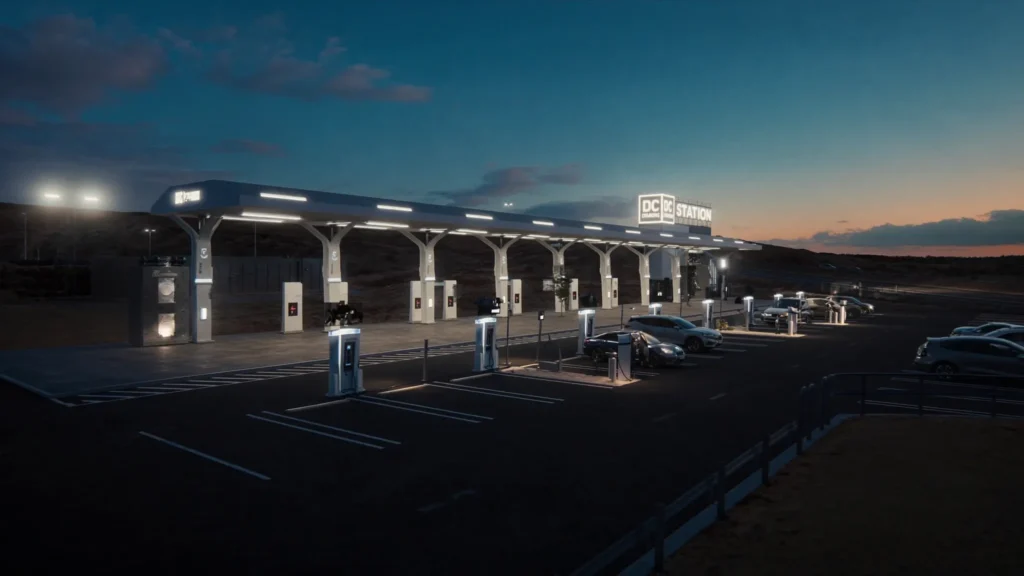
Updated September 2, 2026 · 12 min read
Last updated: August 31, 2026.
If you rely on public charging every week, start with apartment EV charging.
Network access also depends on your plug: see NACS adapter compatibility for which EVs can use Superchargers directly.
Quick answer: the fastest ways to find EV charging stations are your car’s own navigation, the PlugShare app, and the US DOE station locator — then pick by speed: Level 2 for hours-long parking, DC fast (Electrify America, EVgo, Tesla Superchargers) for road trips, at $0.35-0.60/kWh.
Key takeaways
- Over 7 million public EV charging stations operate worldwide; the useful skill is filtering them by plug, speed and price.
- Three finder tools cover everything: in-car navigation, PlugShare, and the DOE’s AFDC locator.
- Major US networks at a glance: Tesla Superchargers (reliability benchmark, now open to most brands), Electrify America (fastest units), EVgo (urban focus), ChargePoint (largest Level 2 footprint), Blink (destination charging).
- Expect $0.35-0.60/kWh at DC fast chargers — a 10-80% session costs $15-25; home charging remains 2-4x cheaper.
- NACS has become the common fast-charging plug; adapters bridge CCS cars today, and new EVs ship NACS-native.
- Road-trip rule: charge 10-80%, not to 100% — the last 20% is slower than driving to the next station.
How to Find EV Charging Stations (Three Tools That Cover Everything)
Searches for EV charging stations near me spike every day, and the answer is simpler than the map chaos suggests. Your car’s navigation should be the first stop: it knows your plug type, filters stations automatically, and — in most 2023+ EVs — preconditions the battery when you navigate to a fast charger, meaningfully speeding the session. PlugShare is the neutral second opinion: crowd-sourced check-ins expose broken stalls before you drive to them, and its filters (plug, power, network, free-only) are the best in class. The US Department of Energy’s AFDC locator rounds out the trio with authoritative coverage and route mapping. Network-specific apps matter mainly for real-time stall availability and payment on that network’s hardware.
| Finder tool | Strength | Use it when |
|---|---|---|
| In-car navigation | Plug-aware, preconditions battery | Every road trip leg |
| PlugShare | All networks, user reliability reports | Scouting unfamiliar areas |
| DOE AFDC locator | Authoritative, route planning | Trip planning, data checks |
| Network apps (EA, EVgo…) | Live stall status, payment, pricing | At or near that network’s site |
The Major EV Charging Networks Compared
Five names dominate US public EV charging stations; knowing their personalities saves real time:
| Network | Type | Typical speed | Known for |
|---|---|---|---|
| Tesla Supercharger | DC fast | 250 kW | The reliability benchmark; most sites now open to non-Tesla EVs via NACS |
| Electrify America | DC fast | 150-350 kW | Fastest hardware, interstate coverage; pricing by kWh |
| EVgo | DC fast | 50-350 kW | Urban/metro focus, grocery-store siting |
| ChargePoint | Mostly Level 2 | 6-19 kW | Largest Level 2 footprint: workplaces, garages, retail |
| Blink | Level 2 + some DC | 7-50 kW | Destination charging: hotels, municipal lots |
Membership math is simple: join the one or two networks you actually pass weekly (memberships cut 10-25% off per-kWh prices), pay-as-you-go everywhere else via plug-and-charge or a contactless card.
Speeds at EV Charging Stations: What the Levels Mean in Minutes
| Station type | Power | 60 kWh pack, 10-80% | Where you meet it |
|---|---|---|---|
| Public Level 2 | 6-19 kW | 3-6 hours | Parking garages, workplaces, shops |
| 50 kW DC (older) | 50 kW | ~50 min | Early networks, some EVgo |
| 150 kW DC | 150 kW | ~25-30 min | Most modern corridor sites |
| 350 kW DC | 350 kW | 18-25 min* | Electrify America flagships |
*Your car sets the ceiling: a vehicle limited to 130 kW gains nothing from a 350 kW stall. The 10-80% convention exists because charging slows sharply above 80% — on road trips, shorter more frequent stops beat charging to full. Home charging economics are a different world entirely; our Level 2 EV charger guide and Tesla home charger guide cover that side.
What EV Charging Stations Cost (and How Billing Works)
| Pricing model | Typical rate | Watch out for |
|---|---|---|
| Per kWh (most fair) | $0.35-0.60 DC / $0.20-0.30 L2 | Peak-hour surcharges on some networks |
| Per minute | $0.15-0.40 | Punishes cars with slower charging curves |
| Per session/hour (L2) | $1-3/hr | Fine for long stays, poor for top-ups |
| Idle fees | $0.40-1.00/min after full | Move the car when the app pings you |
| Free (amenity) | $0 | Usually slower L2; treat as a bonus |
A realistic budget line: relying on fast charging exclusively costs roughly what efficient gasoline does per mile, while home-heavy charging cuts that by 60-75% — the full cost dataset lives on our EV statistics page. That gap is why public stations are best treated as the road-trip and top-up layer, not the daily plan.
Connectors at EV Charging Stations: NACS, CCS, J1772
North America’s plug question is finally resolving. Level 2 remains universally J1772 (Teslas carry an adapter). Fast charging standardized around NACS — the compact Tesla-designed plug adopted by essentially every automaker for new models — while millions of existing cars use CCS, bridged in both directions by adapters that networks and automakers now distribute widely. CHAdeMO survives only for older Nissan Leafs. Practical takeaways: carry your adapter, filter station apps by your plug, and when renting or buying used, check which standard the car speaks before planning a route.
Using a Fast Charger: The Five-Minute Routine
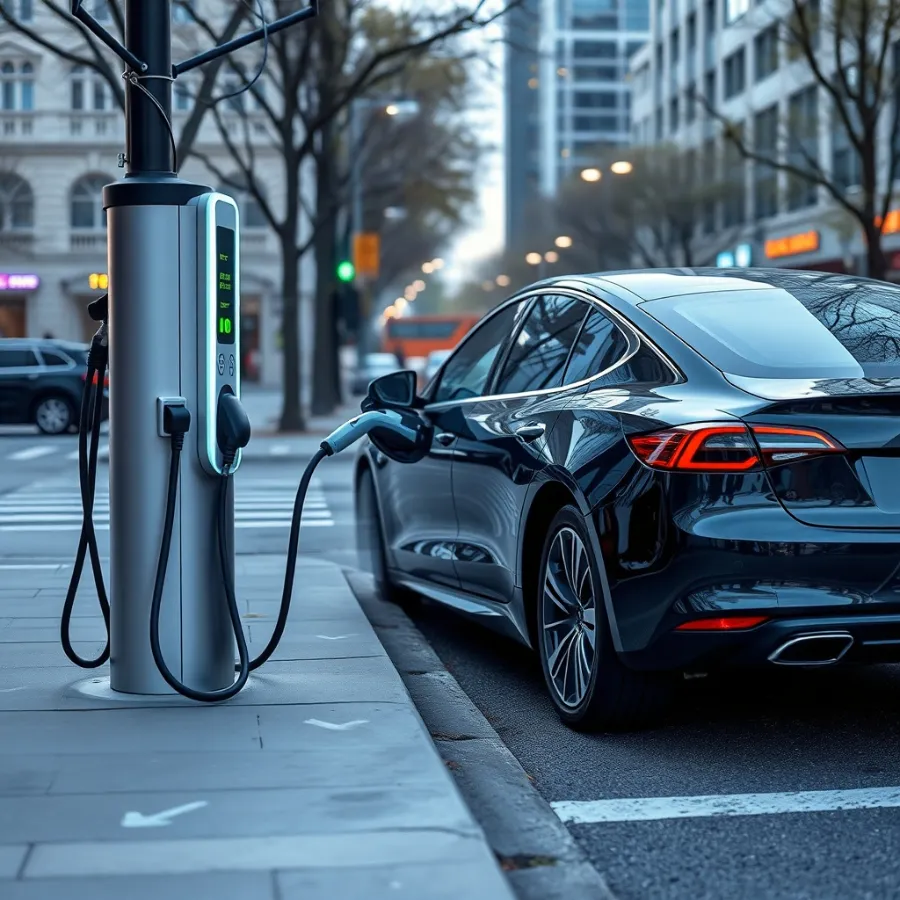
First-timer’s sequence, learned once: navigate to the station in the car (triggers battery preconditioning), plug in before payment (most sessions authorize via app, plug-and-charge, or tap-to-pay), confirm the stall number if the app asks, and watch the first minute — a healthy session ramps quickly toward your car’s peak rate. While charging, the etiquette rules that keep queues civil: don’t occupy a stall past 80% when others wait, never park a non-charging car in a charging bay, and report broken stalls in PlugShare so the next driver skips them. Unplug, holster the cable, and the app emails the receipt.
Road Trips: Planning Around EV Charging Stations
Planning around EV charging stations is gentler math than the anxiety suggests. Plan legs of 2-3 hours (matching human bladder range anyway), target 150 kW+ stations at meal-friendly exits, arrive near 10-15%, and leave at 80%. Buffer rule: always have a reachable second station within range in case of a full or faulty site — PlugShare check-ins make this a ten-second verification. Winter trims range 15-30%, so shorten legs accordingly; preconditioning before each stop claws much of the speed back. The corridor build-out is the fastest-improving part of the entire EV story — the network grew by a third globally just last year, as the numbers on our statistics page show.
Reliability: The Real Ranking of EV Charging Stations
Uptime, not speed, decides how EV charging stations feel to use — and the spread between networks is wide. Tesla’s Supercharger network set the standard the industry now chases: multi-stall sites, remote monitoring, and a decade of iteration produced the dependability that made “just Supercharge it” a routine sentence. Legacy CCS networks spent 2023-2025 in a reliability reckoning — federal funding began requiring 97% uptime reporting, and the difference shows: newer sites carry more stalls, tap-to-pay terminals replaced flaky app-only flows, and plug-and-charge (the car authenticates itself) is spreading across brands.
The practical driver-side playbook: prefer sites with six or more stalls (one broken unit matters less), check the last three PlugShare check-ins before committing, and keep two networks’ payment methods ready. Treat any single-stall rural charger as a bonus, never a plan.
| Reliability signal | What it tells you |
|---|---|
| Recent PlugShare check-ins | Ground truth beats any status API |
| Stall count ≥6 | Redundancy against broken units and queues |
| Tap-to-pay terminal | Session works even when the app doesn’t |
| Site age | Post-2024 builds run newer, better-monitored hardware |
The Build-Out: Where New EV Charging Stations Are Appearing
The station map is not static — it is the fastest-changing infrastructure layer in transport. Globally, public charging grew by roughly a third in a single year to more than 7 million points. In the US, corridor fast charging is filling in along interstates (federal NEVI-funded sites require 150 kW minimums and four stalls), while retail chains — groceries, big-box stores, fast food — race to add chargers because a charging customer is a browsing customer for twenty minutes. The pattern to expect over the next few years: fewer lonely two-stall sites, more 8-16 stall plazas with canopies, restrooms and food, sited where people already stop.
Rural coverage remains the honest gap — sparse traffic supports fewer sites, which is exactly where trip buffers and the AFDC locator earn their keep. Urban dwellers face the opposite issue: plenty of stations, competition for stalls at peak hours, which is why overnight home or workplace charging — where available — still beats any public option; our EV charging at home guide covers the apartment workarounds.
Beyond Cars: Stations for Everything Else
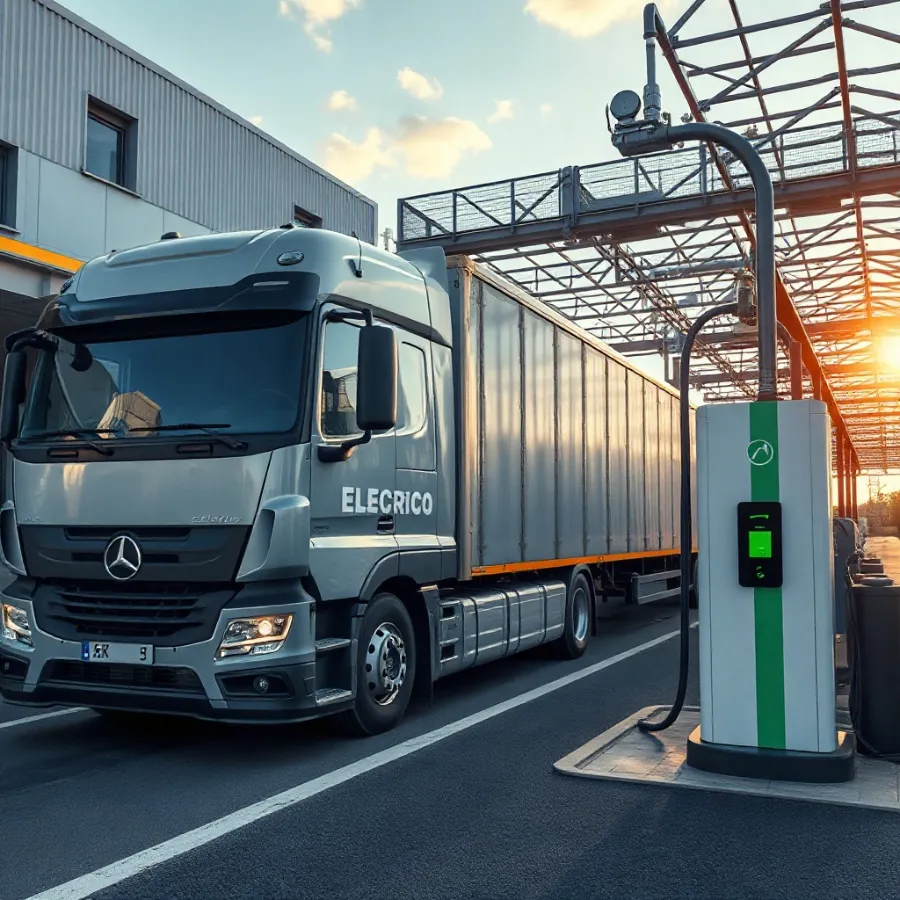
The same infrastructure wave is electrifying larger vehicles. Fleet depots quietly host some of the biggest charging installations anywhere; transit agencies run megawatt-scale overnight yards; and the first public megawatt-class stations for heavy trucks are appearing on freight corridors — the truck-charging standard designed for 1+ MW sessions is covered in our megawatt charging for trucks explainer. For drivers, the visible effect is convergence: truck-stop chains adding car-speed stalls alongside future truck bays, turning familiar fuel plazas into mixed charging hubs.
Network Nuances: What Regulars Know About Each
Beyond the comparison table, each network’s EV charging stations have personality quirks that regulars exploit. Tesla Superchargers: the app shows per-stall availability before you commit, pricing drops at off-peak sites, and non-Tesla drivers should check stall geometry — cable reach favors left-rear charge ports, so nose-in parking sometimes works better for CCS-adapter cars.
Electrify America: the 350 kW “Hyper-Fast” stalls are worth walking past a free 150 kW unit for if your car can use them; Pass+ membership pays for itself at roughly two sessions a month.
EVgo: urban sites mean shorter cables and tighter bays, but also the best odds of a charger inside a parking garage on a rainy day; their reservation feature in select metros removes queue anxiety entirely.
ChargePoint: because most of its EV charging stations are workplace and garage Level 2 units owned by the property, pricing swings from free to steep between neighboring sites — the app shows the tariff before you tap.
Blink: destination-heavy and variable-speed; treat any listed kW as a ceiling, not a promise.
Across all networks, one universal habit separates smooth trips from stressful ones: start sessions through the app rather than the stall screen when both are offered — app sessions recover from glitches with a tap, while screen-initiated ones sometimes need a support call to release the connector.
These small edges compound on road trips: picking the right stall at the right network’s EV charging stations routinely saves 10-15 minutes per stop — an hour on a long travel day, for free.
Seven Ways to Pay Less at EV Charging Stations
| # | Tactic | Typical saving |
|---|---|---|
| 1 | Join the 1-2 networks you pass weekly | 10-25% off per kWh |
| 2 | Charge 10-80%, skip the slow top | Time = money; ~30% shorter sessions |
| 3 | Use off-peak windows where priced | Up to 30% on some networks |
| 4 | Prefer per-kWh sites over per-minute | Large for slower-charging cars |
| 5 | Hunt free destination L2 (hotels, shops) | 100% of that session |
| 6 | Check automaker bundles | Many new EVs include 1-3 years of network credits |
| 7 | Leave promptly at 80% | Avoids $0.40-1.00/min idle fees |
The single biggest saving stays structural: shifting routine charging home or to workplace L2 and reserving public EV charging stations for trips — the cost gap compounds to hundreds of dollars a year.
Winter at Public EV Charging Stations
Cold changes the public-charging experience more than any spec sheet admits. A cold battery accepts DC power slowly — sessions that take 22 minutes in summer can run 40+ in a freezing car park. Two habits restore most of the loss: navigate to the station in the car (triggering battery preconditioning, which can halve cold-session times), and charge immediately after driving while the pack is warm rather than after an overnight freeze. Plan winter road-trip legs 20-30% shorter, favour indoor or canopy-covered EV charging stations where queues form out of the wind, and carry the cable gloves — small comforts that turn January trips from ordeal to routine.
Myths About EV Charging Stations, Tested Against the Data
“There aren’t enough chargers.” Globally, public points passed 7 million and grew ~33% in one year; US corridor gaps are closing under federal minimum-standards funding. Coverage anxiety is increasingly a map-reading problem, not an infrastructure one.
“Public charging takes hours.” Only Level 2 does — by design, for parked hours. Modern fast stalls take most EVs 10-80% in 20-40 minutes, about the length of a meal stop.
“Fast charging ruins the battery.” Occasional road-trip fast charging has negligible measured effect; only sustained fast-charge-only living adds meaningful wear, per fleet degradation data in our EV battery health guide.
“Stations are always broken.” A 2022-era truth that funding rules and competition are fixing: uptime requirements, tap-to-pay retrofits and multi-stall builds have visibly improved the numbers — and PlugShare check-ins let you verify any specific site in seconds.
Safety and Accessibility at Charging Stops
Two practical dimensions worth one minute of thought. Safety at night: prefer EV charging stations sited at staffed locations (travel plazas, supermarkets) over isolated back-lot units after dark — the networks’ own siting is trending that way, and PlugShare photos show the lighting situation before you commit.
Accessibility: newer federally funded sites must meet accessible-design standards (wider bays, reachable screens, cable management), but older stalls vary widely; drivers who need accessible bays can filter for them in the major apps, and the difference between generations of hardware is visible in site photos.
Neither issue should scare anyone off — both simply reward the same thirty-second app check that already guards against broken stalls.
Charger reliability is the real successor to range worry — our EV range anxiety guide explains that shift and how to plan around it.
For the best tools to actually find a working station, see our electric car charging stations map guide.
New to the terminology? See fast charging explained for the basics before choosing a network.
Networks vary by connector too — see our EV charging standards guide before a long trip.
Pricing varies by model, not just network — see our public EV charging cost guide before your next trip.
Frequently Asked Questions
How do I find EV charging stations near me?
Three reliable ways: your car\u0027s built-in navigation (filters to compatible plugs automatically), the PlugShare app (crowd-verified, all networks), and the US DOE\u0027s AFDC station locator. Network apps like Electrify America and EVgo add real-time stall availability for their own chargers.
Are EV charging stations free?
Some Level 2 stations at shops, hotels and workplaces are free as an amenity. DC fast charging is almost never free — expect $0.35-0.60 per kWh, roughly 2-4x home electricity rates.
How much do public EV charging stations cost to use?
Typical US pricing: public Level 2 runs $0.20-0.30/kWh or $1-3/hour; DC fast charging runs $0.35-0.60/kWh. A 10-80% fast-charge session on a 60 kWh pack usually lands between $15 and $25.
How long does charging take at public EV charging stations?
Level 2 stations add ~20-60 km of range per hour — suited to hours-long parking. DC fast chargers take most modern EVs from 10% to 80% in 20-40 minutes, depending on the car\u0027s peak charging rate.
Do all EVs use the same charging stations?
Increasingly yes. Every North American EV can use J1772 Level 2 stations; fast charging splits between NACS (Tesla-style, now adopted industry-wide) and CCS, bridged by adapters. Only CHAdeMO (older Nissan Leafs) is fading out.
How many EV charging stations are there?
Over 7 million public charging points existed worldwide at the end of 2025, with about 1.8 million added that year alone. China hosts roughly 65% of them; the US network is growing fastest along interstate corridors.
Sources and Further Reading
Related Posts
Leave a Comment
Your comment will be published after it has been approved. Please send comments that do not contain slang words.