
Cold Weather EV Battery Guide (2026): Real Range Loss and Fixes
Updated September 18, 2026 · 10 min read
Last updated: September 1, 2026
Quick answer: EV battery performance drops in cold weather for two reasons: lithium-ion chemistry slows below about 5°C, and cabin heating steals energy that would otherwise move the car. Real-world EV battery performance data from Recurrent’s 30,000-vehicle study shows EVs keep 78% of their range on average at freezing (32°F/0°C) — 83% with a heat pump, 75% without. The loss is temporary: range returns fully when temperatures rise, and none of it damages the battery.
Key takeaways
- Average winter range loss at freezing is ~22%; the spread across models runs from ~12% to ~37%.
- A heat pump is the single most important cold-climate spec — roughly 10% more winter range than resistive heating.
- Preconditioning while plugged in recovers most of the everyday penalty; it is a settings change, not a purchase.
- DC fast charging slows significantly on a cold battery — battery preheating before a charging stop matters more than any other road-trip habit.
- Cold does not damage the battery; it is heat and constant 100% charging that age cells.
Why Cold Weather Cuts EV Battery Performance: The Two Real Mechanisms
1. The chemistry slows down
Inside every lithium-ion cell, ions swim through a liquid electrolyte between electrodes. Cold thickens that electrolyte and slows the reactions: internal resistance climbs, usable capacity dips, and the battery management system widens its safety margins. Below roughly −7°C (20°F) the pack may also spend energy warming itself just to operate safely. This part of winter EV battery performance loss is physics, applies to every phone and laptop too, and fully reverses when the pack warms.
2. Heating the cabin costs miles
A gasoline car heats its cabin with free waste heat — the engine throws away enough to warm a house. An EV wastes so little energy that it must generate cabin heat on purpose, spending 3–7 kW on a cold day. Over an hour of driving that is 3–7 kWh — a tenth or more of a typical pack — which is why short city trips in winter show the scariest efficiency numbers: the cabin never stops being reheated relative to miles covered.
The Real Numbers: EV Battery Performance in Winter, by the Data
The best public EV battery performance dataset is Recurrent’s ongoing winter study of over 30,000 US vehicles, which measures observed range rather than lab claims:
| Situation at 32°F / 0°C | Range retained | Range lost |
|---|---|---|
| Fleet average (all models) | 78% | 22% |
| Models WITH a heat pump | 83% | 17% |
| Models WITHOUT a heat pump | 75% | 25% |
| Best performers | ~88% | ~12% |
| Worst performer in study (VW ID.4 without heat pump) | ~63% | ~37% |
Two illustrative pairs from the same study: a Tesla Model 3 with a heat pump loses about 13% of real-world range in the cold; the same model without one loses about 21%. That is the heat-pump dividend in a single car. Deep cold (−15°C and below) pushes every number further down — plan on roughly 60–70% of rated range for highway trips in severe cold, whatever the badge.
Set against the range fundamentals and the range-anxiety question, the practical reading: winter does not make EVs unusable, it makes the spec sheet optimistic by a fifth, and EV battery performance recovers the moment spring arrives. Buy range with winter in mind and the problem disappears into routine.
The Heat Pump: The One EV Battery Performance Spec That Matters
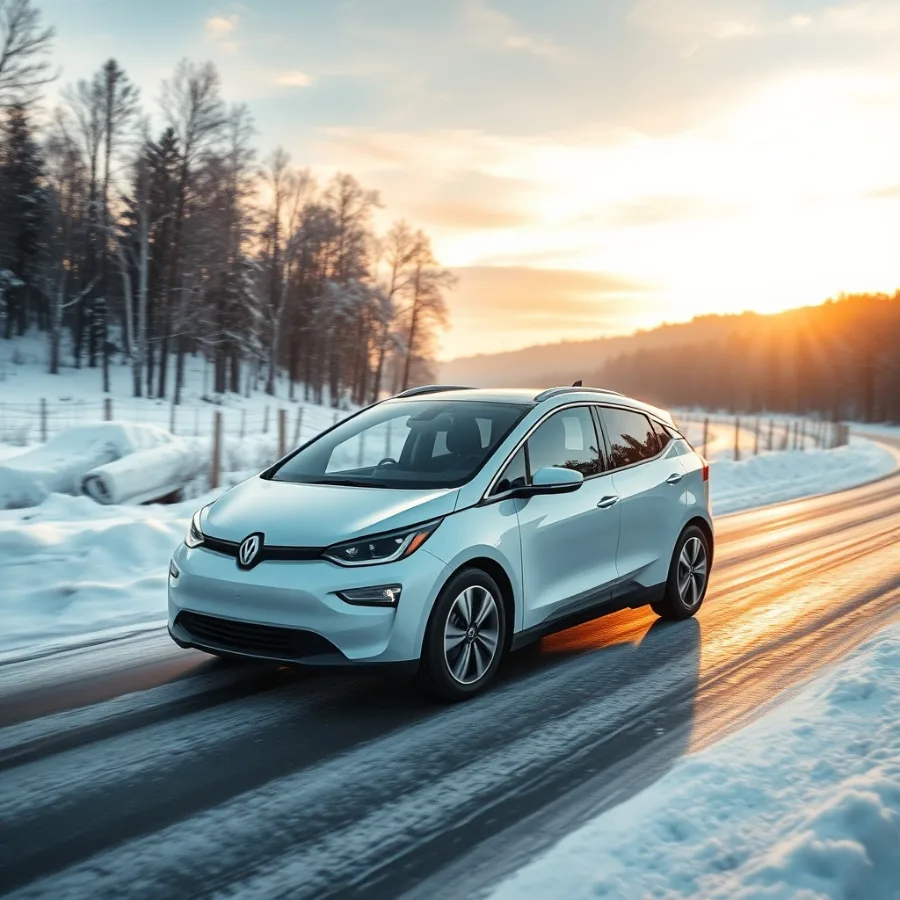
For EV battery performance in winter, a heat pump changes the equation: it moves heat instead of generating it — the same trick as a refrigerator run backwards — delivering 2–3 units of cabin heat per unit of electricity, versus 1:1 for a resistive heater. The ~10% winter range advantage in the data above is why nearly every serious EV redesign since 2021 added one (Tesla from 2021, Hyundai/Kia on most trims, VW as an option, and standard on most premium models).
Buying advice in one line: in any climate that sees frost, treat a heat pump as required equipment — check the spec sheet, because several brands still gate it behind trim levels or cold-weather packages.
Nine Ways to Reclaim EV Battery Performance in Winter
- Precondition while plugged in. Warm the cabin and battery on wall power before departure — every EV app schedules this. It converts the biggest single loss into a non-event and is the closest thing to a free lunch in winter driving.
- Use seat and wheel heaters first. Heating bodies costs ~100 W; heating air costs thousands. Cabin at 18°C plus warm seats beats 23°C air for range every time.
- Slow down modestly on the highway. Aerodynamic drag rises in dense cold air; 105 km/h instead of 120 recovers a surprising share of lost kilometers.
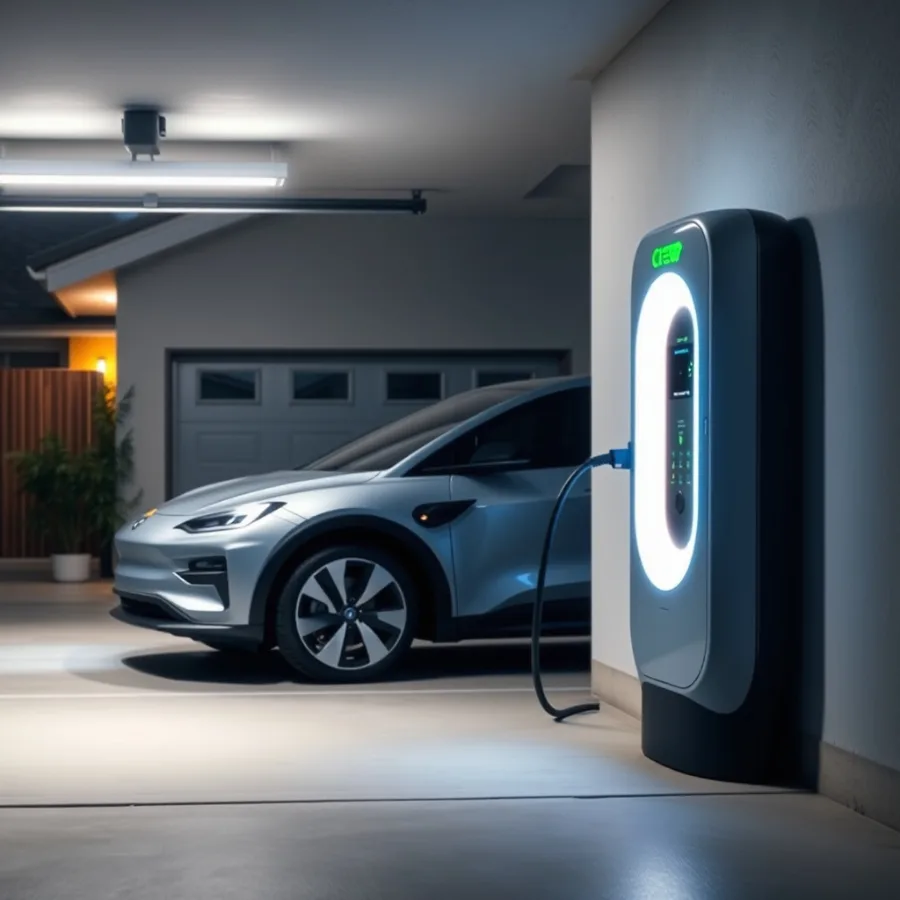
- Keep charge between 20–80% and plug in nightly. A plugged-in car can warm its own pack without spending range — and you leave every morning with a warm, full-enough battery. Home setup details are in our home charging guide.
- Preheat the battery before fast charging. Navigate to the charger in the car’s own navigation (or trigger battery preheat manually where offered): a cold pack may fast-charge at half speed or slower, turning a 25-minute stop into an hour.
- Park inside when possible. A garage at 5°C instead of −15°C outside is worth real range and faster warm-ups.
- Check tire pressure monthly. Pressure falls with temperature; soft tires add rolling resistance on top of everything else.
- Use eco/chill modes and expect less regen. Regenerative braking is limited on a cold pack (the dashboard usually shows it); gentler driving compensates until the battery warms.
- Plan road-trip charging stops closer together. Winter is when the 10% buffer becomes a 25% buffer — our charging stations guide covers pricing and reliability by network.
Cold Charging: What Slows Down and Why
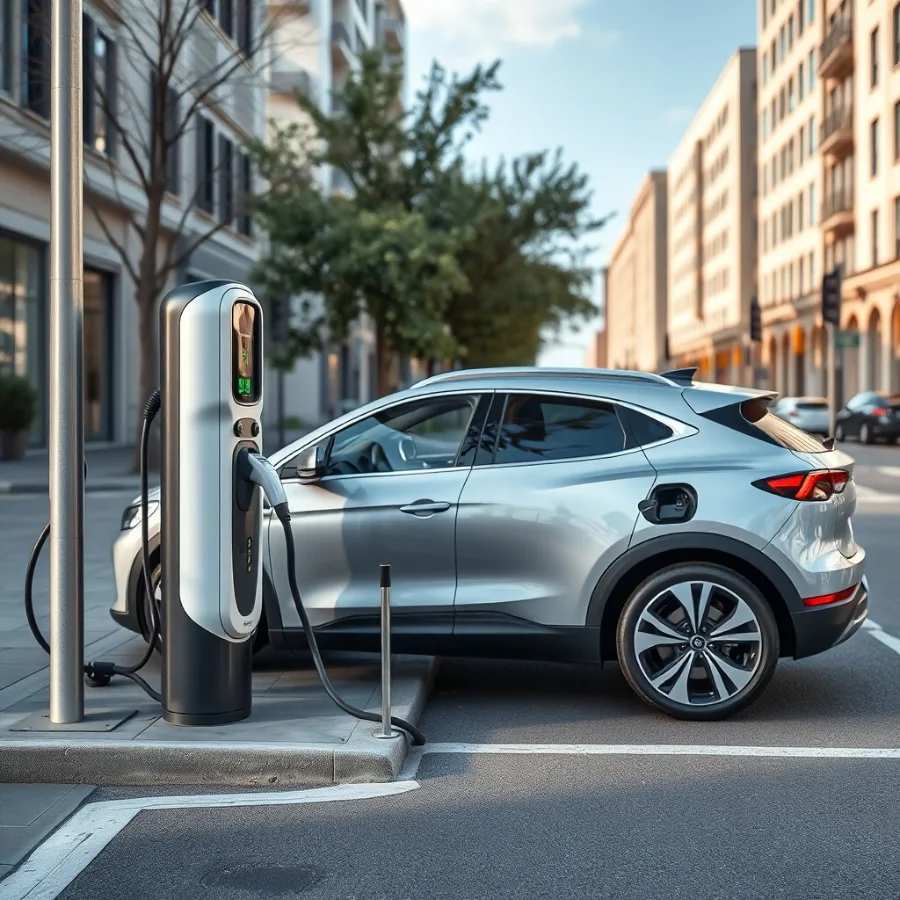
Cold charging is where EV battery performance protection gets strict: charging a cold battery is chemically risky — force lithium in too fast and it plates as metal instead of intercalating, permanently costing capacity. The battery management system therefore throttles charging until the pack warms:
| Charging type | Warm battery | Cold-soaked battery | Fix |
|---|---|---|---|
| Level 1 (wall socket) | Slow | Slower still — some energy warms the pack | Acceptable overnight; plug in immediately after driving |
| Level 2 (home/work) | Full speed | Mildly reduced at first | Nightly plug-in; scheduled charging near departure |
| DC fast charging | Full curve | Can start at 30–50% of normal power | Battery preheat en route — the single best road-trip habit |
None of this throttling harms the car — it is the protection working. The habit that DOES age a pack in winter: repeatedly fast-charging a frozen battery on cars without preheating, which is one reason preheat features spread across the industry so quickly.
Does Cold Damage EV Battery Performance Long-Term? (No — Here Is What Does)
Myths about EV battery performance in the cold deserve a direct answer. Cold temporarily reduces performance; it does not degrade cells — if anything, batteries age slower in cold climates because heat is the true enemy of longevity. What actually accelerates aging: sitting at 100% charge for days, frequent DC fast charging on a cold pack without preheat, and sustained high temperatures. EV battery performance data from fleets consistently shows northern EVs aging no faster than southern ones — often slower. For the chemistry that eventually changes this whole conversation, see our solid state battery guide — solid electrolytes tolerate cold differently and are being engineered for wider temperature windows.
Shopping for Winter: The EV Battery Performance Checklist
If you are choosing an EV for a cold climate, five spec-sheet lines predict winter EV battery performance better than any brand reputation:
- Heat pump — required. The 10% winter dividend from the fleet data above. If a trim does not list it, price the next trim before compromising.
- Battery preheating you can trigger. Automatic preheat when navigating to a fast charger is now common; manual preheat (a button, not just navigation) is better still for road trips and third-party chargers.
- Real usable range with a third lopped off. Take the rated range, multiply by 0.7, and ask whether your worst winter week still fits comfortably. If yes, EV battery performance in January will never be a conversation in your house.
- A genuine winter test result. Norwegian and Canadian outlets run standardized cold-range tests every year on dozens of models; twenty minutes of reading beats every brochure claim.
- Heated seats, wheel — and ideally a heated windshield. Every watt of targeted heating displaces kilowatts of air heating; the windshield version also removes the one chore preconditioning cannot fully do outdoors.
Used-EV shoppers get one bonus check: a battery health report (state-of-health above ~90% for a 3-4 year old car is normal) — cold amplifies whatever capacity loss already exists, so a tired pack shows its age first in February. Our cheapest electric cars guide covers which budget models still include the winter-critical equipment, and for the market context see EV statistics — cold-climate countries lead adoption, which is the strongest real-world vote that winter EV battery performance is a managed problem, not a dealbreaker.
The Winter Morning Routine That Fixes 80% of It
Most winter EV battery performance complaints trace to one scenario: an unplugged car, cold-soaked overnight, asked to do everything at once at 7:45. The routine that prevents it takes two minutes to set up in the app and then runs itself:
- The night before: plug in — even if the battery is at 60%. A plugged-in car draws warmth from the wall, not the pack.
- Set departure time once. The car finishes charging near your leave time (a freshly charged battery is a warm battery) and preconditions the cabin on wall power.
- Walk out to a warm car with full regen. No scraping, no range hit for the first blast of heat, and EV battery performance that looks like October instead of January.
Contrast the two mornings in numbers, for a typical 60 kWh commuter car at −5°C on a 40 km round trip:
| Cold-soaked, unplugged | Preconditioned on wall power | |
|---|---|---|
| Cabin heat source | Battery (worst moment: full blast at start) | Grid electricity before departure |
| Regenerative braking | Limited for the first kilometers | Mostly available immediately |
| Effective consumption on trip | Can run 40–50% above summer | Typically 15–25% above summer |
| Wear factor | Cold-charge throttling if you top up after | None — pack warmed before charging |
One regional footnote: in genuinely severe climates (interior Canada, upper Midwest, northern Scandinavia) block-heater culture translated to EVs seamlessly — garages, timers and plugs everywhere — which is a large part of why Norway, hardly a warm country, leads the world in EV adoption. Cold is a solvable logistics problem, not a physics veto, and strong EV battery performance in winter is mostly the reward for one habit: keep it plugged in.
Parking unused through winter? Our EV battery storage tips cover the 50% rule and plugged-in habits.
Grid cleanliness matters year-round, not just in winter — see our EV emissions renewable energy guide.
Winter performance is temporary; long-term degradation is a separate question — see our EV battery life guide.
Winter EV Battery Performance FAQ
How much range does an EV lose in winter?
On average about 22% at freezing (32F/0C), based on Recurrent’s 30,000-vehicle real-world study. Heat-pump cars average a 17% loss, resistive-heater cars 25%, and the spread across models runs from roughly 12% to 37%. Deeper cold costs more.
Does cold weather permanently damage an EV battery?
No. Cold temporarily slows the chemistry and reduces range, but capacity returns with warmth. Long-term degradation is driven by heat, time spent at 100% charge and abusive fast charging – which is why cold-climate EVs often age slower than hot-climate ones.
Is a heat pump worth it on an EV?
In any climate with real winters, yes – it is the single most effective cold-weather spec, worth roughly 10% of winter range in fleet data (83% vs 75% range retention at freezing). Check trim levels: some brands still sell it as an option.
Why does my EV charge so slowly in the cold?
To protect long-term EV battery performance, the battery management system limits current into a cold pack to prevent lithium plating, which would permanently cost capacity. Preheating the battery – automatic when you navigate to a fast charger on most EVs – restores normal charging speeds.
Should I warm up my EV before driving in winter?
Yes, but while plugged in. Preconditioning from wall power warms the cabin and battery without spending range, restores full regenerative braking sooner, protects EV battery performance and is scheduled in every EV app. Warming up unplugged spends range for comfort.
Which EVs handle winter best?
The pattern beats the badge: models with heat pumps, battery preheating and good thermal management lead every winter test. The best cars in Recurrent’s data keep about 88% of range at freezing; the worst, without heat pumps, keep about 63%.
Related Guides on ZeroCarbonDrive
- How to improve EV driving range — the all-season version of these tactics
- Level 2 EV charger guide — the home setup that makes winter easy
- Solid state battery vs lithium-ion — the chemistry that widens the temperature window
Sources and Further Reading
- Recurrent — Winter EV range loss study (30,000+ vehicles)
- fueleconomy.gov — Fuel economy in cold weather
- US DOE AFDC — Electric vehicle basics
Every figure on this page is dated and linked to its source. How we verify · Editorial policy · Report a correction
Related Posts
Leave a Comment
Your comment will be published after it has been approved. Please send comments that do not contain slang words.