
EV Battery Storage Tips (2026): The Long-Term Parking Guide
Updated September 18, 2026 · 5 min read
Last updated: September 1, 2026
Quick answer: The best EV battery storage tips for a car sitting unused — a season, a deployment, a long trip — boil down to one number: park it at 50% charge, not full and not empty. Leave it plugged in if you can (the car will self-manage), avoid extreme temperatures, and if it truly cannot be plugged in, check the charge level every 4-6 weeks. Do this and a modern EV loses almost nothing sitting still; ignore it and the two real risks — deep-discharge damage and 12V battery death — become real.
Key takeaways
- 50% charge is the sweet spot for long-term storage — both 100% and 0% accelerate calendar aging.
- Plugged-in storage is always safer than unplugged: the car manages its own health silently.
- The small 12V battery, not the traction pack, is what actually fails during long storage — it has no cell-balancing help.
- Extreme heat ages a parked battery faster than cold does; shade and ventilation matter more than a heater.
The Core EV Battery Storage Tip: Charge Level Matters More Than Anything
Lithium-ion cells age fastest at their voltage extremes. Sitting for weeks at 100% keeps the cathode under high stress; sitting at 0% risks the cell dropping below its safe voltage floor, which can cause damage the battery management system cannot always recover from. 50% sits in the chemically gentle middle — low stress, safe margin above the floor, and it is the storage level automakers themselves specify in owner’s manuals for exactly this reason.
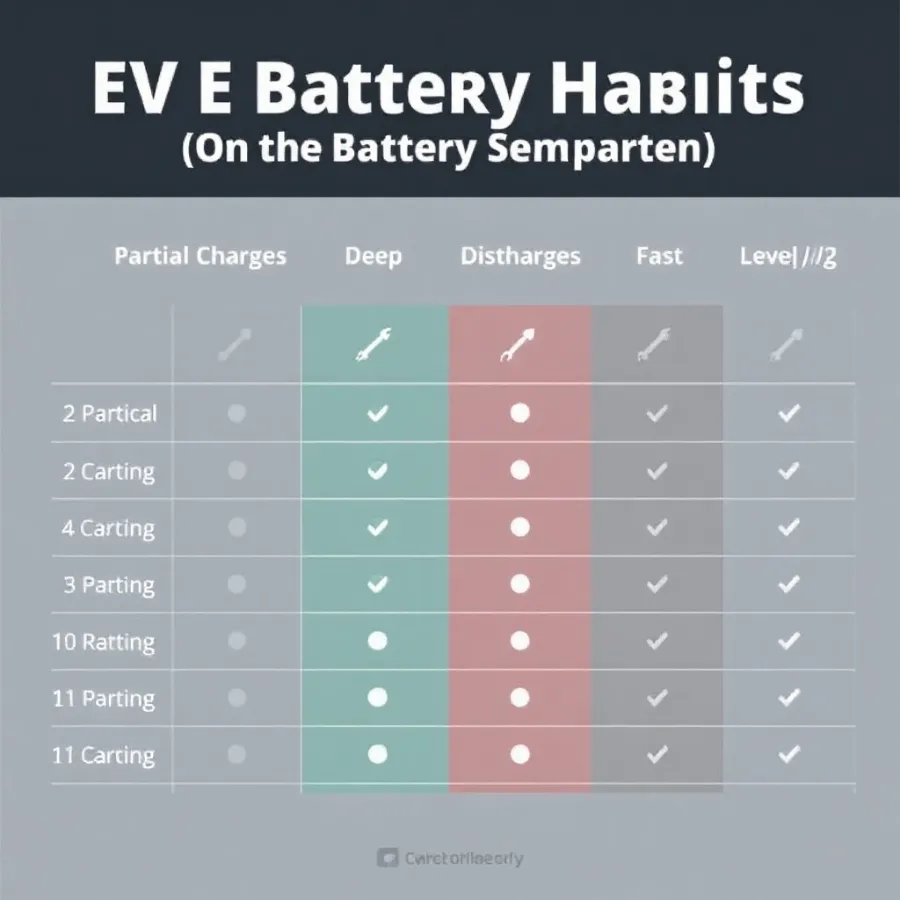
| Storage duration | Recommended charge | Check-in frequency |
|---|---|---|
| Under 2 weeks | Whatever it’s at — no action needed | None |
| 2–8 weeks | 40–60% | Plug in once if unplugged storage; otherwise none |
| 2–6 months | ~50% | Every 4–6 weeks if unplugged |
| 6+ months | ~50%, plugged in strongly preferred | Monthly if unplugged; consider a trickle maintainer for the 12V |
Plugged In vs Unplugged: Why It Matters So Much
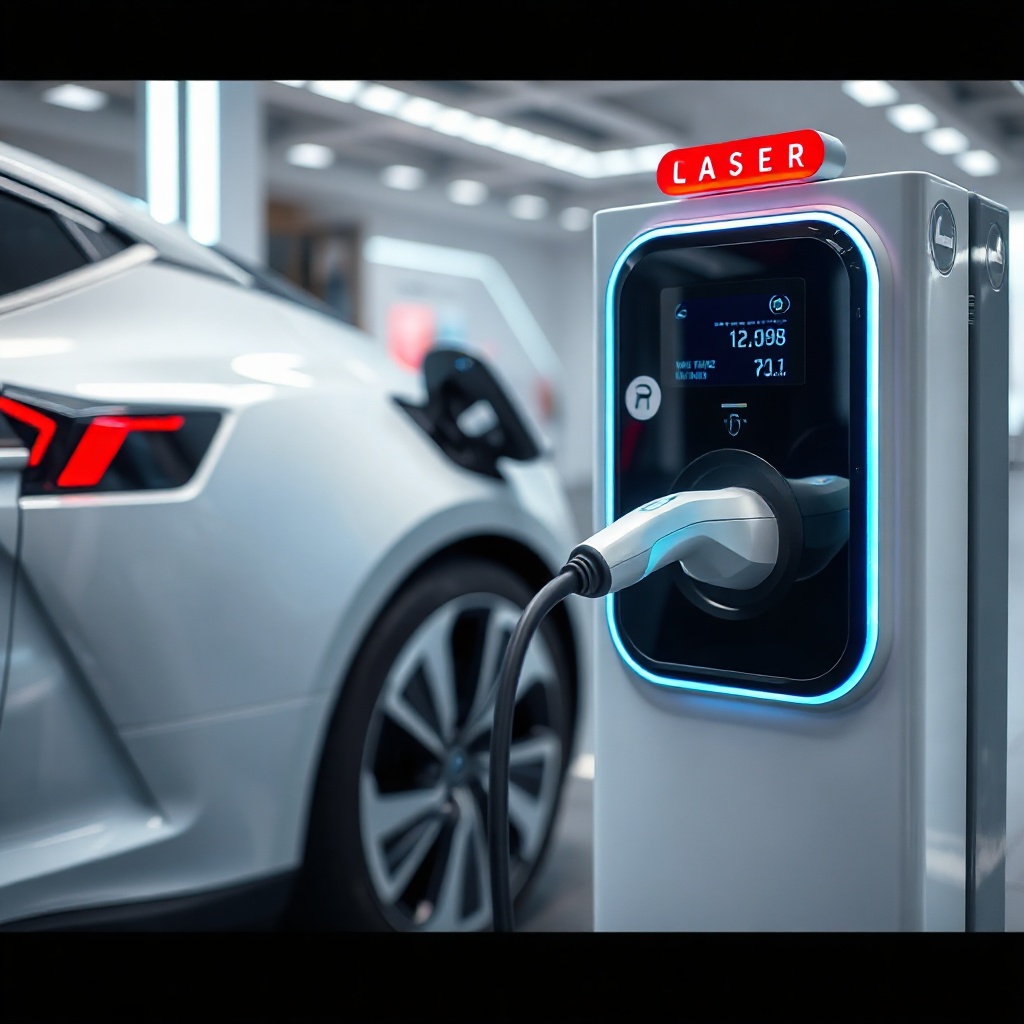
The single best EV battery storage tip is the simplest: leave it connected to a charger, even at low amperage. A plugged-in car does three things automatically that an unplugged one cannot:
- Maintains the 12V battery. Every car — gas or electric — has a small 12V battery running the computers, alarm and locks. It drains slowly even when “off,” and a plugged-in EV tops it up from the big pack; an unplugged EV cannot, and a dead 12V strands the car regardless of how much traction-battery charge remains.
- Thermal management stays active. In extreme heat or cold, the car can condition the pack using wall power instead of spending its own charge or, worse, doing nothing.
- Prevents the slow drain from ever reaching a risky level. Vampire drain (security systems, cellular connectivity, sentry-mode-style features) is real even parked — a few percent a month on most EVs, more with always-on features enabled.
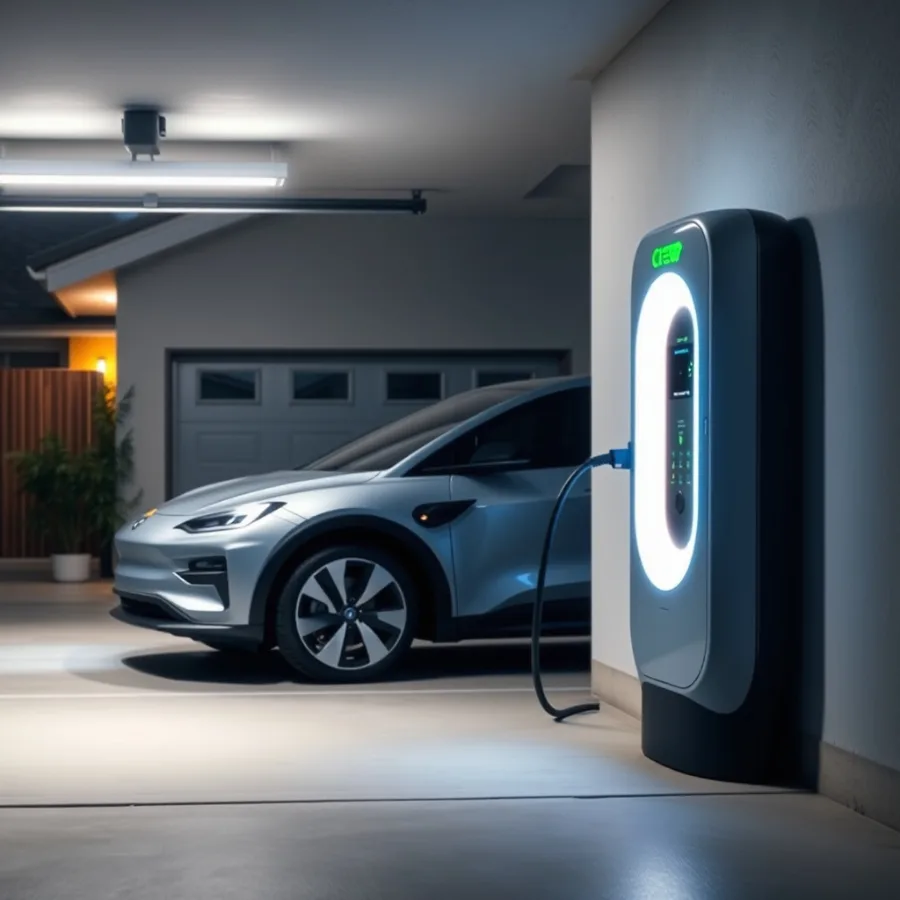
If a plug genuinely is not available (street parking, an airport lot, deployment overseas), disable convenience drains you can live without — sentry/camera modes, cellular connectivity, scheduled preconditioning — before you leave, and set a calendar reminder for the 4-6 week check-in.
Temperature: The Second Lever
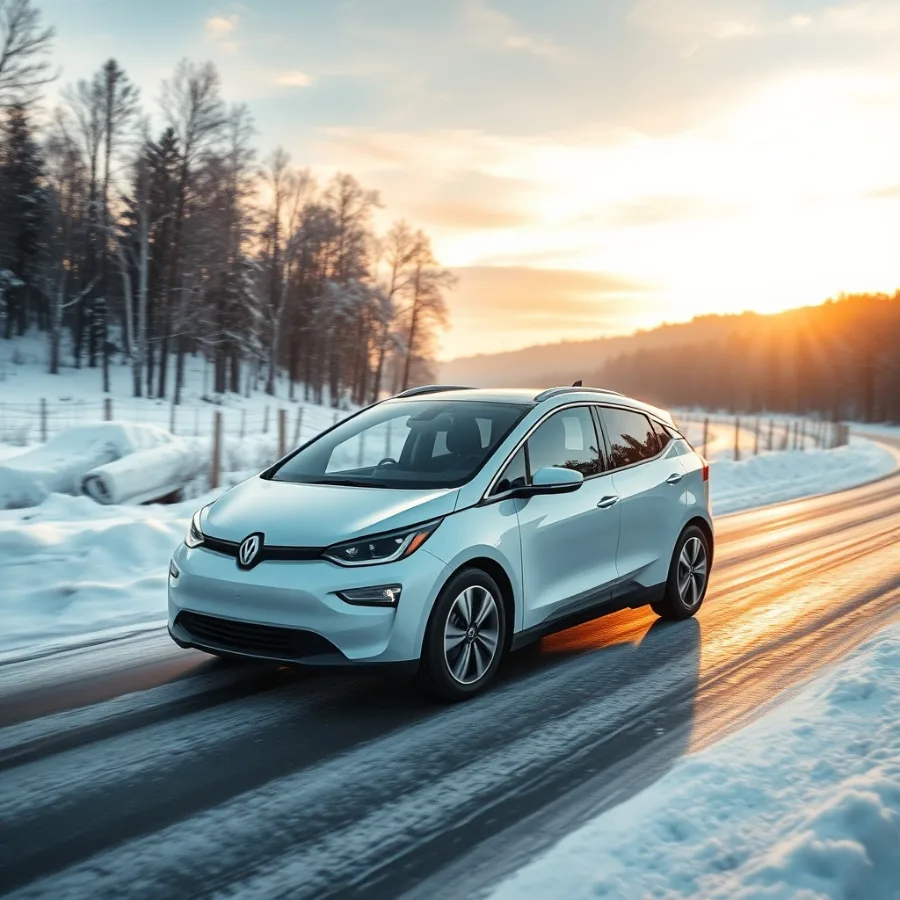
Heat ages batteries faster than cold does, contrary to most owners’ intuition. A car stored in a hot, sunny driveway all summer works its battery management system harder and stresses cells more than one stored in a cold garage — the practical EV battery storage tip is shade or a garage over any heater or warmer. Extreme cold is not damage-free either: it slows the chemistry and can, in unplugged storage, push a marginal charge level closer to the dangerous floor, which is one more reason winter storage benefits from starting at 50-60% rather than 40%.
Seasonal and Special Cases
- Second (garage) car driven rarely. Treat it like long-term storage even if it is “available” — set it to 50-60% via the app’s charge limit and let it be. Modern EVs support scheduled charge limits precisely for this.
- Military deployment or extended travel. Plug in if any outlet is accessible, even a basic wall socket at low amperage; it beats unplugged storage even at full trickle speed. Ask a neighbor to glance at the dashboard once a month if you cannot check remotely via the app.
- Winter storage of a seasonal vehicle. Combine the 50% rule with the cold-weather notes in our winter battery guide — a plugged-in car in a garage is close to the ideal case.
- Reselling or storing before a sale. Buyers increasingly ask for a battery health report; storage at the correct level in the weeks before a sale protects the number they will see.
What NOT to Do
- Do not store at 100% “to have it ready” — the small convenience is not worth the calendar-aging cost over weeks.
- Do not run it to 0% and walk away — the most damaging mistake in this whole topic, and the hardest to reverse.
- Do not disconnect the 12V battery as a “storage hack” unless the manual explicitly supports it for your model — on many EVs this confuses the computer more than it helps.
- Do not assume “it’s electric, it doesn’t need anything” — the single most common wrong belief behind dead-battery tow calls after long storage.
Good storage habits protect the same long-term health — see our EV battery life guide for the full degradation curve.
EV Battery Storage Tips FAQ
What charge level should I store an EV battery at?
Around 50%. Both full and empty accelerate calendar aging in lithium-ion cells; 50% is the chemically gentle middle ground and what most manufacturers specify in owner’s manuals for extended storage.
Should I leave my EV plugged in during long-term storage?
Yes, whenever possible. A plugged-in car maintains its 12V battery, keeps thermal management active, and prevents slow vampire drain from ever reaching a risky level. Unplugged storage needs a manual check every 4-6 weeks instead.
What actually fails when an EV sits unused too long?
Usually the small 12V battery, not the main traction pack – it drains slowly with no help from the big battery if unplugged, and a dead 12V strands the car regardless of remaining charge. Deep-discharge damage to the main pack is rarer but more serious.
Is it bad to store an EV in the cold?
Less bad than heat, generally, but not risk-free: cold slows the chemistry and can push a marginal charge level toward the dangerous floor in unplugged storage. Start colder-climate storage a bit higher, around 55-60%.
How often should I check on a stored EV?
If plugged in, rarely – the car manages itself. If unplugged, every 4-6 weeks, checking the app or dashboard and topping up toward 50% if the level has drifted low.
Will long-term storage hurt my EV’s resale value?
Only if done wrong. Storing at 100% or letting it drain to 0% can measurably affect battery health reports buyers now request. Storing at 50%, ideally plugged in, protects the number a future buyer will see.
Related Guides on ZeroCarbonDrive
- Electric vehicle maintenance — the day-to-day care routine
- EV battery performance in winter — cold-weather operation, not just storage
- Second life EV batteries — what happens after the pack retires
Sources and Further Reading
Every figure on this page is dated and linked to its source. How we verify · Editorial policy · Report a correction
Related Posts

Leave a Comment
Your comment will be published after it has been approved. Please send comments that do not contain slang words.