
Second Life EV Batteries (2026): Where Retired Packs Go Next
Updated September 18, 2026 · 5 min read
Last updated: September 1, 2026
Quick answer: An EV battery “dies” for driving long before it dies for good — most packs are retired from cars around 70–80% of original capacity, still holding decades of useful life for jobs that do not need a full charge in five minutes. Second life EV batteries now stabilize solar and wind farms, back up buildings, and power warehouses worldwide, delaying recycling by 5–10 years and stretching the value out of every cell manufactured.
Key takeaways
- A pack too degraded for a car (below ~70-80% capacity) is often ideal for stationary storage, which barely cycles and rarely needs high power.
- Grid and commercial storage projects using retired EV packs are already operating at meaningful scale — this is deployed technology, not a lab concept.
- Second life delays, but does not replace, recycling — batteries eventually reach true end-of-life and go to material recovery.
- Falling new-battery prices are the industry’s biggest headwind: repurposing must stay cheaper than buying fresh cells to make economic sense.
Why an EV Battery Has a Second Life at All
A car battery has brutal requirements: it must deliver bursts of high power for acceleration, survive fast charging, and carry enough capacity that losing 20% still leaves acceptable range. Stationary storage has none of those constraints — a battery backing up a building or smoothing solar output typically cycles once a day, rarely needs to output more than it stores, and does not care if its “tank” is 20% smaller than when new. The mismatch between what a car needs and what a battery still has left is exactly the gap second life EV batteries fill.
The economics follow the physics: retired packs cost a fraction of new stationary batteries, and the industry’s job is simply testing, regrouping and repackaging cells that already have most of their working life ahead of them.
Where Second Life EV Batteries Actually Work Today
| Application | Why retired packs fit | Real-world status |
|---|---|---|
| Grid-scale storage | Smooths solar/wind output, low cycle demands | Multiple utility-scale projects operating on repurposed packs |
| Renewable energy firming | Stores midday solar for evening use | Common pairing at solar farms and behind-the-meter installs |
| Commercial backup power | Rarely discharges deeply; occasional use | Warehouses, data-adjacent facilities, retail sites |
| EV charging-station buffering | Lets a site offer high peak power without a costly grid upgrade | Growing use at battery-buffered fast-charging stations |
| Off-grid and remote power | Cheap capacity where new batteries are expensive to ship/install | Rural, island and developing-market deployments |
Automakers and battery makers — Nissan, GM, Renault and Chinese battery giants among them — have run second-life programs for years, treating the retired pack as a planned second product rather than immediate waste. That planning is visible in newer EVs designed for easier pack disassembly specifically to make this stage cheaper.
The Honest Economics
Second life EV batteries face one relentless headwind: the price of brand-new lithium cells keeps falling. Every year, the gap between “cheap repurposed pack” and “cheap new pack” narrows, which squeezes the business case for testing, regrading and repackaging used cells. What keeps the model alive:
- Volume is arriving. EVs sold in the mid-2010s are reaching retirement age now, and volumes will only grow — more supply improves economics of scale for the repurposing industry itself.
- Sorting and testing costs are falling as automated capacity-grading lines mature, the main labor cost in the whole process.
- Regulatory pressure favors reuse. Extended producer responsibility rules in the EU and growing rules elsewhere push manufacturers toward reuse before recycling, changing the calculus even where it is not the cheapest option.
The realistic prediction from industry analysts: second life stays a meaningful but not dominant share of the used-battery stream, coexisting with growing direct recycling rather than replacing it — the two options aren’t fighting for the same battery so much as splitting a use case by pack condition.
What Happens After the Second Life?
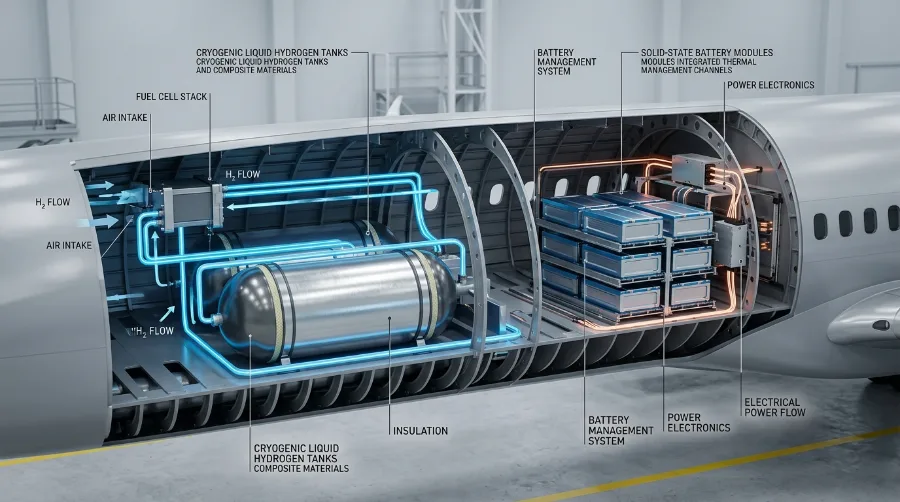
Eventually every cell degrades past useful capacity for anything, including stationary storage. At that point it enters true recycling: shredding and chemical processing recover lithium, nickel, cobalt and copper for new cells, closing the loop the battery started. Second life EV batteries are therefore a delay, not an alternative, to recycling — typically adding 5–10 productive years before that final step, which matters enormously given how energy-intensive mining virgin materials is. For the chemistry that will eventually change this whole picture, see our solid state battery guide — solid electrolytes are being designed with recyclability in mind from the start.
What This Means for EV Buyers
Two practical implications for anyone shopping new or used:
- Your old EV battery has value beyond the car. A pack that no longer meets your range needs is not scrap — some automakers now factor eventual second-life or recycling value into trade-in and end-of-life programs, a small but growing offset to total ownership costs.
- “Battery degradation” is less scary than it sounds. A pack that has fallen to 75% still has a productive future — reframing helps used-EV buyers judge a battery health report rationally instead of fearing any number under 100%.
Keeping YOUR pack healthy for longer starts with proper storage — see our EV battery storage tips guide.
Where that footprint eventually gets recovered is covered in our lithium battery carbon footprint guide.
Second Life EV Batteries FAQ
Once a pack is truly done, the materials don\u2019t go to waste \u2014 see how EV battery recycling recovers lithium, cobalt, and nickel.
What happens to an EV battery when it’s too weak for the car?
Most packs are retired from vehicles around 70-80% of original capacity – still useful for jobs that don’t need full range or high power. They commonly move into second life EV batteries applications like grid and solar storage before eventual recycling.
Is second-life battery storage actually used at scale?
Yes – utility and commercial projects using repurposed EV packs are operating today, not just in pilot programs. Multiple automakers and battery makers run dedicated second-life programs for retired packs.
Are second life EV batteries as good as new ones?
Not for demanding uses, but well-suited to their new job: stationary storage rarely needs the power bursts or full range a car does, so a pack at 70-80% capacity performs adequately for years in that role.
Does second-life use replace battery recycling?
No – it delays it, typically by 5-10 years. Once a pack degrades past useful capacity even for stationary storage, it goes to recycling, where lithium, nickel, cobalt and copper are recovered for new cells.
Why don’t all retired EV batteries get a second life?
Economics: falling prices for brand-new cells narrow the cost advantage of testing and repackaging used ones. Second life works best where sorting costs are low and the application genuinely doesn’t need full capacity.
Should I worry about my EV battery losing capacity?
Less than the marketing suggests. Modern packs degrade only a couple percent a year and carry long warranties, and even a battery that eventually falls to 70-80% still has real value – either in your car longer than expected, or in a productive second life afterward.
Related Guides on ZeroCarbonDrive
- Solid state battery vs lithium-ion — the chemistry shaping future recyclability
- EV ownership costs — where battery value fits the bigger picture
- EV battery performance in winter — how packs are used before retirement
Sources and Further Reading
Every figure on this page is dated and linked to its source. How we verify · Editorial policy · Report a correction
Related Posts

Leave a Comment
Your comment will be published after it has been approved. Please send comments that do not contain slang words.