
Hydrogen Contrails: How Clean Planes Still Mark the Sky (2026)
Updated September 2, 2026 · 7 min read
Last updated: September 1, 2026
Non-CO2 effects are central to sustainable aviation fuel and to electric eVTOL aircraft.
Quick answer: Hydrogen aircraft emit no CO2 in flight, but burning hydrogen produces roughly 2.6 times more water vapor per unit of energy than jet fuel — so hydrogen contrails will form more often than kerosene ones. The encouraging part: with almost no soot in the exhaust, the ice crystals form differently, and early flight research suggests hydrogen contrails are likely to be optically thinner and shorter-lived, with lower warming per contrail. The honest part: this is an active research question, not a settled one.
Key takeaways
- Contrail cirrus is aviation’s largest single non-CO2 climate forcing — comparable in scale to aviation’s CO2 itself.
- Hydrogen removes CO2 and soot from the exhaust but adds water vapor, trading one climate problem for a smaller, different one.
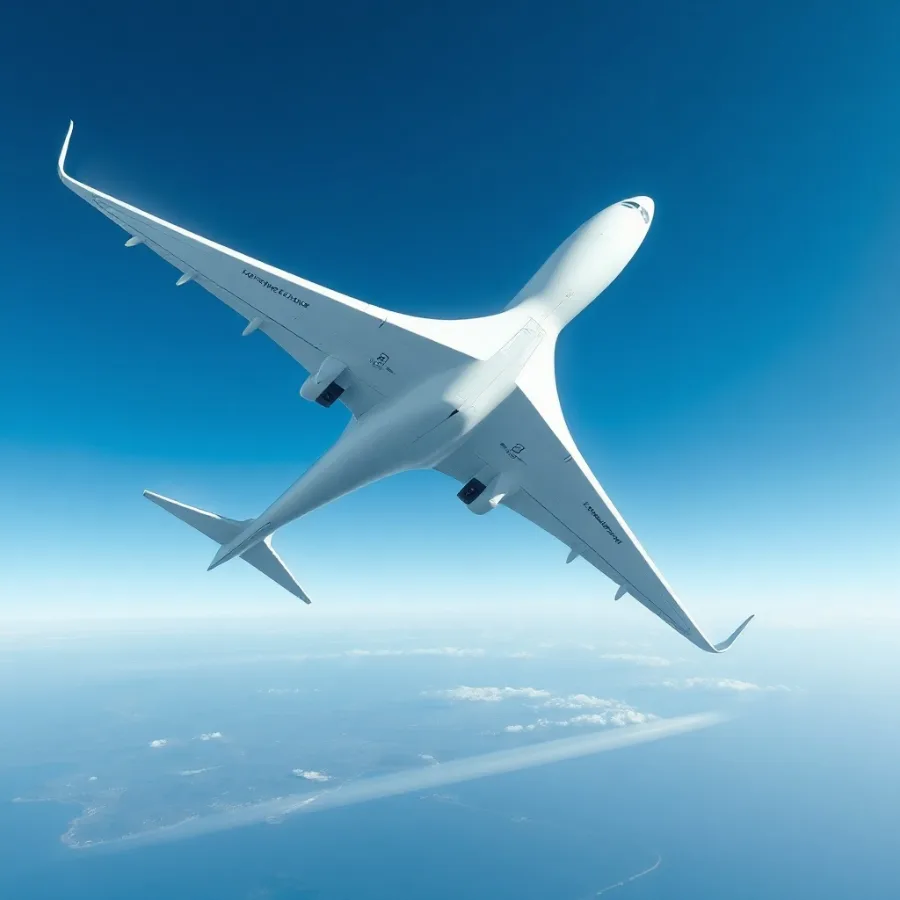
- More frequent but likely weaker contrails is the emerging picture from research campaigns such as the Airbus Blue Condor glider tests.
- Contrail avoidance by routing around ice-supersaturated air works for hydrogen aircraft too — and may matter even more for them.
Why Contrails Matter at All
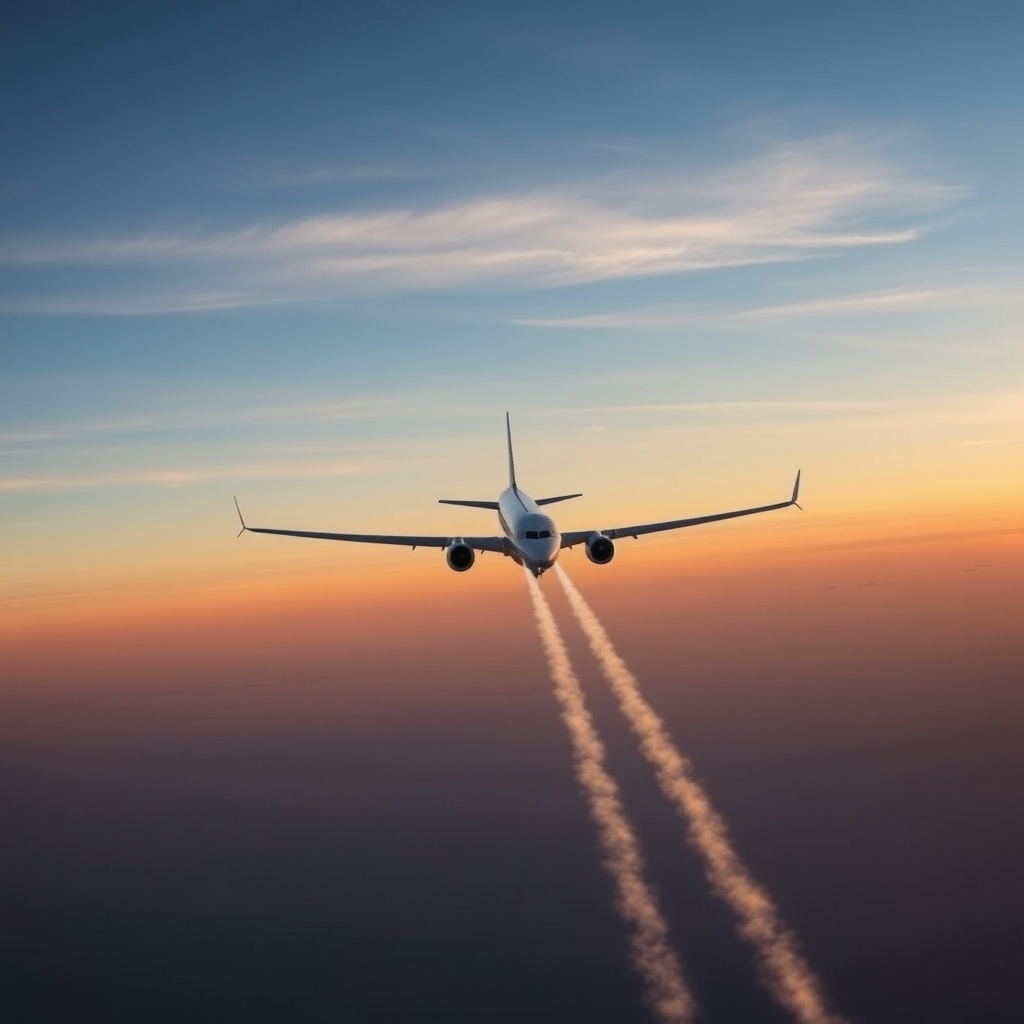
A contrail forms when hot, humid engine exhaust mixes with very cold air — below roughly −40°C — and the mixture briefly exceeds water saturation (the Schmidt–Appleman criterion, in the textbooks). In dry air the ice crystals evaporate within minutes and the climate effect is negligible. In ice-supersaturated regions — patches of air holding more moisture than ice-saturation — contrails persist for hours, spread into man-made cirrus sheets, and trap outgoing heat overnight.
Summed over global traffic, this contrail cirrus is the single largest component of aviation’s non-CO2 forcing, which in total rivals or exceeds the industry’s CO2 warming — the full accounting is in our aviation non-CO2 effects guide and the numbers in aviation emissions statistics. Any zero-carbon aircraft that still makes persistent contrails has therefore solved only part of aviation’s climate problem.
What Changes When the Fuel Is Hydrogen
Burning hydrogen changes the contrail recipe in three ways at once:
| Exhaust property | Kerosene (jet fuel) | Hydrogen combustion | Contrail consequence |
|---|---|---|---|
| Water vapor per unit energy | Baseline | ~2.6× more | Hydrogen contrails form in a wider range of altitudes and temperatures |
| Soot particles | Billions per kg of fuel burned | Essentially none | Far fewer ice nuclei — crystals form on ambient particles instead |
| CO2 and sulfur | Present | None | No CO2 warming, no sulfate particles |
The soot line is the pivotal one. Kerosene contrails freeze onto abundant soot, producing many small, long-lived ice crystals — optically thick, persistent, warming. With hydrogen, the much scarcer background aerosols become the nuclei, which points toward fewer but larger crystals that fall out and sublimate sooner. Larger crystals also interact with light differently, making the contrail optically thinner for its lifetime.
Net effect per contrail: probably less warming. Net effect per flight: still open, because hydrogen contrails will form on days and altitudes where kerosene contrails would not.
What the Research Actually Shows So Far
Because no hydrogen airliner flies yet, evidence comes from theory, modeling and small-scale flight tests:
- Modeling studies (DLR and others) consistently find hydrogen contrails should be more frequent but individually weaker, with several analyses estimating a meaningful net reduction in contrail forcing versus kerosene — though the spread between studies remains wide.
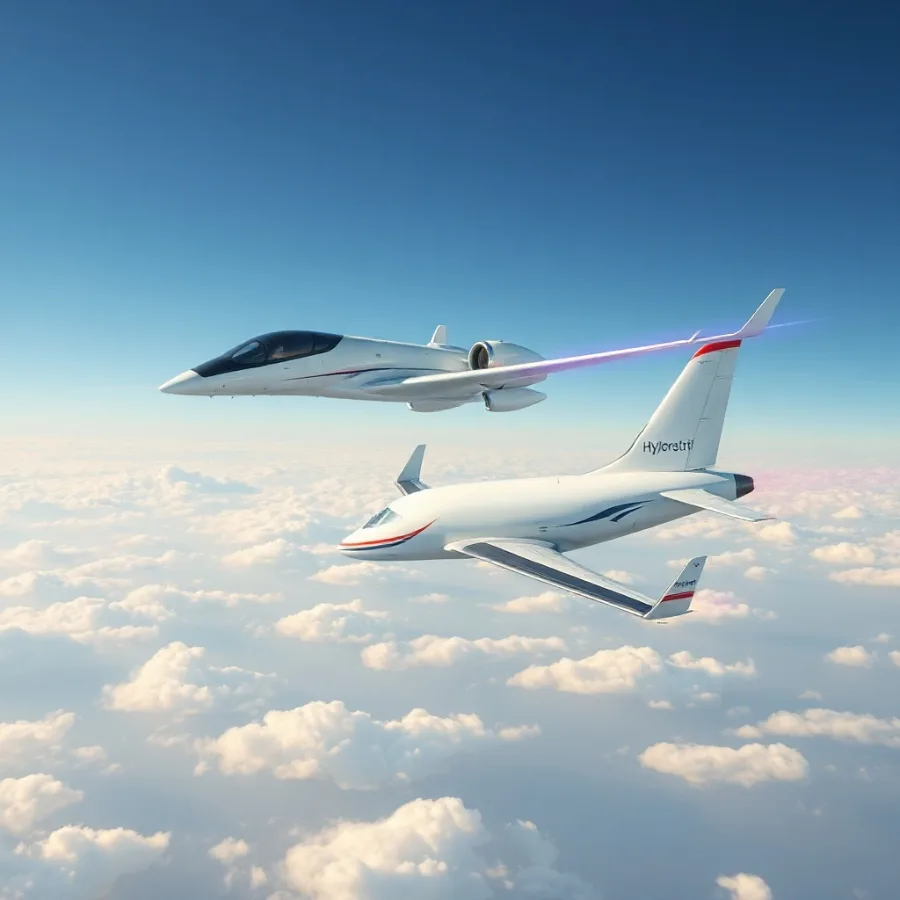
- The Airbus–Perlan “Blue Condor” campaign flew a small hydrogen-combustion engine on a glider at contrail altitudes, with a chase aircraft sampling the plume — the first in-flight measurements of pure hydrogen contrails. Early findings support the fewer-nuclei, larger-crystal picture; full analyses are still being published.
- Fuel cells are a separate question. A fuel-cell powertrain (the likely first commercial hydrogen aviation route — see our hydrogen aviation guide) exhausts water at much lower temperature and can even condense some of it onboard, giving designers a control knob combustion engines lack.
The honest summary for 2026: every serious analysis expects hydrogen aviation to warm the climate far less than kerosene aviation even after contrails are counted — but “far less” is not zero, and the error bars on hydrogen contrails specifically are still large.
Can Hydrogen Contrails Be Avoided Entirely?
Yes, in the same way kerosene contrails can: don’t fly through the wet patches. Ice-supersaturated regions are shallow (often a few hundred meters thick) and cover a minority of airspace, so modest altitude changes on a minority of flights avoid most persistent contrails, at a fuel cost typically estimated in the low single digits of a percent for the rerouted flights. Trials by airlines and air-traffic bodies (including Google-supported prediction work with American Airlines) have demonstrated meaningful contrail reductions from such routing.
Two hydrogen-specific twists:
- Because hydrogen contrails form under a wider set of conditions, the avoidance zones grow — routing needs better humidity forecasting, the current weak point.
- Because hydrogen aircraft carry no carbon penalty for small detours beyond extra fuel mass, the climate case for aggressive avoidance is even cleaner than for kerosene.
How Big Is This Problem, Really?
Perspective matters. Sized against the alternatives:
| Aircraft type | CO2 in flight | Contrail/cirrus effect | Overall climate picture |
|---|---|---|---|
| Kerosene airliner | Full | Full (soot-rich, persistent) | Baseline problem |
| SAF-powered airliner | Reduced on lifecycle basis | Somewhat reduced (cleaner burn, less soot) | Meaningful improvement |
| Hydrogen combustion | Zero | More frequent, likely weaker — net probably lower | Large improvement, contrail question open |
| Hydrogen fuel cell | Zero | Lower-temperature exhaust, partly controllable | Potentially the cleanest sky option |
| Battery-electric | Zero | None | Cleanest, but range-limited — see electric aircraft |
Hydrogen contrails are, in other words, a second-order problem attached to a first-order solution. The risk researchers actually worry about is different: that the issue gets ignored during aircraft design, locking in decades of avoidable cirrus, when modest engineering and routing choices made now could largely neutralize it.
The Design Knobs: How Engineers Can Shrink Hydrogen Contrails
Unlike CO2, which depends only on how much fuel burns, contrail formation responds to engineering choices — and hydrogen aircraft are being designed while this science is fresh, which is an advantage kerosene never had:
- Cruise altitude. Flying a few thousand feet lower keeps aircraft under most ice-supersaturated layers. Hydrogen’s efficiency profile tolerates this better than turbofans burning kerosene, and several concept studies bake lower cruise into the design rather than treating it as a penalty.
- Exhaust temperature and mixing. How fast the plume cools determines whether the saturation threshold is crossed. Nozzle design that promotes rapid mixing narrows the window in which hydrogen contrails can form.
- Onboard water management (fuel cells). Condensing part of the product water and releasing it as liquid at lower altitude — or even storing it — directly reduces the vapor available for ice.
- Humidity sensing and avoidance. The cheapest knob is knowing where the wet air is. Better onboard hygrometers feeding shared forecasts would improve routing for the whole fleet, hydrogen and kerosene alike.
The realistic reading of all this: hydrogen contrails are a manageable side effect with multiple mitigation paths, none exotic. The task for the industry is simply to treat them as a requirement now — the way noise and NOx became requirements — rather than retrofitting the fix later.
Hydrogen Contrails FAQ
hydrogen production costs is worth a closer look for the full picture.
Do hydrogen planes make contrails?
Yes. Burning hydrogen produces about 2.6 times more water vapor per unit of energy than jet fuel, so hydrogen contrails form more readily than kerosene ones. The open question is their warming effect, which early research suggests is lower per contrail.
Are hydrogen contrails worse than normal contrails?
Current modeling and first flight tests point the other way: with almost no soot in the exhaust, hydrogen contrails should consist of fewer, larger ice crystals that are optically thinner and shorter-lived. More frequent but weaker is the emerging picture.
Is water vapor a greenhouse gas?
Yes, but emitted water vapor itself matters little at cruise altitudes because it rains out within days to weeks. The climate concern is the ice clouds – contrail cirrus – that the vapor seeds in ice-supersaturated air, which trap outgoing heat.
Why do contrails sometimes disappear quickly and sometimes spread?
It depends on the air the aircraft crosses. In dry air, ice crystals sublimate within minutes. In ice-supersaturated regions the crystals grow, persist for hours and spread into cirrus sheets – those are the contrails that matter for climate.
Can pilots avoid making contrails?
Largely yes. Ice-supersaturated layers are thin, so climbing or descending a couple of thousand feet on flagged segments avoids most persistent contrails for a small fuel penalty. Airline trials using contrail forecasts have already demonstrated significant reductions.
Do fuel-cell aircraft solve the contrail problem?
Potentially better than combustion: fuel cells exhaust water at low temperature and designs can condense part of it before release, giving engineers control over how much vapor enters the sky. That is one reason fuel cells lead most near-term hydrogen aviation programs.
Related Guides on ZeroCarbonDrive
- Hydrogen aviation explained — the aircraft these contrails will trail
- Aviation non-CO2 effects — the full contrail-cirrus science
- Hydrogen fuel cells vs solid-state batteries — the powertrain race
Sources and Further Reading
- DLR (German Aerospace Center) — contrail and hydrogen-emissions research
- Airbus — hydrogen and Blue Condor flight-test programme
- IPCC assessments — aviation radiative forcing context
Related Posts
Leave a Comment
Your comment will be published after it has been approved. Please send comments that do not contain slang words.