
Sustainable Aviation Fuel Explained
Updated September 18, 2026 · 7 min read
Table of Contents
- Introduction
- Composition of Sustainable Aviation Fuel
- Production Process
- Benefits of Sustainable Aviation Fuel
- Environmental Impact
- Regional Variations
- Frequently Asked Questions
Introduction
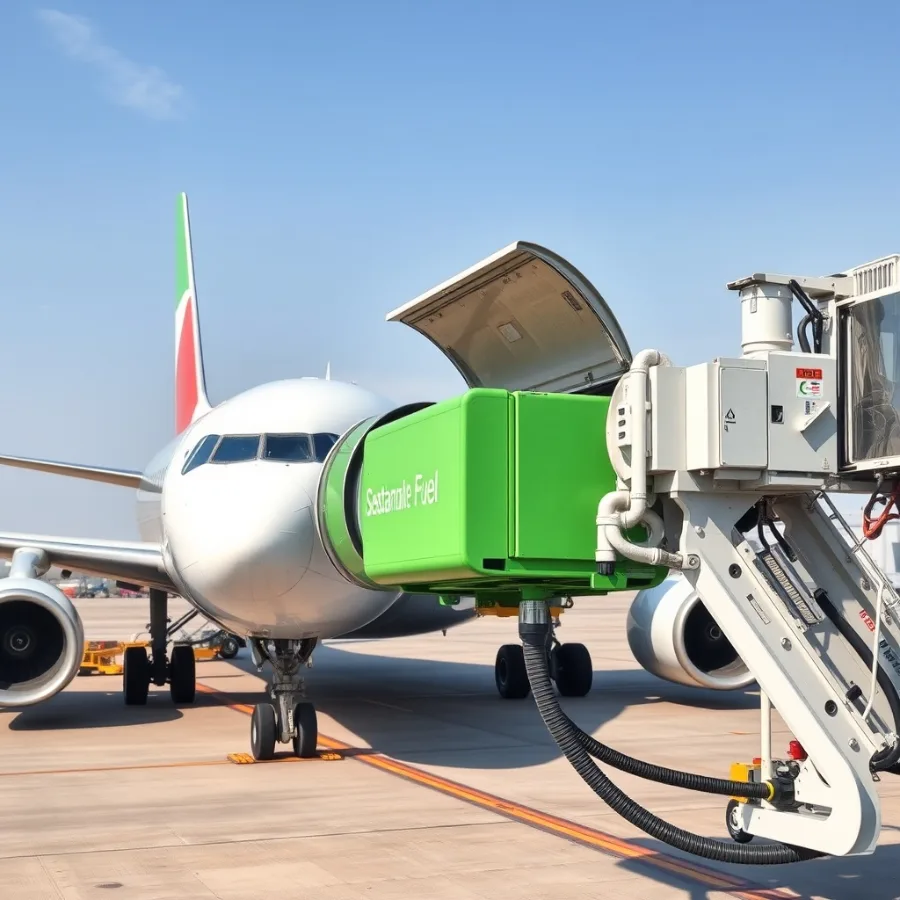
Sustainable Aviation Fuel (SAF) is an alternative to conventional aviation fuel that is produced from renewable resources such as agricultural residues, waste oils, and algae. It offers a more sustainable option for powering aircraft, reducing greenhouse gas emissions and dependency on fossil fuels.
SAF’s cost premium is one reason fares may move; see how clean aviation affects ticket prices.
Key Points:
- SAF is a renewable fuel source derived from sustainable feedstocks.
- It is chemically similar to traditional jet fuel but has lower carbon emissions.
- SAF can be blended with conventional jet fuel without requiring modifications to aircraft engines.
For more information on emissions comparisons between different fuel types, visit Zero Carbon Drive.
Composition of Sustainable Aviation Fuel
Sustainable Aviation Fuel is typically composed of hydrocarbons, similar to conventional jet fuel, but with a lower carbon intensity. It can be produced using various feedstocks, including used cooking oil, algae, and agricultural residues. The production process involves converting these feedstocks into hydroprocessed esters and fatty acids (HEFA) or synthetic paraffinic kerosene (SPK).
Key Components:
- Hydrocarbons derived from sustainable feedstocks
- Low sulfur content
- Chemically similar to traditional jet fuel
- Reduced carbon emissions compared to conventional jet fuel
To learn more about smart traffic systems and their role in sustainability, visit Zero Carbon Drive.
Production Process
The production of Sustainable Aviation Fuel involves several stages, including feedstock sourcing, conversion processes, and refining. Feedstocks such as agricultural residues, waste oils, and algae are processed to extract the necessary hydrocarbons, which are then refined to meet aviation fuel standards. The final product is a drop-in fuel that can be used in existing aircraft without any modifications.
Production Steps:
- Feedstock sourcing and collection
- Conversion to hydroprocessed esters and fatty acids (HEFA) or synthetic paraffinic kerosene (SPK)
- Refining to meet aviation fuel standards
- Blending with conventional jet fuel
Benefits of Sustainable Aviation Fuel
The use of Sustainable Aviation Fuel offers several benefits, both environmental and economic. By reducing carbon emissions and dependence on fossil fuels, SAF contributes to the aviation industry’s sustainability goals and helps mitigate the impact of air travel on the environment. Additionally, SAF can help airlines meet emissions reduction targets and comply with regulatory requirements.
Key Benefits:
- Lower carbon emissions compared to traditional jet fuel
- Enhanced energy security and independence
- Supports the growth of a sustainable aviation industry
- Reduces the environmental impact of air travel
For insights into car CO2 emissions and their impact, visit Zero Carbon Drive.
Environmental Impact
The adoption of Sustainable Aviation Fuel can have a significant positive impact on the environment by reducing greenhouse gas emissions and air pollution associated with air travel. SAF has a lower carbon intensity compared to traditional jet fuel, resulting in fewer emissions of CO2 and other pollutants during combustion. By increasing the use of SAF in aviation, the industry can make substantial progress towards achieving its sustainability targets.
Environmental Implications:
- Reduction of greenhouse gas emissions
- Improvement of air quality near airports
- Lower carbon intensity per kilometer flown
- Contribution to global efforts to combat climate change
Regional Variations
- US: The United States has been a leader in the development and adoption of Sustainable Aviation Fuel, with initiatives to increase production and use across the aviation sector.
- EU: The European Union has set ambitious targets for reducing aviation emissions and has implemented policies to support the adoption of SAF.
- China: China is investing in research and development of sustainable aviation technologies, including the production of SAF from alternative feedstocks.
- India: India is exploring opportunities to integrate Sustainable Aviation Fuel into its aviation industry to reduce carbon emissions and improve environmental sustainability.
SAF is no longer just a voluntary choice: since 2025, blending is legally required at EU and UK airports. For the exact percentages, penalties and timelines, see our guide to the SAF mandates under ReFuelEU and UK rules — and for how airlines must offset the emissions SAF cannot yet cover, our explainer on CORSIA.
Certified Production Pathways Compared
Not all sustainable aviation fuel is made the same way. ASTM has certified several production pathways, each with different feedstocks, maturity and lifecycle savings. Understanding them explains both today's market — dominated by used cooking oil — and tomorrow's, which must scale synthetic fuels.
| Pathway | Feedstock | Typical lifecycle CO2 saving | Maturity (2026) |
|---|---|---|---|
| HEFA (hydroprocessed esters) | Used cooking oil, animal fats | ~70–85% | Commercial — ~85% of supply |
| Alcohol-to-Jet (AtJ) | Ethanol from waste or crops | ~50–85% | First commercial plants |
| Fischer–Tropsch (FT) | Municipal waste, forestry residues | ~85–94% | Demonstration to early commercial |
| Power-to-Liquid (e-SAF) | Green hydrogen + captured CO2 | ~90–100% | Pilot plants; mandated from 2030 in the EU |
The catch is feedstock ceilings: there is only so much used cooking oil in the world, which is why the UK caps HEFA's share of its mandate and why the EU's ReFuelEU regulation reserves a growing slice specifically for synthetic fuels. The long-term scalability of sustainable aviation fuel rests on Fischer–Tropsch and power-to-liquid plants that are only now being financed.
The 2026 Rulebook: From Voluntary to Mandatory
Since January 2025, sustainable aviation fuel has been a legal requirement, not a marketing choice. Jet fuel suppliers must blend 2% SAF at EU airports under ReFuelEU (rising to 6% in 2030 and 70% by 2050), while the UK's mandate requires 3.6% in 2026 on its way to 22% by 2040 — full percentages, penalties and buy-out prices are in our guide to the SAF mandates.
The regulatory pull goes beyond blending percentages. Airlines burning certified sustainable aviation fuel on intra-European routes cut their allowance bill under the EU ETS, which also reserves 20 million free allowances through 2030 to offset part of the SAF price premium. Internationally, SAF reduces offsetting obligations under CORSIA in proportion to its lifecycle savings. Official specifications and sustainability criteria are maintained by ICAO, and market tracking is published by IATA.
One caveat keeps expectations honest: sustainable aviation fuel cuts lifecycle CO2, but flying's total climate impact also includes contrails and NOx — effects SAF only partially reduces. Cleaner-burning fuel does lower soot, making contrails fainter, which is one reason SAF blending and contrail avoidance work better together than either alone; the full picture is in our guide to aviation non-CO2 effects.
Supply, Demand and Price in 2026
Global production of sustainable aviation fuel roughly doubled in 2024 to about one million tonnes and has kept climbing, yet still covers well under 1% of world jet fuel demand of some 300 million tonnes a year. Mandated European demand is absorbing most new supply, and prices remain two to five times conventional jet fuel — roughly $1,800 per tonne against $800 for fossil kerosene in recent reference values, with synthetic e-SAF far higher still.
Analysts expect the gap to narrow but not close this decade: blended prices near $5 per gallon in 2030 versus about $2.50 for conventional fuel. For airlines the premium lands in the fuel bill; for passengers it is still cents to a few euros per ticket at current blend levels. The investment signal, however, is unmistakable — guaranteed, legally mandated demand out to 2050 is exactly what financiers needed to fund the next generation of plants.
Related guides: Sustainable Aviation Fuel vs Electric, Sustainable Aviation Fuel vs Electric Aviation and Sustainable Aviation Fuel (SAF) Mandates: What You Need to Know.
SAF is one lever among several; for how they rank, see sustainable aviation strategy: what actually cuts emissions.
Frequently Asked Questions
How is Sustainable Aviation Fuel produced?
Sustainable Aviation Fuel is produced through the conversion of renewable feedstocks such as agricultural residues, waste oils, and algae into hydroprocessed esters and fatty acids (HEFA) or synthetic paraffinic kerosene (SPK).
What are the environmental benefits of using Sustainable Aviation Fuel?
The use of Sustainable Aviation Fuel results in lower carbon emissions, improved air quality, and reduced environmental impact compared to traditional jet fuel.
Is Sustainable Aviation Fuel compatible with existing aircraft engines?
Yes, Sustainable Aviation Fuel can be blended with conventional jet fuel and used in existing aircraft engines without requiring modifications.
How does Sustainable Aviation Fuel contribute to reducing the carbon footprint of air travel?
By replacing traditional jet fuel with Sustainable Aviation Fuel, airlines can significantly reduce the carbon intensity of their flights, leading to a lower overall carbon footprint for air travel.
TAGS: sustainable aviation fuel, aviation industry, alternative fuel, greenhouse gas emissions, renewable resources, environmental impact
Where this fits
This page is part of the zero-carbon aviation hub on ZeroCarbonDrive:
- Zero-carbon aviation hub: the four routes, and what is certified
- Aviation emissions statistics
- Electric and hydrogen aircraft tracker
Work it out yourself
Related tools and method notes on ZeroCarbonDrive:
Every figure on this page is dated and linked to its source. How we verify · Editorial policy · Report a correction
Related Posts



Leave a Comment
Your comment will be published after it has been approved. Please send comments that do not contain slang words.