
Contrail Avoidance Explained: The Best 2026 Guide to Cooling Aviation
Updated September 18, 2026 · 12 min read
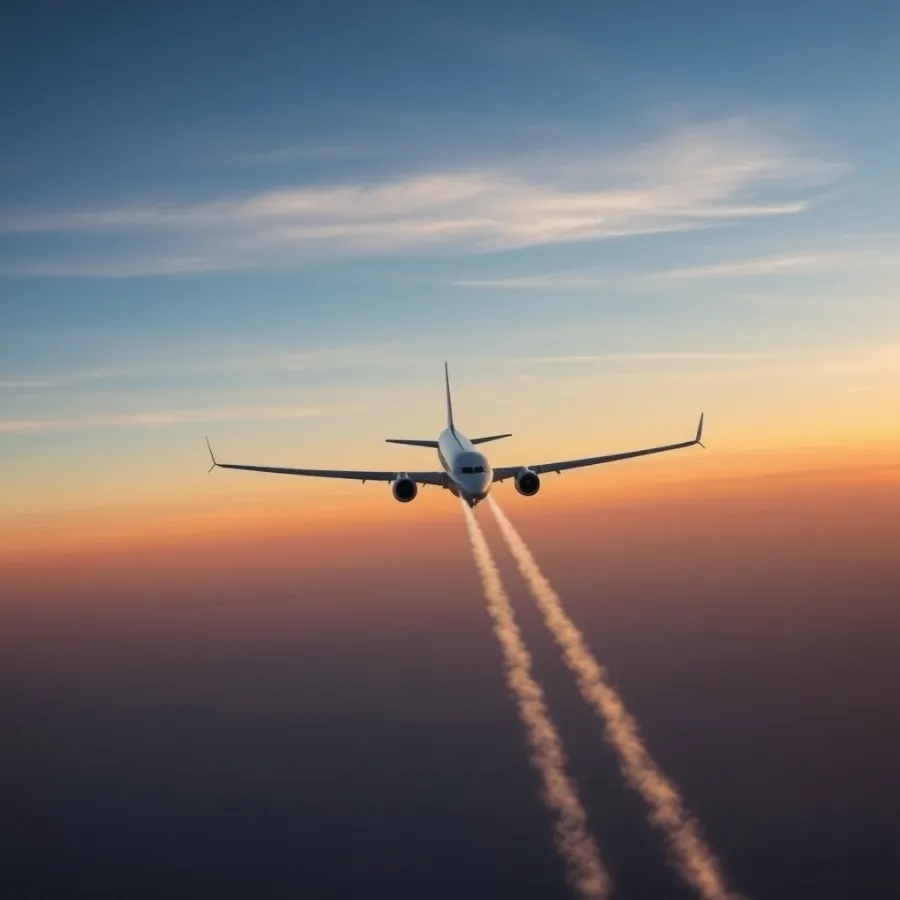
Contrail avoidance may be the cheapest large-scale climate lever humanity has barely started using. By nudging a small share of flights a few hundred metres up or down, airlines can stop the warming cirrus clouds their aircraft would otherwise create — eliminating a heating effect comparable to aviation’s entire CO2 output, for roughly the price of a coffee per flight. In 2023 the idea graduated from theory to flight trials; by 2025–2026 it moved into thousand-flight operational campaigns. This guide explains how contrail avoidance works, what the trials actually found, what it costs, and why regulators from Brussels to ICAO are suddenly paying attention.
Key takeaways

- A tiny fraction of flights does most of the damage: under 3% of global flights generated about 80% of contrail warming in 2019 — so targeted rerouting of a few flights delivers outsized cooling.
- The fuel penalty is small. Trials and simulations report 54–73% contrail warming reductions for fleet-wide extra fuel burn between 0.01% and 2%.
- It is astonishingly cheap: a central estimate of about $1.75 per tonne of CO2-equivalent avoided — versus ~$12 for CORSIA credits and ~€86 for EU ETS allowances.
- The benefit dwarfs the cost: even conservative analyses find the avoided contrail warming outweighs the extra-fuel CO2 penalty at least 15-fold.
- The bottleneck is forecasting. Predicting the humid air layers where contrails persist is still imperfect — the reason fleet-averaged results lag the results on flights that actually flew the avoidance route.
What is contrail avoidance?
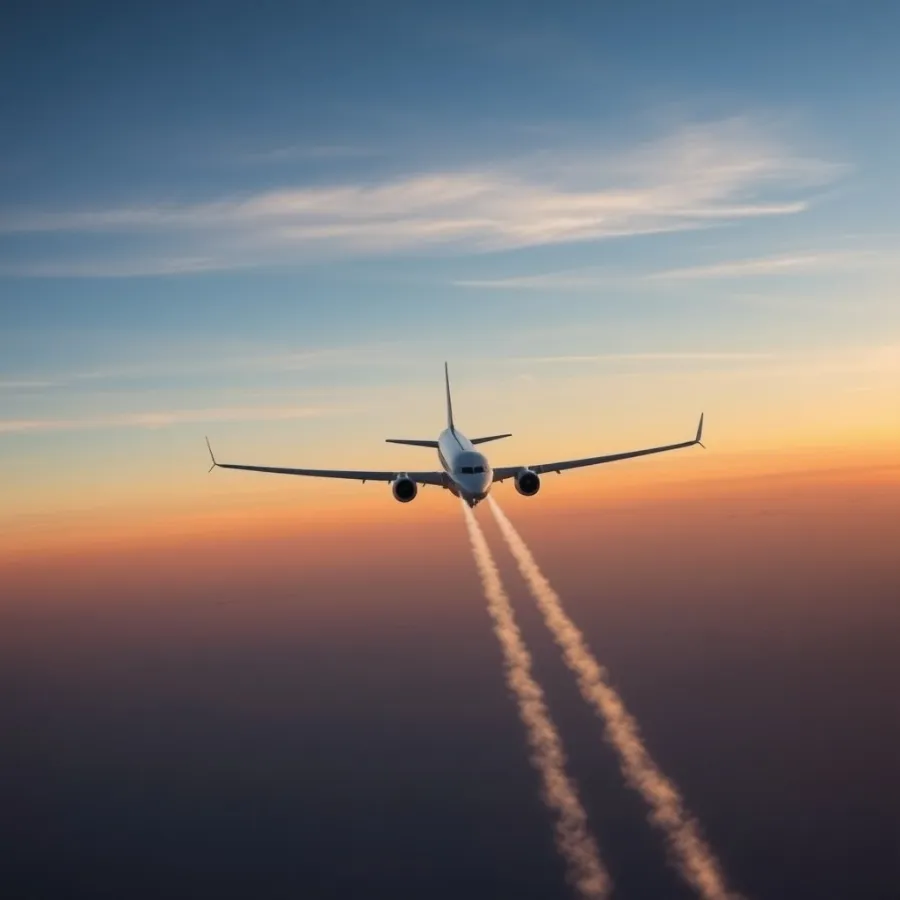
Condensation trails form when hot, humid engine exhaust meets very cold air. Most vanish within minutes. But when an aircraft crosses an ice-supersaturated region (ISSR) — a layer of air so humid that ice crystals cannot evaporate — the trail persists for hours and spreads into man-made cirrus cloud that traps outgoing heat. Those persistent contrails are the single largest component of aviation’s climate impact beyond CO2, as we detail in our guide to aviation non-CO2 effects.
Contrail avoidance is the operational fix: forecast where the ISSRs are, and route flights around them — usually a climb or descent of 600 to 1,000 metres over the affected segment, since the humid layers are typically only one to two kilometres thick. No new aircraft, no new fuel, no new infrastructure; just better weather data feeding the flight plan.
The physics is forgiving in one crucial way: ISSRs are patchy. A flight rarely needs a whole new route — only a small altitude adjustment for the minutes it would otherwise spend inside the humid layer. That is what keeps the fuel penalty, and therefore the cost, so low.
The 3% problem — and opportunity
The case for contrail avoidance rests on an extreme concentration: analysis of 2019 traffic found that fewer than 3% of flights produced roughly 80% of all contrail warming (about 5% in Europe). Night flights over humid regions in winter are the worst offenders, because their contrails trap heat all night with no offsetting daytime reflection.
That skew transforms the economics. An intervention that had to touch every flight would be operationally painful; one that needs to reroute perhaps one flight in twenty — and only for part of its route — can be folded into normal flight planning. The task becomes identifying the few "big hit" flights each day and giving them a slightly different vertical profile.
What the trials found
Between 2020 and 2026, contrail avoidance went from a simulation exercise to multi-airline operational campaigns. The headline results are remarkably consistent.
| Trial / study | Scale | Contrail reduction | Fuel penalty |
|---|---|---|---|
| Teoh et al., Japan airspace (2020) | Simulation of Japanese traffic | ~60% of contrail forcing | 0.01% |
| Google / Breakthrough Energy / American Airlines (2023) | 70 test flights | 54% fewer contrails | ~2% on adjusted flights |
| Flightkeys system simulation (2024) | ~85,000 American Airlines flight plans | 73% of contrail warming | 0.11% fleet-wide |
| SATAVIA multi-operator trials | 65 optimised flights, 12 operators | >2,200 tonnes CO2e prevented | Minimal |
| Transatlantic campaign (Jan–May 2025) | ~2,400 US–Europe flights | 62% on flights that flew the avoidance option; ~12–14% fleet-averaged | No meaningful increase |
The gap in the last row is the honest headline of the field. On flights that actually executed the contrail avoidance routing, formation fell 62% and estimated warming about 69%. Averaged across every treatment-eligible flight — including those where forecasts missed, or operations intervened — the reduction was a more modest 12–14%. Contrail avoidance clearly works when the forecast is right; making the forecast right more often is now the core engineering problem.
What contrail avoidance costs
Because the intervention is mostly software plus a sliver of extra fuel, the cost per unit of climate benefit is extraordinarily low by any standard.
| Source | Estimate |
|---|---|
| Contrails.org research synthesis (2026) | ~$1.75 central ($0.50–$14 range) |
| Roland Berger projection | €2–6 |
| Google current estimate | €5–25 |
| Transport & Environment (by 2040, mature system) | ~€20 |
| For comparison: CORSIA credit (mid-2026) | ~$12 |
| For comparison: EU ETS allowance (2026) | ~€86 |
Even at the pessimistic end, contrail avoidance undercuts almost every carbon abatement option airlines currently pay for — cheaper than the offsets airlines buy under CORSIA, an order of magnitude cheaper than EU ETS allowances, and two orders cheaper than the green premium on mandated sustainable aviation fuel. For passengers, Transport & Environment puts the mature-system ticket impact below €1.60 on European flights and under €4.30 transatlantic.
The 15-to-40-fold benefit ratio matters too: rerouting burns slightly more fuel, and that CO2 lasts centuries while the avoided contrail would have lasted hours. Even after weighting for those lifetimes, analyses consistently find the avoided warming beats the fuel penalty by at least 15× — and real-world trials suggest 40× or more.
How contrail avoidance works in practice
An operational contrail avoidance system stitches together four pieces:
- Humidity forecasting. Weather models predict where ice-supersaturated regions will sit over the coming hours. This is the weakest link: standard forecasts were built for rain, not for thin humid layers at 10–12 km altitude.
- Contrail prediction. Models such as CoCiP combine the ISSR forecast with each flight’s trajectory, aircraft type and engine data to estimate the warming the flight would cause — and flag the "big hits".
- Flight plan optimisation. Systems like Flightkeys’ 5D planner weigh the predicted contrail warming against fuel, time and airspace constraints, and propose an adjusted vertical profile. The dispatcher accepts or rejects it like any other planning trade-off.
- Verification. Satellite imagery and increasingly AI-based detection check whether the contrail actually formed, closing the loop and scoring forecast accuracy — essential if avoided warming is ever to be credited or priced.
Air traffic control is the quiet constraint in the middle: an altitude change request must fit around other traffic, which is why EUROCONTROL and several air navigation service providers have joined the trials to test how avoidance requests flow through busy airspace.
Policy: measured first, priced later
No regulator yet mandates contrail avoidance, but the ground is being prepared. Since 1 January 2025, the EU requires airlines to monitor and report the CO2-equivalent non-CO2 effects of every flight in the EU ETS scope — contrails included. The Commission reports on the results by 2027 and may then propose bringing non-CO2 warming into the allowance system. The moment contrails carry a price, contrail avoidance stops being altruism and becomes the cheapest compliance strategy on the market.
Design questions remain genuinely hard. Rewarding avoided warming requires trusting forecasts and verification enough to credit something that did not happen; penalising contrails requires fairness when forecasts miss. Most proposals therefore start with "no-regrets" framing: target only the highest-confidence, highest-impact segments, where even imperfect forecasts deliver large expected benefits. Aviation’s other climate instruments took decades to build — the hope is that contrail policy, riding on the EU’s monitoring framework, moves faster.
Who is building it
A small ecosystem now spans tech, airlines and science. Google Research and Breakthrough Energy supply AI contrail forecasts and satellite verification, and ran the 2023 American Airlines trial and the 2025 transatlantic campaign with its 62% result on flown avoidance routes. Flightkeys, whose planning system dispatches millions of flights a year, has built contrail optimisation directly into its 5D engine — the 85,000-flight simulation showing 73% warming reduction for 0.11% extra fuel. SATAVIA (now part of GE Aerospace) pioneered per-flight contrail management with carriers such as Etihad and KLM. Estuaire and academic groups led by Imperial College’s contrail researchers supply the forcing analytics; EUROCONTROL and national weather services are working on the ISSR forecasting and airspace integration beneath it all.
Notably, contrail avoidance is technology-agnostic about the aircraft itself: it works with today’s fleet, and it will still matter for tomorrow’s, since hydrogen aircraft produce more water vapour and potentially more contrails — a trade-off we examine in our piece on hydrogen contrails.
The honest challenges
Three obstacles stand between today’s trials and routine global practice. First, forecast accuracy: ice-supersaturation is under-observed, and until aircraft themselves carry humidity sensors at scale — a retrofit programme now being discussed in Europe — models will keep missing some humid layers and crying wolf on others. Second, verification and crediting: satellites can now attribute individual contrails to individual flights with growing confidence, but a market-grade accounting standard for avoided warming is still being written. Third, operational integration: dispatchers, pilots and controllers need avoidance requests to be as routine as turbulence avoidance, which means standard phraseology, procedures and airspace capacity planning.
None of these is a physics problem. That is what distinguishes contrail avoidance from most climate technology: the science is settled enough, the hardware exists, and the remaining work is forecasting, standards and coordination — the kind of problems aviation is historically good at solving.
Contrail avoidance vs the other climate levers
Aviation’s decarbonisation toolbox now has four main instruments, and they are not interchangeable — they differ wildly in cost, speed and what they actually fix.
| Measure | Approx. cost per tCO2e | Available at scale | What it addresses |
|---|---|---|---|
| Contrail avoidance | ~$2 (range $0.50–14) | Now (with today’s fleet) | Non-CO2 warming (~half of total impact) |
| Carbon offsets (CORSIA) | ~$12 (2026) | Now (supply-constrained) | CO2 on paper, elsewhere |
| EU ETS allowances | ~€86 (2026) | Now (intra-EU only) | Prices CO2, funds clean tech |
| Sustainable aviation fuel | >$200 at current premiums | Scaling through 2030s | Physical CO2 cuts, partial soot/contrail benefit |
| Fleet renewal | Varies (capital-heavy) | 15–20 year cycles | ~15–20% fuel burn per generation |
The comparison is not a competition — a serious airline climate strategy needs all rows. But it explains why researchers call contrail avoidance the sector’s "opportunity of the decade": nothing else on the list buys as much near-term cooling per euro, and nothing else works with the aircraft already in the sky. There is even a synergy with fuel policy: SAF’s lower soot output makes the contrails that do form fainter and shorter-lived, so mandated SAF and avoidance routing reinforce each other.
One caution keeps the enthusiasm honest: avoided contrail warming and avoided CO2 are not the same thing physically. A contrail’s heat-trapping lasts hours; CO2‘s lasts centuries. Metrics that convert one into the other (GWP100, GWP20) can make the case look better or worse depending on the time horizon chosen — which is exactly why the accounting standards now being written matter as much as the flight trials. Our guide to the carbon footprint of air travel unpacks how these layers add up for a single journey.
How the science got here
Contrails have been studied since military pilots first cursed them for revealing positions in the 1940s, and the IPCC flagged their climate role as early as 1999. But two things changed in the last decade. First, the science firmed up: the landmark 2021 effective-radiative-forcing assessment by Lee and colleagues established contrail cirrus as the largest single term in aviation’s climate impact — bigger than the sector’s accumulated CO2. Second, computation caught up: machine-learning contrail detection in satellite imagery made it possible to verify individual contrails from individual flights, turning an atmospheric-science debate into an auditable operational metric.
That verification step is what unlocked the trials. When Google’s models could show American Airlines pilots had produced 54% fewer contrails than the control group, contrail avoidance acquired something aviation climate policy had always lacked: fast, measurable feedback. CO2 policies play out over decades; a contrail forecast is proven right or wrong the same afternoon.
What airlines and travellers can do now
For airlines, the entry path is unusually gentle. Contrail forecasting can be piloted through existing flight-planning vendors without fleet changes; joining a structured trial (several are recruiting through 2026–2027) brings free analytics and shared learning; and early movers accumulate exactly the operational data — forecast hit rates, fuel deltas, dispatcher workflows — that will convert into competitive advantage the day the EU prices non-CO2 warming.
Travellers have less direct leverage, but not none. Daytime flights produce less net contrail warming than overnight ones on average, and airlines that publish non-CO2 strategies are signalling real engagement rather than offset-only marketing. The larger point for passengers is simpler: contrail avoidance is the strongest evidence yet that a large slice of flying’s climate harm is fixable quickly and cheaply — which makes airline inaction, not the physics, the thing worth questioning.
Related guides: Top 10 Eco-Friendly Cooling Technologies Revamping Modern AI Supercomputers, Liquid Cooling Tech: How Next-Gen Data Centers Are Cutting Carbon Emissions by 50% and EU ETS Aviation Explained: The Best 2026 Guide to Airline Carbon Costs.
Soot-free propulsion changes contrail formation entirely: our guide to hydrogen aviation explains why fuel-cell aircraft may sidestep the contrail problem altogether.
Frequently Asked Questions
What is contrail avoidance in simple terms?
It is adjusting a flight’s altitude — typically by 600–1,000 metres over a short segment — so the aircraft does not fly through the humid air layers where contrails persist and warm the climate. The route change is planned before departure using specialised weather forecasts.
How much extra fuel does contrail avoidance burn?
Very little. Studies and trials report fleet-wide fuel increases between 0.01% and 0.11%, and about 2% on the individual flights that actually adjust. The avoided warming outweighs the extra CO2 at least 15-fold.
Why not just avoid all contrails?
Only persistent contrails formed in ice-supersaturated air cause meaningful warming, and under 3% of flights cause about 80% of it. Targeting those few flights captures most of the benefit at a fraction of the operational cost.
Is contrail avoidance required by law?
Not yet. The EU began mandatory monitoring and reporting of non-CO2 effects, including contrails, in January 2025, with a Commission report due by 2027 that could lead to pricing them within the EU ETS. Today’s trials are voluntary airline initiatives.
How much would contrail avoidance add to a ticket?
Estimates for a mature system put the cost below €1.60 for a European flight and under €4.30 for a transatlantic one — far less than existing carbon costs on the same routes.
Sources
- Transport & Environment (2026). Contrail avoidance: aviation's climate opportunity of the decade. transportenvironment.org
- Contrails.org (2026). The cost of contrail management. notebook.contrails.org
- Martin Frías et al. (2024). Feasibility of contrail avoidance in a commercial flight planning system. Environmental Research: Infrastructure and Sustainability. iopscience.iop.org
- Google Research (2025). Blue skies: AI contrail avoidance trials. blog.google
- Blue Lines (2026). List of contrail avoidance trials. blue-lines.org
- European Commission, Climate Action. Non-CO2 aviation effects MRV under the EU ETS. climate.ec.europa.eu
Where this fits
This page is part of the zero-carbon aviation hub on ZeroCarbonDrive:
- Zero-carbon aviation hub: the four routes, and what is certified
- Aviation non-CO2 effects
- Aviation emissions statistics
Every figure on this page is dated and linked to its source. How we verify · Editorial policy · Report a correction
Related Posts

Leave a Comment
Your comment will be published after it has been approved. Please send comments that do not contain slang words.