
EU ETS Aviation Explained: The Best 2026 Guide to Airline Carbon Costs
Updated September 18, 2026 · 12 min read
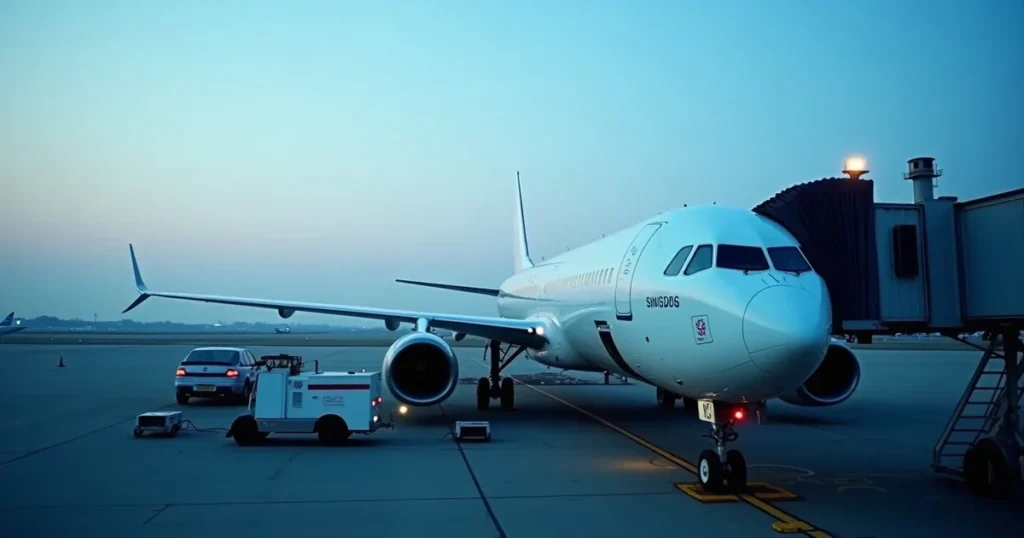
The EU ETS aviation rules are the world’s toughest carbon pricing regime for flying — and 2026 is the year they start to bite in full. From 1 January 2026, airlines receive no more free emission allowances: every tonne of CO2 emitted on flights within Europe must be covered by allowances bought at auction or on the market, at prices analysts expect to average around €86 per tonne this year and nearly double by 2030. This guide explains how the EU Emissions Trading System applies to aviation, what changed in 2024–2026, what it costs airlines and passengers, and how it interlocks with CORSIA and the SAF mandates.
Key takeaways
- Free allowances are gone. Aviation’s free allocation was cut 25% in 2024, 50% in 2025 and 100% from 2026 — airlines now buy every allowance, with one exception: 20 million allowances reserved through 2030 to subsidise sustainable aviation fuel.
- The price is real money. EU allowances are projected to average about €86 per tonne in 2026, rising toward €142 by 2030 — several times the price of CORSIA credits.
- Scope is intra-European for now. The EU ETS covers flights within the European Economic Area (plus departures to Switzerland and the UK); long-haul flights fall under CORSIA instead — pending a 2026 review that could change that from 2027.
- Non-CO2 effects entered the system in 2025 — airlines must now monitor and report the CO2-equivalent warming of contrails and NOx per flight, the first step toward pricing them.
- The cap keeps shrinking by about 4.3–4.4% a year, so the cost of flying on fossil kerosene inside Europe rises by design, every year.
What is EU ETS aviation and how does it work?
The EU Emissions Trading System is a cap-and-trade market: the EU sets a fixed, annually shrinking cap on total emissions, issues a matching number of allowances (EUAs, each worth one tonne of CO2), and lets companies trade them. Emit a tonne, surrender an allowance. Because the cap falls every year, allowances become scarcer and — in theory and mostly in practice — more expensive, pushing the market toward cleaner technology.
Aviation joined the system in 2012. Airlines monitor fuel burn on every covered flight, report verified emissions annually, and must surrender enough allowances by 30 September each year to cover the previous year’s emissions. Miss the deadline and the penalty is €100 per tonne plus the obligation to surrender the missing allowances anyway — non-compliance is strictly more expensive than compliance.
Two features distinguish aviation’s treatment. First, its emissions sit under the general EU ETS cap, competing with power plants and factories for the same shrinking pool. Second, aviation is the sector where Europe’s carbon market collided hardest with international politics — which is why its geographic scope looks the way it does.
Scope: which flights pay, and the "stop the clock" story
On paper, the 2008 law covered every flight touching a European airport — including a Delta flight from New York or an Emirates flight to Dubai. The backlash was immediate: the US passed a law prohibiting its airlines from complying, China reportedly froze Airbus orders, and India banned its carriers from participating. In 2012 Brussels "stopped the clock", suspending enforcement for long-haul flights to give ICAO time to build a global alternative — the scheme that became CORSIA.
That truce still defines the map today:
- Covered by the EU ETS: flights within the European Economic Area, plus departures from the EEA to Switzerland and to the United Kingdom.
- Covered by CORSIA instead: extra-European international flights — the EU applies ICAO’s offsetting scheme to these routes.
- Covered by the UK ETS: UK domestic flights, UK departures to the EEA and to Gibraltar (the UK runs a mirror-image system since Brexit).
The truce has an expiry date. A review in 2026 will assess whether CORSIA is delivering enough climate ambition; if the Commission judges it is not, the default in the legislation is to extend the EU ETS to departing long-haul flights from 2027 — a move airlines and many non-EU governments fiercely oppose, and one that would reopen the 2012 trade fight at far higher carbon prices.
The end of free allowances: 2024–2026 phase-out
For a decade, airlines received most of their allowances free, muting the EU ETS’s financial sting. The 2023 "Fit for 55" revision of the EU ETS ended that arrangement on a strict schedule.
| Year | Free allocation | What airlines must buy |
|---|---|---|
| 2023 | ~100% of historical benchmark | Only growth above allocation |
| 2024 | Reduced by 25% | A quarter of baseline plus growth |
| 2025 | Reduced by 50% | Half of baseline plus growth |
| 2026 onward | Zero — full auctioning | Every tonne emitted |
One carve-out survives: through 2030, up to 20 million allowances are reserved to reward airlines that uplift sustainable aviation fuel, covering part or all of the price gap between SAF and fossil kerosene — up to 70% of the gap for advanced biofuels and 95% for synthetic e-kerosene. It is a clever piece of policy stitching: the EU ETS pays airlines to do what the SAF mandate obliges fuel suppliers to sell.
What EU ETS allowances cost
Unlike CORSIA’s administratively vetted credits, EUAs trade on liquid exchanges and their price is set minute by minute by the market. The trajectory is structurally upward: the cap shrinks by a linear reduction factor of 4.3% per year through 2027 and 4.4% from 2028, tightening supply regardless of demand.
| Year | Average EUA price |
|---|---|
| 2026 | ~€86 / tonne CO2 |
| 2030 | ~€142 / tonne |
| 2035 | ~€185 / tonne |
Compare that with the roughly $12 per tonne that CORSIA-eligible credits fetched in mid-2026 and the gulf between the two regimes is obvious — a European short-haul flight’s CO2 is priced at seven times the rate of a long-haul departure’s growth emissions. That asymmetry is precisely what the 2026 review will scrutinise. For the mechanics behind carbon pricing more broadly, see our guide to carbon credit prices.
For airlines the arithmetic is straightforward and painful. A single A320neo rotation of 800 km emits roughly 4–5 tonnes of CO2; at €86 each, that is €350–430 per flight in carbon cost alone, multiplied across hundreds of daily departures. Analysts estimate the end of free allocation adds several billion euros a year to European aviation’s costs from 2026 — the moment, as one industry analysis put it, when carbon stops being a footnote and becomes a line item.
Non-CO2 effects: the 2025 game-changer
The EU ETS is also the first regime anywhere to formally account for aviation’s non-CO2 effects — the contrail cirrus and nitrogen oxide warming that roughly doubles flying’s total climate impact. Since 1 January 2025, airlines must monitor, report and verify the CO2-equivalent effects of each flight within the EU ETS scope, calculated from flight trajectory, aircraft and fuel properties and weather data.
For now this is measurement without pricing: no allowances are owed on contrails yet. But the sequencing is deliberate — the Commission must report on the results by 2027 and may then propose extending allowance obligations to non-CO2 warming. Airlines that learn to avoid contrail-forming flight levels early would enter any such regime with a structural cost advantage, which is why the trials we cover in our non-CO2 guide have suddenly acquired commercial urgency.
EU ETS vs UK ETS vs CORSIA: the three-system map
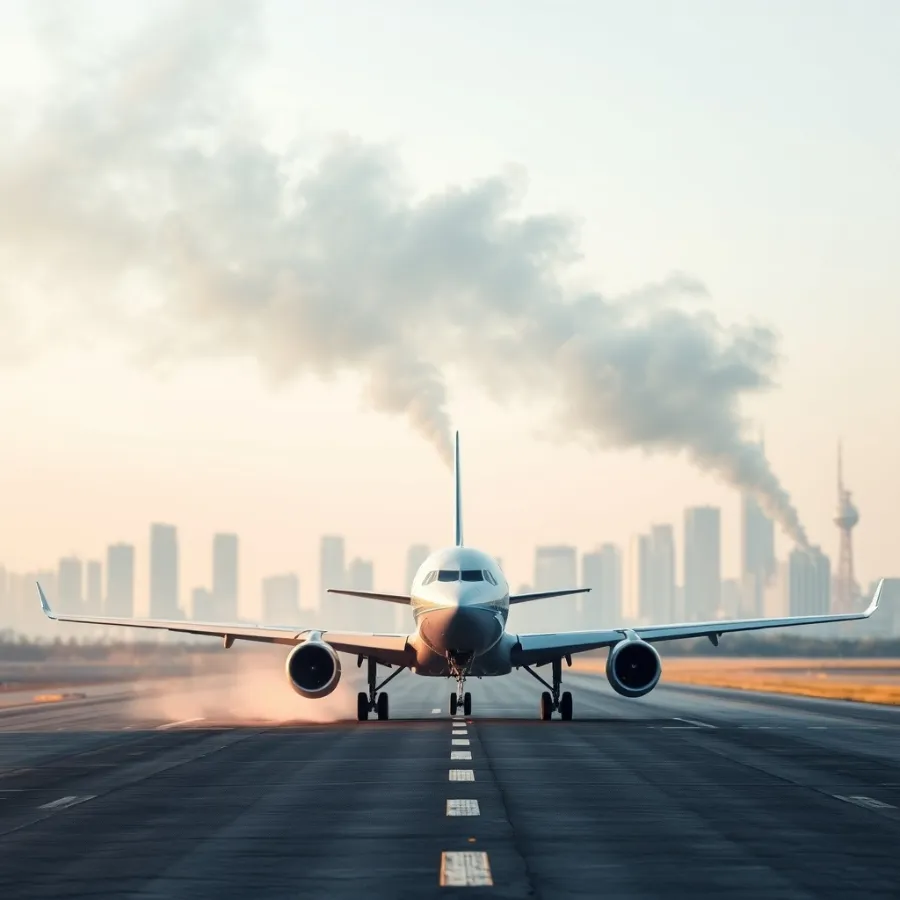
A European airline in 2026 navigates three overlapping carbon regimes, each with different prices, scopes and philosophies.
| Feature | EU ETS | UK ETS | CORSIA |
|---|---|---|---|
| Type | Cap-and-trade | Cap-and-trade | Offsetting scheme |
| Flights covered | Intra-EEA + EEA→CH/UK | UK domestic + UK→EEA | International between participating states |
| 2026 carbon price | ~€86/t (market) | Similar order, UK auctions | ~$12/t (credits) |
| Free allocation | Ended 2026 (except SAF allowances) | Ended 2026 | Not applicable |
| Non-CO2 effects | MRV since 2025 | Under consultation | Not covered |
| Trajectory | Cap −4.3–4.4%/yr | Net-zero aligned cap | Baseline 85% of 2019 to 2035 |
The systems are stitched together to avoid double charging: a flight pays into exactly one regime depending on its route. What a flight cannot avoid is paying somewhere — which is why route-level carbon cost now shapes network planning, and why the countries with the biggest aviation footprints face the biggest bills. Our breakdown of aviation emissions by country shows where the exposure is concentrated.
How airlines comply: the annual EU ETS cycle
Compliance runs on a fixed yearly rhythm. Throughout the year, each operator monitors fuel burn on every covered flight under an approved monitoring plan — fuel consumption converts to CO2 at a standard factor of 3.16 tonnes per tonne of jet kerosene, with certified SAF counted at zero. By 31 March, the airline submits its verified annual emissions report, checked by an accredited independent verifier. By 30 September, it must surrender allowances matching every reported tonne, transferring them in the Union Registry where they are cancelled forever.
Each airline is administered by a single member state to avoid duplicate regulation — typically where its operating licence sits, or for non-EU carriers, the state with the most of its traffic. Small operators emitting under 10,000 tonnes a year, plus military, medical and rescue flights, are exempt outright.
Behind the paperwork sits a real market operation. Airlines buy EUAs at the regular EEX auctions or on secondary markets, and most large carriers now run carbon desks that hedge exposure years forward, exactly as they hedge jet fuel. Getting the forecast wrong is expensive in both directions: over-buying ties up cash, under-buying forces purchases into a rising market days before the surrender deadline.
Where the money goes: auction revenue and the Innovation Fund
Full auctioning turns aviation from a lightly-charged sector into a significant revenue source — several billion euros a year at 2026 prices and traffic. Member states must spend at least half their general EU ETS auction income on climate-related purposes, and a dedicated slice of allowances feeds the EU Innovation Fund, one of the world’s largest funding programmes for clean technology demonstration.
The circularity matters for aviation: Innovation Fund grants are co-financing several of the first commercial e-kerosene plants in Europe — the very fuels the SAF mandate will require at scale from 2030. In effect, money collected from burning fossil kerosene inside Europe is being recycled into building its replacement. The 20-million-allowance SAF support pot works the same way at airline level, cutting the green premium on every tonne of sustainable fuel uplifted on covered routes.
What it means for airlines and fares
Carbon is now one of the largest controllable cost lines for intra-European flying. Airlines respond on four fronts: fleet renewal (a neo/MAX-generation aircraft burns ~15–20% less fuel per seat than its predecessor, saving carbon cost in direct proportion); SAF uptake, doubly rewarded by mandate compliance and the EU ETS’s zero emissions factor for certified sustainable fuel; network design, since a hub just outside the EEA can legally re-route connecting traffic around the priced zone — a leakage risk regulators watch closely; and hedging, with carriers now buying EUAs years forward like they hedge jet fuel.
For passengers, the arithmetic lands on the ticket. At 2026 prices, the carbon cost embedded in a typical intra-European economy seat is in the range of €5–12 depending on distance and load factor — and airlines increasingly surface it as an explicit environmental surcharge. Lufthansa, Air France-KLM and others introduced such fees as the free allocation phase-out accelerated. By 2030, at projected prices, the embedded cost roughly doubles. Set against a flight’s full climate impact — which, counting non-CO2 effects, is about twice its CO2 alone — the current price still under-charges flying; see our analysis of the carbon footprint of air travel for the full accounting.
Does it work? Evidence and criticisms
The EU ETS is widely regarded as the most effective aviation climate policy in force. The carbon price is high enough to change fleet and fuel economics, the cap guarantees the sector’s covered emissions fall over time, and revenue — billions of euros a year from aviation auctioning — flows partly into the Innovation Fund financing clean technology, including SAF plants.
The criticisms are mirror images of its strengths. Coverage is narrow: only about a quarter of European aviation’s total emissions fall under the EU ETS, because long-haul flights — the bulk of the sector’s CO2 — sit under the far weaker CORSIA regime. Carbon leakage is real at the margins, with some connecting traffic shifting to hubs just beyond the priced zone. And the system prices CO2 only, while the non-CO2 half of aviation’s warming remains, for now, measured but free. Each of these gaps is on the 2026–2027 legislative agenda; none has a painless fix.
EU ETS aviation milestones at a glance
- 2008 — Directive adopted bringing aviation into the EU ETS, covering all flights touching EU airports.
- 2012 — Aviation obligations begin; international backlash triggers the "stop the clock" decision limiting scope to intra-European flights.
- 2016 — ICAO agrees CORSIA; the EU keeps its reduced scope in exchange.
- 2023 — "Fit for 55" revision: free allocation phase-out agreed, SAF allowances created, non-CO2 MRV mandated.
- 2025 — Non-CO2 monitoring begins; free allocation halved.
- 2026 — Full auctioning; scope review of CORSIA equivalence due.
- 2027 — Potential extension to long-haul departures if CORSIA is judged insufficient; Commission report on pricing non-CO2 effects.
Related guides: CORSIA Explained: The Best 2026 Guide to Aviation Carbon Offsets, Aviation and Carbon Emissions and How to reduce charging costs with clean energy.
Frequently Asked Questions
Which flights are covered by the EU ETS in 2026?
Flights within the European Economic Area, plus departures from the EEA to Switzerland and the United Kingdom. Extra-European international flights fall under CORSIA instead, pending the 2026 scope review.
Do airlines still get free EU ETS allowances?
No. Free allocation was cut 25% in 2024, 50% in 2025 and ended entirely from 2026. The only exception is a reserve of 20 million allowances (2024–2030) that subsidises airlines’ purchase of sustainable aviation fuel.
How much does an EU ETS allowance cost?
Prices float on the market. Analysts project an average around €86 per tonne of CO2 in 2026, rising to roughly €142 by 2030 and €185 by 2035 as the cap tightens.
Does the EU ETS cover contrails and other non-CO2 effects?
Partly. Since January 2025 airlines must monitor and report the CO2-equivalent warming of non-CO2 effects per flight, but no allowances are owed on them yet. A Commission report by 2027 will decide whether to price them.
What is the penalty for non-compliance?
€100 per tonne of CO2 not covered by surrendered allowances — on top of the unchanged obligation to surrender those allowances. Persistent offenders can ultimately face an EU-wide operating ban.
Sources
- European Commission, Climate Action. Reducing emissions from aviation. climate.ec.europa.eu
- EASA. EU Emissions Trading System — aviation. easa.europa.eu
- International Carbon Action Partnership (2026). EU Emissions Trading System factsheet. icapcarbonaction.com
- Acumen Aviation (2026). EU ETS aviation in 2026: when carbon becomes a line item. acumen.aero
- Ishka Global (2026). EU/UK ETS: free allowances end — how much will costs rise for airlines? ishkaglobal.com
- Dutch Emissions Authority. ETS aviation: units and allowances. emissionsauthority.nl
Where this fits
This page is part of the zero-carbon aviation hub on ZeroCarbonDrive:
- Zero-carbon aviation hub: the four routes, and what is certified
- Aviation emissions statistics
- Sustainable aviation fuel explained
Every figure on this page is dated and linked to its source. How we verify · Editorial policy · Report a correction
Related Posts

Leave a Comment
Your comment will be published after it has been approved. Please send comments that do not contain slang words.