
Charging Grids vs Hydrogen Fueling Stations (2026): Airports Choose Both
Updated September 2, 2026 · 5 min read
Last updated: September 1, 2026
Quick answer: Airports face a real infrastructure choice as they electrify ground operations and prepare for future aircraft: charging grids vs hydrogen fueling stations. Electric charging leverages existing grid connections and is already the practical choice for ground support equipment and electric aircraft prototypes; hydrogen fueling requires entirely new production, storage and delivery infrastructure but offers the weight advantage that may matter more for larger aircraft. Most airports are pursuing both in parallel rather than betting on one exclusively.
Key takeaways
- Charging infrastructure builds on grid connections airports already have; hydrogen requires new production, storage and delivery systems from scratch.
- Charging grids serve ground support equipment and smaller electric aircraft well today; hydrogen’s advantage grows with aircraft size and range requirements.
- Grid capacity itself is a real constraint — high-power aircraft charging can require substation-level upgrades most airports haven’t budgeted for yet.
- Most airports investing in either infrastructure are hedging with both, not picking a single winner this early.
Charging Grids: Building on What Airports Already Have

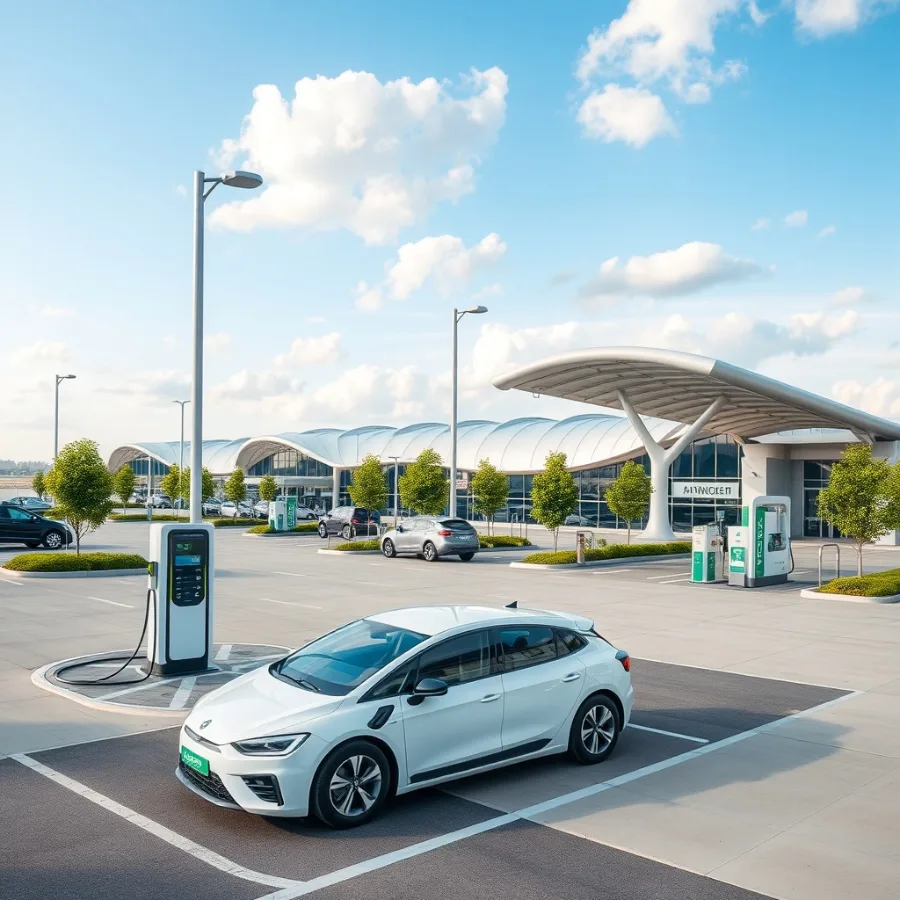
Every airport already has substantial grid electricity infrastructure for terminals, lighting and ground operations — extending that to support electric ground support equipment (baggage tractors, pushback tugs, electric buses) and eventually electric aircraft charging is an incremental buildout rather than a from-scratch project. This is why charging grids have moved faster in practice: airports are electrifying ground fleets today, with battery-buffered charging stations (pairing on-site batteries with grid connections) increasingly used to deliver high power without requiring expensive substation upgrades for every gate.
Hydrogen Fueling: Starting From Near-Zero Infrastructure
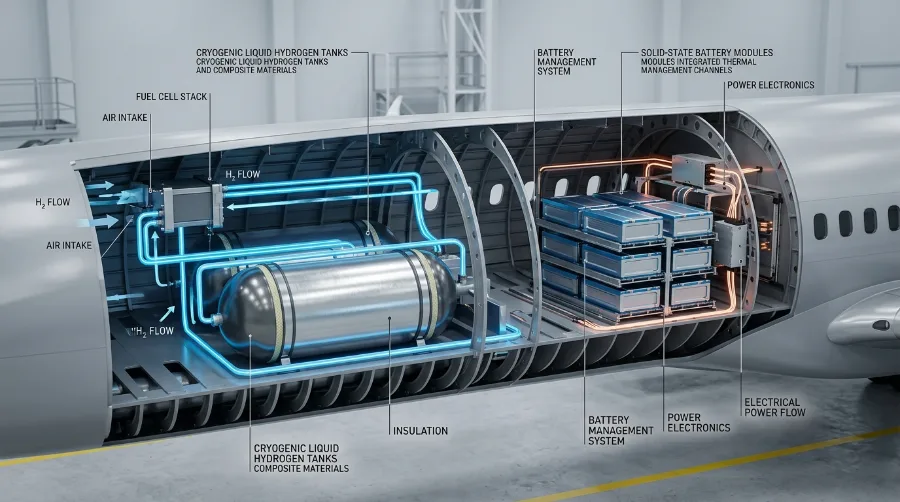
Hydrogen fueling stations face a much steeper infrastructure challenge: production (electrolysis or other methods), compression or liquefaction, storage, and delivery systems essentially don’t exist at most airports today and must be built from the ground up. The payoff, when it arrives, matches the case made in our hydrogen vs lithium-ion energy density guide: hydrogen’s system-level weight advantage matters most for larger, longer-range aircraft where battery weight becomes physically limiting. For smaller aircraft and ground equipment, that advantage doesn’t yet outweigh the infrastructure cost gap.
The Real Constraint: Grid Capacity Itself
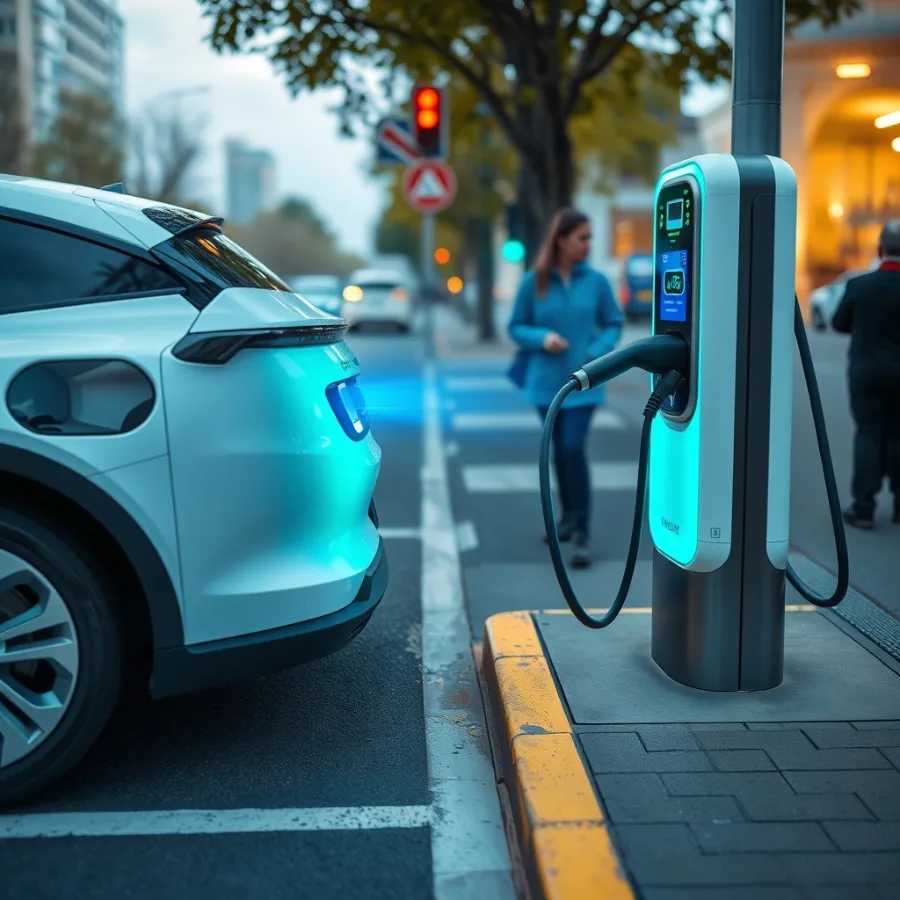
Charging grids aren’t a free lunch either. High-power aircraft charging — potentially hundreds of kilowatts to megawatts per aircraft — can exceed what an airport’s existing grid connection supports, requiring substation-level upgrades that rival hydrogen’s infrastructure cost in some cases. This is exactly the problem battery-buffered charging systems are designed to solve: storing grid power in on-site batteries during low-demand hours, then discharging it in bursts to support high-power aircraft charging without needing a full grid capacity upgrade.
Which Wins? Neither, Yet — Both Are Being Built in Parallel
The honest answer to “charging grids vs hydrogen fueling stations” is that airports pursuing serious electrification and decarbonization plans are investing in both, matched to different use cases: charging for ground equipment and near-term electric aircraft, hydrogen infrastructure pilots for the larger aircraft that may need it later. This mirrors the broader pattern across ground transportation, where battery-electric and hydrogen serve different vehicle classes rather than one technology winning outright everywhere.
A Worked Comparison: Two Airport Investment Paths
To make the charging grids vs hydrogen fueling stations decision concrete, consider two mid-size regional airports making infrastructure choices today:
Airport A (charging-first): Extends its existing grid connection with a battery-buffered charging system supporting electric ground support equipment and a handful of short-hop electric commuter aircraft. Capital cost is moderate, deployment is fast, and the airport captures near-term emissions and noise reductions on its ground fleet immediately.
Airport B (hydrogen-first): Builds electrolysis and storage capacity anticipating future hydrogen-fueled regional aircraft on longer routes. Capital cost is significantly higher upfront, deployment takes years longer, but the airport positions itself for the aircraft class that batteries genuinely cannot serve well — longer-range routes where the weight penalty of a large battery pack becomes operationally prohibitive.
Most real airports land somewhere between these two extremes: electrify ground operations now (the charging grids side of the ledger, where the case is already proven) while running smaller hydrogen pilots to keep options open for the aircraft generation that follows. Betting everything on either technology this early would mean either missing today’s easy wins (skipping charging) or ceding the long-range aircraft market to competitors (skipping hydrogen).
The operating economics behind these infrastructure choices are covered in our cost per flight guide.
Charging Grids vs Hydrogen Fueling Stations FAQ
Which is cheaper for airports: charging grids or hydrogen fueling?
Charging grids are generally cheaper to deploy initially since they extend infrastructure airports already have, while hydrogen fueling requires entirely new production, storage and delivery systems built from scratch.
Can airport grids handle aircraft-scale charging?
Not always without upgrades – high-power aircraft charging can exceed existing grid connections, requiring substation-level improvements. Battery-buffered charging stations increasingly solve this by storing power during low-demand hours.
Why would an airport invest in hydrogen infrastructure at all?
Hydrogen’s weight advantage over batteries grows with aircraft size and range requirements, making it the more plausible long-term option for larger aircraft even though the infrastructure cost is currently higher than charging.
Are airports choosing one technology over the other?
Mostly no – airports pursuing serious decarbonization plans are investing in both charging and hydrogen infrastructure in parallel, matched to different use cases rather than betting exclusively on one technology.
What is being electrified at airports today?
Mainly ground support equipment – baggage tractors, pushback tugs, electric buses – which charging grids handle well today, plus early electric aircraft prototypes on shorter routes.
Will hydrogen ever fully replace charging at airports?
Unlikely to fully replace it – the two serve different aircraft size and range profiles, similar to how battery-electric and hydrogen coexist in ground transportation rather than one technology dominating every use case.
Related Guides on ZeroCarbonDrive
- Hydrogen vs lithium-ion energy density — why hydrogen matters more for larger aircraft
- Hydrogen aviation explained — the aircraft-side technology
- Electric aircraft explained — the charging-side technology
Sources and Further Reading
Related Posts



Leave a Comment
Your comment will be published after it has been approved. Please send comments that do not contain slang words.