
Chinese Electric Cars (2026): Brands, Quality and Where You Can Buy Them
Updated September 18, 2026 · 10 min read
Last updated: September 5, 2026.
Quick answer: Chinese electric cars now dominate the global market — Chinese makers supplied about 60% of all EVs sold worldwide in 2025, led by BYD’s 4.6 million vehicles — but a 100% US tariff keeps them out of America for now, while Europe, Asia and Latin America buy them in record numbers.
Key takeaways
- China produced 16 million electric cars in 2025 and exported a record 2.5+ million.
- BYD sold ~4.6 million vehicles in 2025 — the world’s largest EV maker, ahead of Tesla.
- Chinese brands supplied roughly 60% of global EV sales; the wave reaches everywhere except the US/Canada.
- The 100% US tariff doubles import prices; BYD says it has no US entry plans under current rules.
- Quality is no longer the story: top models earn 5-star Euro NCAP ratings and lead on battery technology.
- Expect eventual US entry via local factories, not imports — the Japanese-automaker playbook, on a tariff-set timetable.
Who Makes Chinese Electric Cars: The Brands That Matter
| Brand | Owner/group | Known for | Where sold |
|---|---|---|---|
| BYD | Independent | Scale + Blade LFP battery; ~4.6M sales 2025 | ~everywhere ex-US/Canada |
| MG | SAIC | Value EVs with a European badge heritage | Europe, Australia, Asia |
| Zeekr / Volvo / Polestar | Geely | Premium engineering, Swedish design ties | Global incl. limited US (Volvo/Polestar) |
| NIO | Independent | Battery-swap stations, premium sedans/SUVs | China, Europe |
| Xpeng | Independent | Driver-assist software focus | China, Europe |
| Li Auto | Independent | Extended-range family SUVs | China |
| Chery / Omoda / Jaecoo | Chery | Fast-expanding budget exports | Asia, LatAm, Europe |
A nuance most coverage misses: several “Western” EVs are already Chinese-built or Chinese-owned — Polestar and many Volvos (Geely), some Teslas sold in Europe (Shanghai-built), and the entire MG range. The question “can I buy a Chinese electric car” often answers itself in the parking lot.
Why Chinese Electric Cars Got So Competitive
Three structural advantages compound. Vertical integration: BYD manufactures its own cells, semiconductors and motors — costs others pay suppliers for. Scale: 16 million EVs built in one year drives component costs down the learning curve faster than any rival market. Brutal domestic competition: dozens of brands fight for Chinese buyers with weekly price moves; only the efficient survive, and the survivors export. Add China’s decade-long battery supply-chain buildout — refining, cathodes, cells — and the price gap becomes structural, which is exactly why our EV statistics page shows Chinese pack prices ($84/kWh) 44-56% below Western ones.
Are Chinese Electric Cars Good? Quality and Safety Data
The stereotype about Chinese electric cars being cheap junk is a decade stale. Recent BYD, MG, NIO and Zeekr models carry 5-star Euro NCAP crash ratings; BYD’s Blade LFP battery survived nail-penetration tests that reshaped industry safety benchmarks and is now licensed by global automakers; and Chinese cell chemistry leads the LFP transition documented in our solid state battery vs lithium ion guide. Honest caveats remain: infotainment translation quirks in early exports, thinner dealer/service networks outside Asia, and resale-value uncertainty in new markets. Hardware, though, is no longer the weakness.
For how to read the ratings themselves, see why electric vehicle safety ratings matter.
Where Chinese Electric Cars Can and Cannot Be Sold
| Market | Tariff/status | Practical effect |
|---|---|---|
| United States | 100% tariff | Import price doubles; BYD says no entry plans; effectively closed |
| Canada | 100% tariff | Mirrors the US position |
| European Union | 17-45% (brand-specific) | Chinese EVs still sell and grow; some shift to EU assembly |
| UK, Australia, LatAm, SE Asia, Middle East | Low/normal duties | Fastest-growing Chinese EV markets |
Policy context matters for buyers everywhere: tariffs shape which models appear locally and at what price, the same way carbon rules shape aviation in our EU ETS explainer. For Americans, the practical takeaway is patience: analysts converge on Chinese-brand cars arriving via North American factories within a few years — the route Toyota and Hyundai once took.
BYD in Focus: How One Maker Redefined the Market
No explanation of Chinese electric cars works without BYD. The company began as a battery manufacturer in 1995, entered cars in 2003, and stopped making pure combustion vehicles entirely in 2022 — the first legacy-scale automaker to do so. That battery-first DNA explains its edge: the Blade LFP pack it builds in-house is cheaper, safer in penetration testing, and more tolerant of daily 100% charging than the NMC packs most rivals buy from suppliers. In 2025 that translated into roughly 4.6 million vehicles sold and 800,000+ delivered overseas, making BYD the yardstick every EV maker — Tesla included — is now measured against.
The catalog spans a $12,000-class city car (Seagull) to premium sub-brands (Denza, Yangwang), which is itself the story: Chinese electric cars are not a price tier, they are a full market running in parallel to the Western one.
Chinese Electric Cars by Segment
| Segment | Representative Chinese EVs | What defines the class |
|---|---|---|
| Budget Chinese electric cars | BYD Seagull/Dolphin, Wuling Mini | $10-20k prices no Western maker matches |
| Family sedans/SUVs | BYD Atto 3/Seal, MG4, Chery Omoda E5 | The export workhorses; Euro NCAP 5-star norm |
| Premium tech | NIO ET5, Xpeng G6, Zeekr 001 | Battery swap, city-driving assist, 800V charging |
| Range-extended family | Li Auto L-series | EREV formula dominating China’s family segment |
| Performance halo | Yangwang U9, Zeekr 001 FR | 1,000+ hp statements of capability |
How Europe Is Responding
Europe chose a middle path between American exclusion and open doors: brand-specific EU tariffs of roughly 17-45% (calculated on subsidy findings), which slowed but did not stop the wave. The strategic response to Chinese electric cars is localization — BYD is building in Hungary and Turkey, Chery in Spain, and MG’s owner SAIC weighs EU assembly — which converts an import controversy into local jobs and, not incidentally, tariff-free cars. For European buyers the practical result is more choice at lower prices; for Western automakers it has forced faster cost-cutting and cheaper models than any regulation ever achieved. Competition, in short, is doing what tariffs alone could not.
The Gray-Market Reality for Americans
Determined US buyers occasionally import Chinese electric cars through third countries — and almost always regret the math. The 100% tariff applies at entry; federalizing a non-US-market vehicle (lighting, safety, telematics compliance) costs thousands more; no warranty, parts channel or OTA support survives the trip; and insurers quote accordingly. A $30,000 car lands as a $70,000+ curiosity. Unless the goal is a collector piece, the rational American play is watching the local-manufacturing chess unfold — and meanwhile comparing the domestic value picks in our EV incentives coverage.
Myths About Chinese Electric Cars, Tested
“They’re spying devices on wheels.” Data-security scrutiny is legitimate and active in several markets, but identical connected-car questions apply to every modern vehicle; European regulators address it through data-localization requirements rather than bans.
“They’ll rust away in three years.” The export generation is built for European winters and Australian sun; corrosion warranties match industry norms. Early-2010s horror stories describe cars two product generations gone.
“Cheap means disposable batteries.” Backwards: LFP chemistry — the Chinese specialty — cycles longer than premium NMC and tolerates full charges daily, which is why Tesla adopted it for standard-range cars, as our EV battery health guide details.
“Without subsidies they’d collapse.” Subsidies mattered in the buildout decade; today’s edge is structural (integration, scale, competition). The EU’s own tariff investigation priced the residual subsidy advantage at 17-45% — significant, but far short of explaining a 50-60% cost gap.
What Buyers Outside the US Should Check
| Check | Why it matters |
|---|---|
| Local service network depth | The real ownership difference vs incumbents |
| Battery warranty terms | 8yr/160,000km is the bar; LFP packs tolerate 100% charging |
| Software/OTA update track record | Varies more by brand than hardware does |
| Charging standard fit | CCS2 in Europe/AU; check charging network compatibility |
| Resale data in YOUR market | Young brands = thin used-value history |
Charging and Living With One Outside China
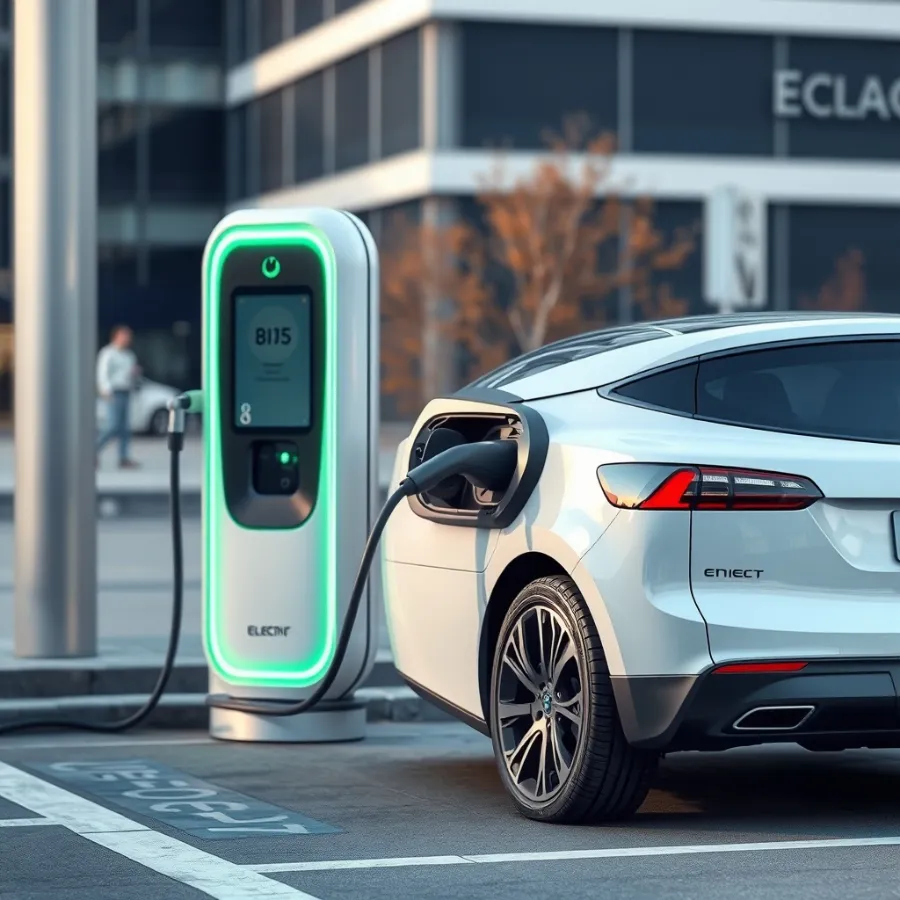
Exported Chinese electric cars adapt to local standards — CCS2 ports in Europe and Australia, local plugs elsewhere — so public charging works exactly as it does for any EV; our EV charging stations guide applies unchanged. Home charging is equally standard: any quality unit from our Level 2 EV charger guide pairs fine. Two ownership notes specific to the newer brands: check whether navigation-based battery preconditioning is enabled in your market’s software build (it lags on some early exports, slowing winter fast-charging), and confirm the local importer’s parts depth for body panels — mechanical parts rarely constrain, cosmetic ones sometimes do.
Resale on Chinese electric cars is the honest open question. Young brands lack a decade of residual-value data, and early adopters carry that uncertainty. The counterweight: LFP packs age slowly, and as service networks thicken, residuals in mature Chinese-EV markets (Norway, Australia, Thailand) have begun tracking mainstream brands. Five years from now the question will likely sound as dated as it now does for Korean cars.
The Numbers That Explain Everything
| Statistic (2025) | Value | Why it matters |
|---|---|---|
| Chinese EV production | 16 million | More than the rest of the world combined |
| Chinese share of global EV sales | ~60% | The market’s center of gravity has moved |
| Chinese EV exports | 2.5+ million (doubled YoY) | The wave is accelerating, not peaking |
| BYD global sales | ~4.6 million | World’s largest EV maker |
| China pack price average | $84/kWh | 44-56% below NA/EU — the structural edge |
| US tariff | 100% | The one big market outside the wave |
Every figure traces to the IEA and BloombergNEF datasets on our EV statistics page, updated as annual editions land.
What It Means for the Global EV Transition
Whatever one thinks of the trade politics, the climate math on Chinese electric cars is direct: Chinese electric cars are the main reason global EV prices keep falling and the main engine behind one in four new cars worldwide being electric. Exported at 2.5 million a year and built at 16 million, they are dragging the worldwide cost curve down — including for competitors forced to respond.
The US market’s isolation from that price pressure is a policy choice with a visible cost: American buyers pay more per EV than almost anyone else, a gap our EV tax credits by country comparison puts in context. The next chapter — local factories, joint ventures, or continued separation — will decide whether that gap closes this decade.
Watchlist: What Changes Next
Three developments will reshape this guide’s next update. First, factory announcements — a confirmed BYD or Chery plant in Mexico or the US would start the countdown to American availability of Chinese electric cars in domesticated form. Second, the EU localization race: every European-built model converts tariff friction into mainstream acceptance, the way “Japanese imports” became simply “Toyotas” a generation ago.
Third, the technology one-two of sodium-ion city cars and 800V-charging platforms, both arriving first in China — when they land in exported Chinese electric cars, the price and charging-speed baselines for the whole industry move again. This page carries a visible last-updated date and is revised as each shift lands, per our editorial policy.
For what those structural cost advantages mean at US dealerships, our cheapest electric cars guide ranks the current under-$40k field with verified prices.
One-Minute Recap
The short version of the Chinese electric cars story: they dominate global volume (60% of world supply), lead on battery cost and LFP chemistry, match Western safety ratings in current export models, and reach every major market except the US and Canada, where a 100% tariff holds the door shut. For non-US buyers the checklist is service network, warranty, software maturity and resale data; for Americans, the watch-item is factory announcements in North America. Everything above is the evidence for those five sentences.
Frequently Asked Questions
Can you buy a Chinese electric car in the US?
Effectively no, not new ones: a 100% import tariff doubles the sticker price, and BYD has said it has no plans to enter the US or Canada under current trade conditions. The realistic paths are gray-market imports (costly, warranty-free) or waiting for locally assembled models.
Which Chinese electric car brands are the biggest?
BYD dominates with about 4.6 million vehicles sold in 2025, making it the world\u0027s largest EV maker. Geely (with Zeekr, Volvo, Polestar links), SAIC (MG), Chery, and premium challengers NIO, Xpeng and Li Auto round out the front rank.
Are Chinese electric cars good quality?
Modern Chinese EVs routinely score well in European crash tests (many MG, BYD and NIO models carry 5-star Euro NCAP ratings) and lead on battery tech — BYD\u0027s Blade LFP pack is licensed by global automakers. Software polish and dealer networks vary more than hardware quality.
Why are Chinese electric cars so cheap?
Scale and vertical integration: China built 16 million EVs in 2025, and companies like BYD make their own batteries, chips and motors. Intense domestic price competition — dozens of brands fighting for share — pushes prices down further before any subsidy.
Where are Chinese EVs sold today?
Nearly everywhere except the US and Canada: Europe (with 17-45% EU tariffs), Southeast Asia, Latin America, Australia and the Middle East. Chinese EV exports passed 2.5 million vehicles in 2025 — roughly doubling year over year.
Will Chinese electric cars come to America eventually?
Industry analysts widely expect entry within a few years — most likely via factories in Mexico or the US itself rather than direct imports, mirroring how Japanese and Korean automakers established themselves. Tariff policy will set the timetable.
Sources and Further Reading
- IEA — Global EV Outlook 2026: Manufacturing and Trade
- Gasgoo — BYD 2025 global sales
- CNBC — Chinese EVs and the US market
Every figure on this page is dated and linked to its source. How we verify · Editorial policy · Report a correction
Related Posts
Leave a Comment
Your comment will be published after it has been approved. Please send comments that do not contain slang words.