
Underground Carbon Storage
Updated September 18, 2026 · 8 min read
Underground carbon storage places captured carbon dioxide deep beneath the surface, keeping it away from the atmosphere. The approach is increasingly discussed as industries search for practical ways to reduce emissions that cannot easily be eliminated.
The technology is not a license to continue polluting without limits. When paired with cleaner production, strong regulation, and transparent monitoring, however, it can support climate goals in sectors such as cement, steel, chemicals, and energy.
Basic Concepts and Definitions
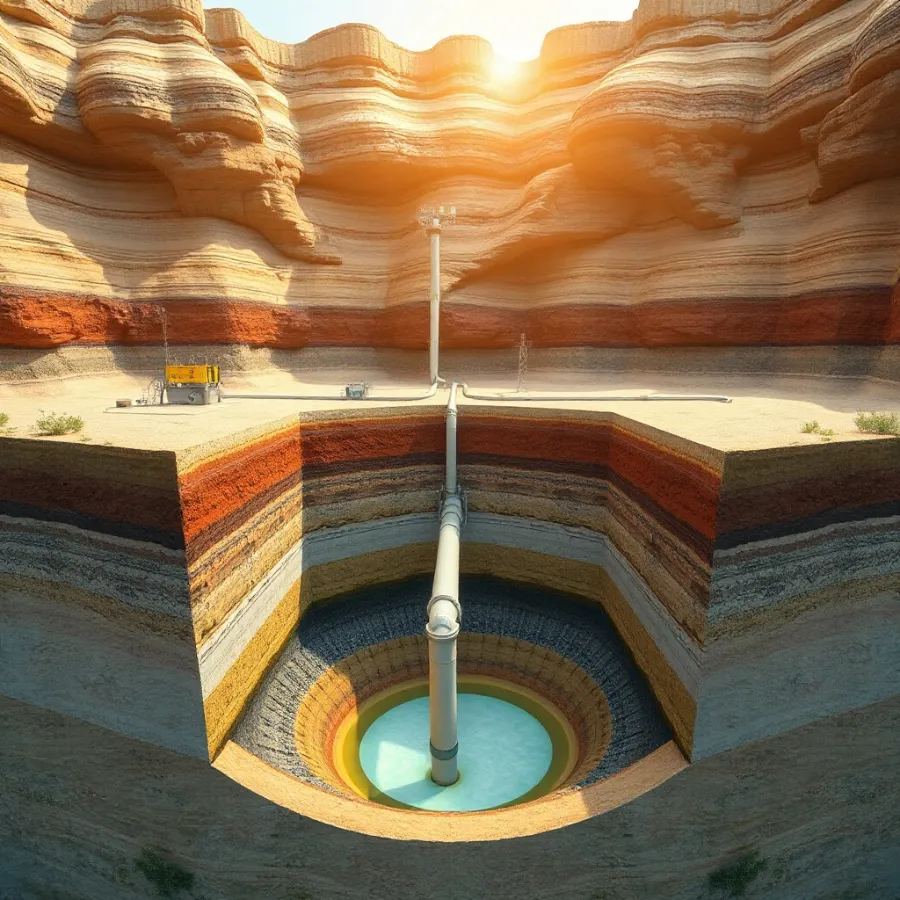
Underground carbon storage is the final stage of carbon capture and storage, commonly shortened to CCS. Carbon dioxide is separated from an industrial gas stream, compressed, transported, and injected into suitable geological formations. Storage sites are usually located more than 800 meters underground, where pressure keeps the gas in a dense, fluid-like state.
Carbon capture can occur before combustion, after combustion, or through oxy-fuel processes. Direct air capture follows a different route by extracting diluted carbon dioxide directly from ambient air. Both approaches may use geological storage, although their costs and energy requirements differ considerably.
A complete project includes injection wells, sealing layers, monitoring equipment, risk controls, and a closure plan. Carbon capture and utilization, known as CCU, is not identical because it turns captured carbon into products. Climate benefits depend on how long those products retain the carbon.
How Captured Carbon Reaches the Subsurface
Industrial facilities generally capture carbon dioxide using solvents, membranes, adsorption materials, or physical separation. Amine-based solvents are widely used because they can remove carbon dioxide from flue gas, although heating the solvent for reuse consumes substantial energy.
After water and impurities are removed, the captured gas is compressed into a dense phase. This reduces its volume and makes transportation more efficient. Pipelines are often preferred for large, steady flows, while ships, rail systems, and road tankers can serve smaller or more distant projects.
At the storage site, injection wells carry carbon dioxide into porous rock. Operators manage pressure and flow rates to avoid damaging the formation. A single project may use several injection wells alongside dedicated monitoring wells.
Shared transport and storage hubs can lower costs by serving multiple factories. Such clusters are emerging around ports and industrial regions where cement plants, refineries, hydrogen facilities, and waste-to-energy plants operate close together.
Geological Formations Suitable for Carbon Storage
Deep saline formations offer the greatest estimated storage potential. These layers contain salty water that is unsuitable for drinking and are commonly found beneath thick, impermeable caprock. Sandstone and carbonate formations may provide the pore space needed to hold injected carbon dioxide.
Depleted oil and gas reservoirs are also considered attractive. Their geological structures held hydrocarbons for millions of years, and operators often possess extensive seismic data and drilling records. Existing wells can still create leakage pathways if their locations or construction quality are poorly documented.
Basalt formations provide another option. Carbon dioxide can react with minerals containing calcium, magnesium, and iron, eventually forming stable carbonate minerals. Projects in Iceland have demonstrated that this mineralization can occur faster than researchers once expected under favorable conditions.
Site selection depends on capacity, injectivity, depth, pressure, fault behavior, caprock integrity, and proximity to emission sources. Storage estimates should not be treated as guaranteed capacity until detailed seismic surveys, test wells, pressure analysis, and reservoir modeling confirm the formation’s performance.
From Early Experiments to Commercial Projects
Injecting carbon dioxide underground is not entirely new. The oil industry has used it for enhanced oil recovery since the twentieth century, pushing additional petroleum toward production wells. Dedicated climate storage differs because its central purpose is long-term containment rather than increased oil extraction.
Norway’s Sleipner project became a major milestone in 1996. It began injecting carbon dioxide separated from natural gas into the Utsira saline formation beneath the North Sea. Repeated seismic surveys have allowed researchers to observe how the stored plume moved through underground layers.
Canada’s Quest project stores emissions from hydrogen production, while Australia’s Gorgon project injects carbon dioxide separated from natural gas. In Iceland, Carbfix dissolves carbon dioxide in water before injecting it into basalt, encouraging mineral formation.
New projects increasingly use regional hubs. Norway’s Northern Lights network, for example, is designed to receive liquefied carbon dioxide by ship and store it beneath the seabed. Similar plans are developing around the North Sea, the Gulf Coast, and major Asian industrial centers.
Monitoring Leakage Pressure and Long-Term Safety
Carbon dioxide can be trapped in several ways. Structural trapping holds it beneath caprock, while residual trapping immobilizes small droplets inside rock pores. Over time, some carbon dissolves in formation water or reacts with minerals, generally increasing storage security.
Operators monitor injection pressure, well integrity, groundwater chemistry, and the underground carbon plume. Tools may include three-dimensional seismic imaging, pressure gauges, microseismic sensors, satellite measurements, soil-gas sampling, and chemical tracers.
The most credible leakage risks often involve wells rather than intact caprock. Old boreholes, defective cement, corrosion, or unexpected pressure changes require careful investigation. Good projects therefore map legacy wells and define procedures for repair, pressure reduction, or temporary shutdown.
Monitoring must continue after injection ends. The exact period depends on local law and site behavior, but responsibility should not be transferred until evidence shows that the plume is stable and predictable. Emergency plans, financial security, and public reporting strengthen confidence.
Climate Benefits Costs and Community Concerns
The climate value of underground carbon storage depends on the entire supply chain. Analysts consider the capture rate, additional energy use, transport emissions, methane leakage, construction impacts, and the probability of permanent containment. Focusing only on the amount injected can exaggerate performance.
CCS is often most relevant where direct electrification remains technically difficult. Cement production is a leading example because limestone releases carbon dioxide during calcination, regardless of the fuel used. Some chemical, refining, steel, hydrogen, and waste-management processes may also benefit.
Costs vary by carbon concentration, project scale, transport distance, geology, financing, and regulation. Capturing a concentrated stream is generally cheaper than treating diluted power-plant exhaust or ambient air. Shared pipelines and storage hubs can reduce infrastructure expenses but require coordinated planning.
Communities may worry about pipeline accidents, groundwater, property values, induced seismicity, and long-term liability. Developers should engage residents before major decisions are fixed. Clear information about alternatives, local impacts, employment, and emergency response is more useful than promotional claims.
Policy also matters. Carbon prices, tax credits, contracts for difference, storage permits, and emissions standards can improve project economics. These measures work best when combined with efficiency, cleaner fuels, and [renewable energy systems], rather than treating carbon storage as the only climate solution.
Expert Recommendations and Tips
Start with emissions prevention: Project planners should first examine efficiency, electrification, material substitution, and process redesign, reserving storage for emissions that remain technically or economically difficult to avoid.
Characterize the geology thoroughly: Developers should combine seismic surveys, core samples, test wells, pressure data, and reservoir simulations before presenting a formation as commercially usable storage capacity.
Assess the complete life cycle: Calculations should include capture energy, transportation, construction, methane releases, auxiliary fuel, and compression so that reported reductions reflect genuine net climate benefits.
Protect drinking-water resources: Injection zones should be separated from usable aquifers by reliable confining layers, while groundwater baselines should be recorded before drilling or injection begins.
Map every existing well: Abandoned and undocumented boreholes can become leakage pathways, making historical drilling records, field inspections, and corrective cementing essential parts of site preparation.
Control reservoir pressure: Operators should adjust injection rates, distribute flow across wells, or manage formation water when necessary to reduce fault activation and preserve caprock integrity.
Plan monitoring before operation: A strong measurement, reporting, and verification program should establish baseline conditions and define technologies, reporting intervals, thresholds, and corrective actions in advance.
Create durable financial safeguards: Companies should provide bonds, insurance, trust funds, or comparable security so that monitoring, remediation, and closure costs do not later fall on taxpayers.
Engage affected communities early: Residents, landowners, Indigenous groups, emergency services, and local authorities should receive understandable risk information and meaningful opportunities to influence project design.
Avoid exaggerated capture claims: Operators should distinguish between equipment capture rate, annual operating performance, net avoided emissions, and permanently stored carbon because these figures are not interchangeable.
Related guides: The Future of Carbon Capture and Storage Solutions, Energy Storage Trends and Future of EV Storage.
Frequently Asked Questions
Can stored carbon dioxide return to the atmosphere?
Leakage is possible if a site is poorly selected, a well fails, or pressure is mismanaged. Properly characterized formations use multiple trapping mechanisms and thick sealing layers. Monitoring and repair plans are still necessary because no geological project should rely on assumptions alone.
How long can carbon dioxide remain underground?
Well-chosen reservoirs are expected to retain carbon dioxide for thousands of years or longer. Containment tends to become more secure as the carbon dissolves in brine, becomes trapped in small pores, or reacts with minerals.
Can underground storage contaminate drinking water?
A leak into a shallow aquifer could alter water chemistry and mobilize naturally occurring metals. This risk is reduced by placing injection zones far below drinking-water sources, testing well integrity, maintaining pressure limits, and monitoring groundwater.
Does carbon injection cause earthquakes?
Injection changes underground pressure and can occasionally activate existing faults. Most associated seismic events are too small to be felt, but careful fault mapping, pressure monitoring, and adjustable injection rates are essential where geological sensitivity exists.
Is carbon storage the same as enhanced oil recovery?
No. Enhanced oil recovery injects carbon dioxide primarily to produce more petroleum, although part of the gas may remain underground. Dedicated storage is designed and regulated around permanent containment, measurement, and climate performance.
Is underground carbon storage expensive?
It can be. Capture usually represents the largest cost, particularly for diluted emission streams. Expenses may fall when facilities share pipelines and storage sites, use concentrated carbon sources, and operate under predictable long-term climate policies.
Can households use this technology?
Underground storage is generally an industrial-scale service rather than a household technology. Individuals encounter it indirectly through lower-carbon cement, steel, electricity, fuels, or waste treatment produced by facilities connected to CCS networks.
Conclusion
Underground carbon storage can help manage emissions from industries with limited near-term alternatives. Its strongest applications combine reliable capture, carefully selected geology, secure transport, transparent accounting, and monitoring that continues beyond site closure.
The technology still carries cost, energy, safety, and governance challenges. It should complement rapid emission prevention rather than delay it. When projects use conservative claims, independent oversight, community participation, and enforceable long-term responsibility, geological storage can become a credible part of a broader climate strategy.
Sources and Further Reading
Every figure on this page is dated and linked to its source. How we verify · Editorial policy · Report a correction
Related Posts


Leave a Comment
Your comment will be published after it has been approved. Please send comments that do not contain slang words.