
Carbon Offset vs Carbon Credit: The Key Difference Explained
Updated September 18, 2026 · 2 min read
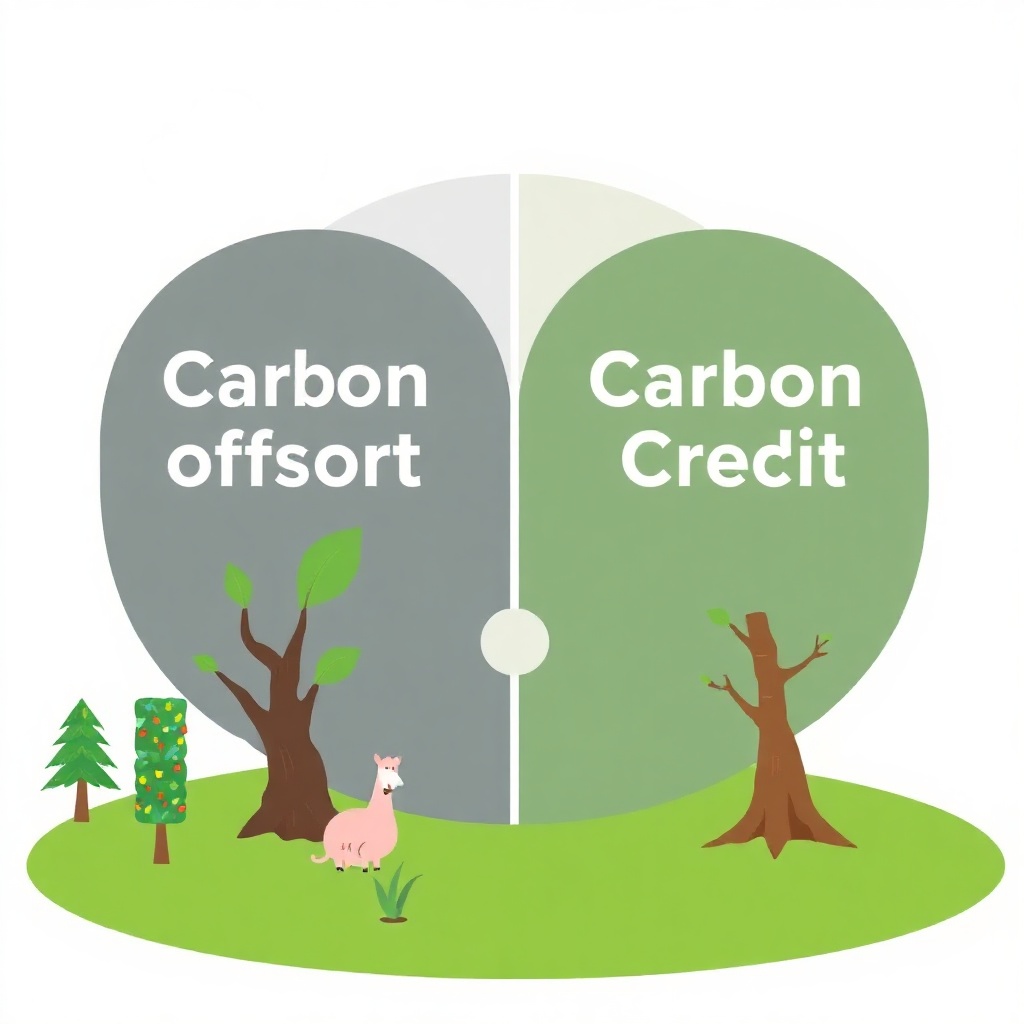
The short answer on carbon offset vs carbon credit: a carbon credit is a tradable unit representing one ton of CO2 either avoided or removed, while a carbon offset is the act of purchasing and retiring that credit to compensate for emissions elsewhere — every offset involves a credit, but a credit only becomes an offset once someone buys it specifically to claim compensation for their own emissions.
- A credit is the underlying tradable unit; an offset is the specific claim made when a credit is purchased and retired against one’s own emissions.
- Credits can be bought, sold, or held without being used as an offset — only “retiring” a credit against a specific emissions claim makes it an offset.
- Credit quality varies enormously by project type and verification standard, directly affecting whether an offset claim built on it is actually credible.
- “Retirement” is the key accounting step — a credit can only be used as an offset once, then must be permanently retired from the registry to prevent double-counting.
Carbon offset vs carbon credit: the relationship
| Term | What it is | Key characteristic |
|---|---|---|
| Carbon credit | A tradable unit representing 1 ton of CO2 avoided/removed | Can be bought, sold, held, or retired |
| Carbon offset | The act of retiring a credit to claim compensation | A specific use case for a credit, not a separate instrument |
Why “retirement” is the key distinguishing step
A carbon credit sitting in a trading account isn’t yet an offset — it only becomes one when its owner formally retires it against a specific emissions claim, permanently removing it from circulation in the registry so it can’t be resold, traded, or claimed by anyone else. This retirement step is what turns an abstract tradable financial instrument (the credit) into a concrete climate compensation claim (the offset), and it’s also the point where double-counting risk gets eliminated, assuming the registry is properly maintained.
Why credit quality determines offset credibility
Since an offset claim is only as good as the credit behind it, credit quality is the real substance of the offset-vs-credit conversation: a credit from a rigorously verified, additional (meaning the reduction wouldn’t have happened anyway), permanent project supports a genuinely credible offset claim, while a credit from a low-quality or overstated project undermines the offset regardless of how the transaction is labeled. This is why scrutiny of offset programs increasingly focuses on the underlying credit’s project type and verification standard, not just whether an offset purchase happened.
Why this distinction matters for buyers
Understanding the credit-vs-offset relationship helps explain some confusing market dynamics: a company can hold carbon credits without making any offset claims (useful for future flexibility or trading), and the same underlying credit type can support wildly different offset credibility depending on the specific project and verification standard it came from — meaning “we bought carbon credits” and “we retired high-quality carbon credits as offsets” are meaningfully different claims worth distinguishing.
Sources and Further Reading
Want the ground-level basics first? See carbon credits explained.
What is the difference between a carbon offset and a carbon credit?
A carbon credit is a tradable unit representing one ton of CO2 avoided or removed, while an offset is the specific act of purchasing and retiring that credit to compensate for one’s own emissions.
Can you have a carbon credit without it being an offset?
Yes — a credit sitting in a trading account, bought or held without being retired against a specific emissions claim, is not yet an offset. It only becomes an offset once formally retired for that purpose.
What does ‘retiring’ a carbon credit mean?
Retiring permanently removes a credit from a registry so it can’t be resold or claimed by anyone else, turning it from a tradable financial instrument into a concrete, one-time-use offset claim.
Why does carbon credit quality matter for offsets?
Since an offset claim is only as credible as the credit behind it, a credit from a rigorously verified, additional, and permanent project supports a genuine offset claim, while a low-quality credit undermines it regardless of transaction labeling.
Can the same carbon credit be used as an offset twice?
No — proper registry systems retire a credit permanently once used as an offset, specifically to prevent double-counting where the same emissions reduction gets claimed by more than one buyer.
Is buying carbon credits the same as making a carbon-neutral claim?
Not automatically — buying credits without retiring them as offsets against specific emissions doesn’t support a carbon-neutral claim; the credits must be formally retired for that specific compensation purpose.
Every figure on this page is dated and linked to its source. How we verify · Editorial policy · Report a correction
Related Posts



Leave a Comment
Your comment will be published after it has been approved. Please send comments that do not contain slang words.