
Industrial Carbon Emissions Sources: A Sector Breakdown
Updated September 13, 2026 · 2 min read
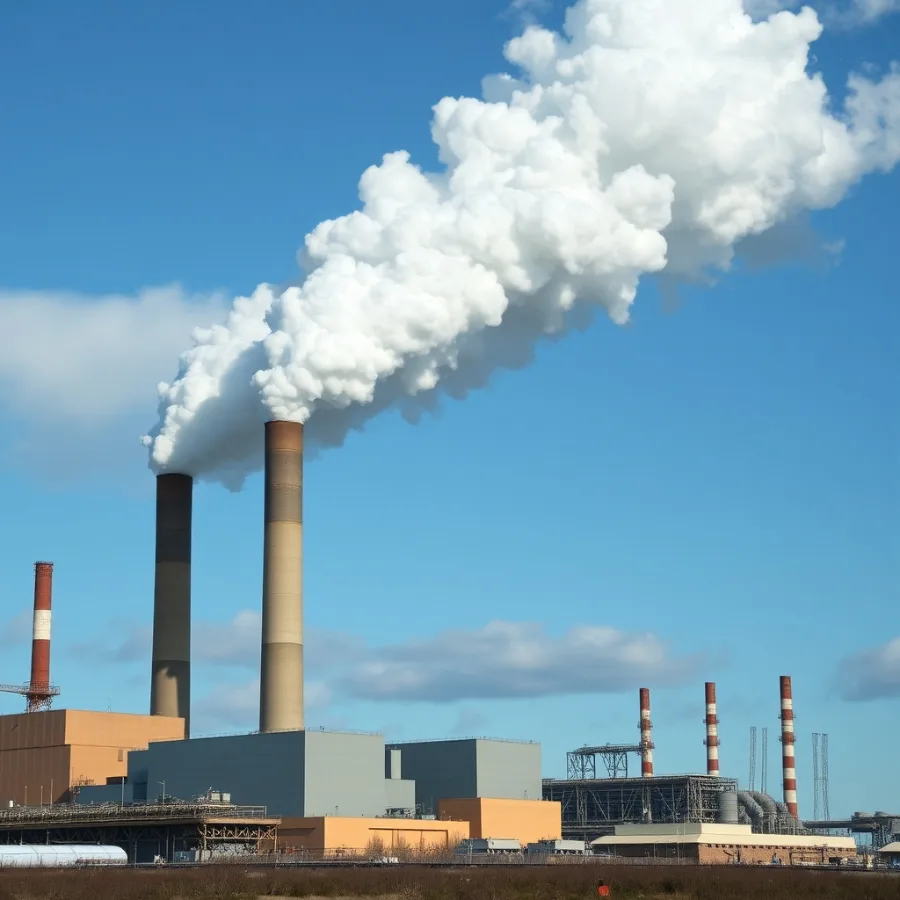
Breaking down industrial carbon emissions sources reveals a concentrated picture: a handful of heavy industries — steel, cement, chemicals, and to a lesser extent aluminum and glass — account for the large majority of industrial emissions, driven mainly by process heat requirements and, in some cases, chemical reactions that release CO2 independent of the energy source used.
- Process heat — the high temperatures many industrial processes require — is the single largest category of industrial emissions across most sectors.
- Some industries (cement, and to a lesser extent chemicals) have emissions baked into the chemical process itself, not just the energy source.
- Industrial emissions are harder to decarbonize than power generation because many processes need very high, sustained temperatures that electrification doesn’t yet reach cost-effectively everywhere.
- A relatively small number of large facilities account for a disproportionate share of total industrial emissions, making targeted facility-level intervention high-leverage.
The main industrial carbon emissions sources by sector
| Sector | Primary emissions source | Decarbonization difficulty |
|---|---|---|
| Steel | Coal as fuel + chemical reducing agent | High — needs hydrogen-based process change |
| Cement | Process heat + chemical calcination reaction | Very high — process emissions can’t be electrified away |
| Chemicals | Process heat + fossil-derived feedstocks | High — variable by specific product |
| Aluminum/glass | Extremely energy-intensive process heat | Moderate — more electrification-friendly than cement/steel |
Why process heat dominates industrial emissions
Many industrial processes require sustained, very high temperatures — well beyond what’s needed for typical building heating — historically most economically reached by burning fossil fuels directly at the point of use. Electrifying this kind of high-temperature process heat is technically possible for some applications but remains expensive or immature for others, making process heat the single largest and most persistent category of industrial emissions across most heavy-industry sectors.
Why some sectors have emissions independent of energy source
Cement is the clearest example of a sector where switching to clean energy alone can’t solve the emissions problem: the calcination reaction that converts limestone to clinker releases CO2 as a direct chemical byproduct, regardless of whether the kiln itself runs on coal or renewable electricity. This distinction between energy-source emissions (fixable by switching power sources) and process emissions (requiring a different chemistry entirely) is central to understanding why some industries are fundamentally harder to decarbonize than others.
Why facility-level concentration matters for strategy
Industrial emissions aren’t spread evenly across countless small sources — a relatively concentrated set of large steel mills, cement plants, and chemical facilities account for a disproportionate share of the total. This concentration is actually a strategic advantage for decarbonization efforts: targeted intervention (retrofits, carbon capture installation, process conversion) at a manageable number of large facilities can move the needle more than diffuse efforts spread across thousands of smaller emitters, making facility-level industrial decarbonization a genuinely high-leverage climate strategy.
Sources and Further Reading
What are the main industrial carbon emissions sources?
A small number of heavy industries — steel, cement, chemicals, and to a lesser extent aluminum and glass — account for the large majority of industrial emissions, driven mainly by high-temperature process heat requirements.
Why is process heat such a big source of industrial emissions?
Many industrial processes need sustained, very high temperatures historically reached most economically by burning fossil fuels directly, and electrifying this kind of high-temperature heat remains expensive or immature for many applications.
Can switching to clean electricity solve all industrial emissions?
No — some processes, particularly cement production, release CO2 through the chemical reaction itself (calcination), independent of the energy source powering the facility, requiring a fundamentally different process rather than just cleaner power.
Are industrial emissions concentrated in a few facilities?
Yes — a relatively small number of large steel mills, cement plants, and chemical facilities account for a disproportionate share of total industrial emissions, making facility-level intervention a genuinely high-leverage strategy.
Which industrial sector is hardest to decarbonize?
Cement is generally considered the hardest, since its process emissions from calcination can’t be eliminated by switching energy sources alone, requiring alternative binders or carbon capture instead.
Is industrial decarbonization harder than power sector decarbonization?
Generally yes — power generation has proven, scalable clean alternatives like wind and solar, while many industrial processes need very high sustained temperatures or specific chemistry that clean electricity alone doesn’t yet address everywhere.
Every figure on this page is dated and linked to its source. How we verify · Editorial policy · Report a correction
Related Posts


Leave a Comment
Your comment will be published after it has been approved. Please send comments that do not contain slang words.