
The Future of EV Charging Infrastructure in 2030: Revolutionary Smart Charging Networks
Updated September 2, 2026 · 6 min read
The Future of EV Charging Infrastructure in 2030: Powerful Smart Networks
The Future of EV Charging Infrastructure is becoming one of the most important topics in electric mobility, clean energy and global transportation. As electric vehicles move from early adoption into the mainstream market, charging networks are now just as important as the vehicles themselves. Drivers want speed, reliability and easy access. Fleet operators want predictable charging schedules. Governments want lower emissions and stronger energy security.
This shift is changing how cities, highways, power grids and mobility companies plan the next decade of transportation. EV Charging Infrastructure is no longer just about installing chargers in parking lots. It now includes smart software, ultra fast charging, battery storage, megawatt charging systems and renewable energy integration.
The Future of EV Charging Infrastructure
The Future of EV Charging Infrastructure will decide how quickly electric vehicles become practical for everyday drivers and commercial fleets. A reliable charging network reduces range anxiety and gives consumers confidence that electric mobility can replace traditional fuel-based transportation.
Countries such as China, the United States, Germany, Norway, the United Kingdom and India are investing heavily in charging stations because public infrastructure directly affects EV adoption. Without enough reliable chargers, even the best electric vehicles become less attractive.
Modern charging networks must support:
- home charging
- public charging stations
- highway fast charging
- commercial fleet depots
- electric bus systems
- heavy-duty truck charging
- renewable energy integration
The biggest challenge is not only building more chargers. The real challenge is building smarter, faster and more dependable charging systems.
The Future of EV Charging Infrastructure Networks
Smart EV Charging Networks are becoming the foundation of future mobility. Traditional chargers simply deliver electricity to a vehicle. Smart charging systems use software to manage charging speed, grid demand, electricity prices and battery condition.
This matters because millions of electric vehicles charging at the same time could create serious pressure on local power grids. Smart charging helps avoid that problem by controlling when and how vehicles charge.
A smart EV charging network can monitor:
- grid demand
- charger availability
- electricity pricing
- battery temperature
- vehicle charging needs
- renewable energy supply
For drivers, this means a better charging experience. For utilities, it means lower grid stress. For businesses, it means better energy cost control.
Ultra Fast EV Charging
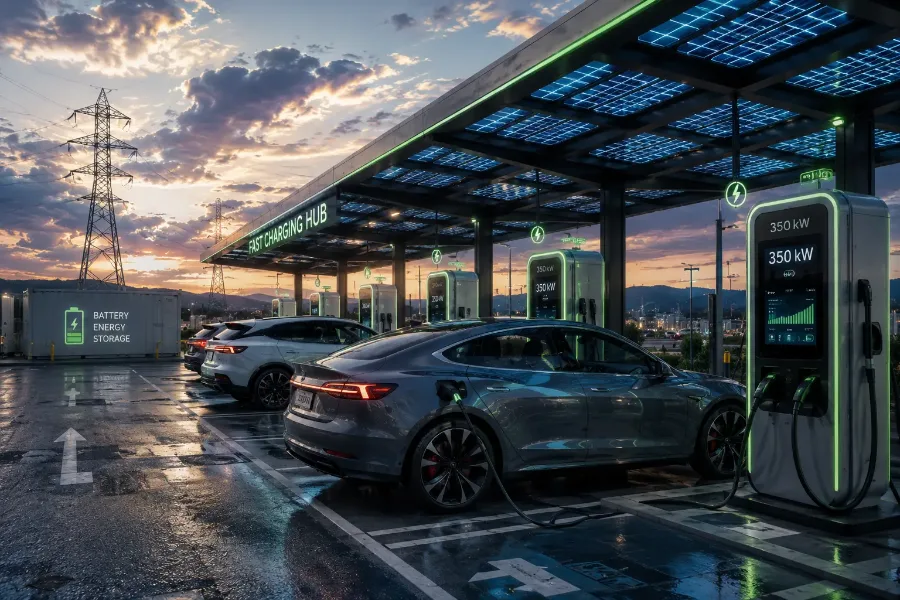
Ultra Fast EV Charging is one of the most important parts of The Future of EV Charging Infrastructure. Many drivers will charge at home, but long-distance travel depends on fast and reliable public charging.
Modern DC fast chargers commonly operate at 150 kW, 250 kW or 350 kW. These chargers can add significant driving range in a short time, depending on the vehicle battery and charging curve.
However, ultra fast charging requires more than powerful hardware. A charging station needs strong grid access, cooling systems, reliable payment software and proper site planning.
Fast charging hubs are especially important on highways. They allow EV drivers to travel between cities without long delays. Europe, China and the United States are all expanding highway charging corridors to support long-distance electric mobility.
Megawatt Charging Systems
Megawatt Charging is designed for heavy-duty electric transportation. Passenger cars usually do not need this level of power, but electric trucks, buses and commercial fleets do.
Large vehicles have large battery packs. If a truck or bus needs to return to service quickly, slow charging is not enough. Megawatt charging can help commercial fleets reduce downtime and make electric freight more realistic.
Megawatt charging will likely grow first in:
- truck depots
- logistics centers
- ports
- bus terminals
- industrial zones
The main challenge is electricity demand. A depot with multiple megawatt chargers may require major grid upgrades. This is why utilities, transport companies and governments must plan charging infrastructure together.
Battery Buffered Charging
Battery buffered charging stations are becoming more important because they reduce pressure on the grid. Instead of pulling all electricity directly from the grid during every charging session, these systems store energy in on-site batteries.
When a vehicle arrives, the station can deliver high power from the battery system. This makes ultra fast charging easier in areas where the grid is not strong enough for direct high-power charging.
Battery buffered charging can provide:
- lower peak demand
- faster charging access
- better grid stability
- renewable energy storage
- backup power support
Battery development is closely connected to future mobility. Readers can explore this topic further in How Battery Technology Is Transforming Electric Flight.
Global EV Charging Infrastructure
The Future of EV Charging Infrastructure is also a global race. Different regions are building charging networks at different speeds.
China
China currently leads the world in EV adoption and public charging deployment. Strong government support, domestic EV manufacturers and battery supply chains give China a major advantage.
Europe
Europe is expanding charging infrastructure through climate regulation and clean transportation policy. Germany, Norway, the Netherlands, France and the United Kingdom are major markets for EV charging growth.
United States
The United States is investing in national charging corridors, but charging reliability remains uneven across regions. California leads adoption, while many rural areas still need stronger infrastructure.
India and Middle East
India is growing rapidly in electric two-wheelers, buses and urban fleets. The Middle East has strong potential because of smart city projects, solar energy investments and modern infrastructure planning.
EV Charging Comparison Table
| Charging Type | Main Benefit | Main Challenge | Best Use Case |
| Level 2 Charging | Affordable and simple | Slow for long trips | Homes and workplaces |
| DC Fast Charging | Quick public charging | High installation cost | Urban hubs and highways |
| Ultra Fast Charging | Shorter charging stops | Grid capacity demand | Long-distance travel |
| Megawatt Charging | Supports heavy vehicles | Very high power demand | Trucks and buses |
| Battery Buffered Charging | Reduces grid pressure | Battery system cost | Weak-grid locations |
Future Mobility Integration
The Future of EV Charging Infrastructure will connect directly with future mobility systems such as autonomous vehicles, electric buses, smart cities, electric aviation and clean logistics.
Autonomous electric vehicles may one day drive themselves to charging hubs during low-demand hours. Commercial fleets may schedule charging automatically based on route planning, electricity prices and battery health.
Electric aviation may also require high-power charging systems at airports and regional mobility hubs. Related developments are covered in Top Sustainable Aircraft Technologies in 2026.
Charging infrastructure also depends on sustainable materials, cables, power electronics and storage systems. More on advanced materials can be found in Sustainable Space Materials.
External Resources
The International Energy Agency Global EV Outlook tracks global electric vehicle adoption, battery demand and charging infrastructure growth.
The U.S. Department of Energy EV Charging Network provides information about charging infrastructure planning and national EV network development.
Related guides: Fast Charging Networks, Battery Buffered EV Charging in 2030: Hidden Grid Crisis, EV Infrastructure Supporting Smart Transportation
Frequently Asked Questions
What is EV charging infrastructure?
EV charging infrastructure includes charging stations, power connections, payment systems, software platforms and grid integration tools used to charge electric vehicles.
Why is smart charging important?
Smart charging helps reduce grid stress, lower energy costs and improve charging reliability for drivers, businesses and fleet operators.
What is ultra fast EV charging?
Ultra fast EV charging uses high-power DC chargers to reduce charging time and support long-distance electric vehicle travel.
What is megawatt charging?
Megawatt charging is a high-power charging system designed mainly for heavy-duty electric trucks, buses and commercial fleets.
Final Industry Outlook
The Future of EV Charging Infrastructure will shape the next stage of global transportation. Electric vehicles are improving quickly, but charging networks must improve just as fast.
Smart EV Charging Networks, Ultra Fast EV Charging, Megawatt Charging and Battery Buffered Charging Stations will become essential parts of clean mobility infrastructure.
The companies and countries that build reliable, scalable and user-friendly charging networks will gain a major advantage in the future mobility economy.
Electric vehicles may have started as cleaner alternatives to gasoline cars, but the charging systems behind them are becoming a new intelligent energy layer for global transportation.
Sources and Further Reading
Related Posts


Leave a Comment
Your comment will be published after it has been approved. Please send comments that do not contain slang words.