
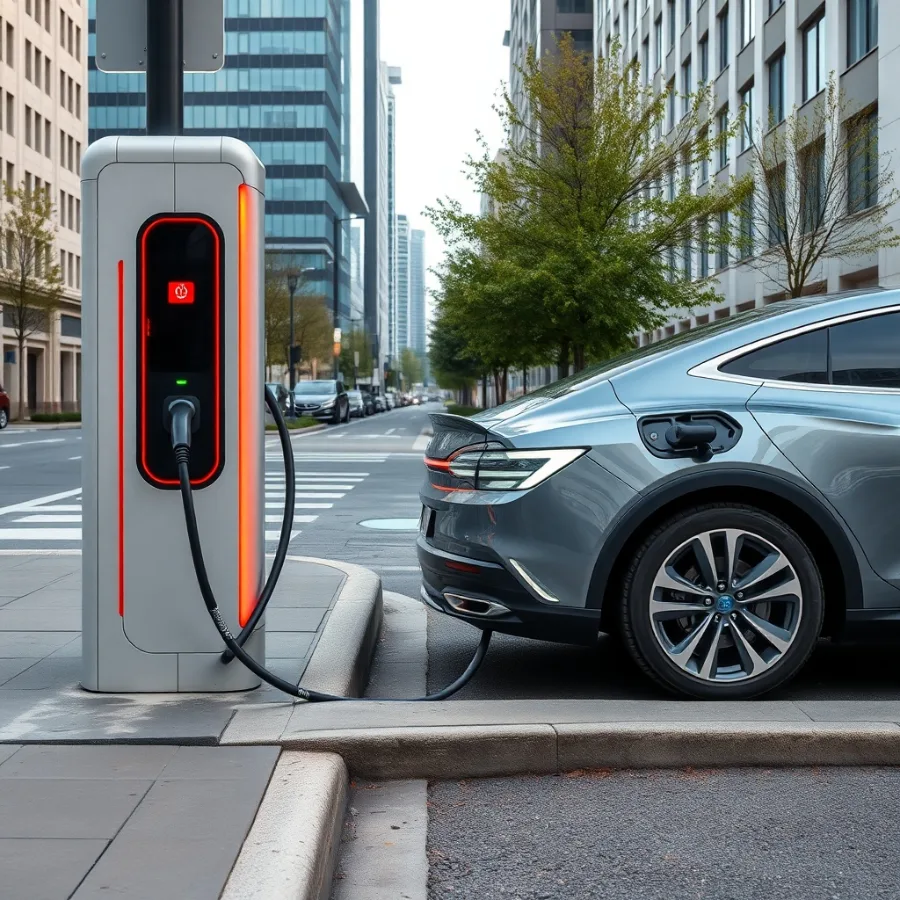
ev charging time chart
Updated September 18, 2026 · 2 min read
Factors Affecting EV Charging Time
Several factors influence the charging time of an electric vehicle, including the battery capacity, charger type, and the state of charge when plugging in. Faster charging speeds are typically achieved with higher-capacity chargers and vehicles equipped with advanced battery technology.
- Battery Capacity: Larger battery capacities take longer to charge but provide greater driving range.
- Charger Type: Level 1 chargers are slower than Level 2 or DC fast chargers.
- State of Charge: Charging from a lower state of charge to 80% is faster than topping up from 80% to 100%.
- Battery Technology: Advancements in battery technology allow for faster charging rates.
Learn more about diesel vs. electric emissions.
Types of EV Chargers
There are three main types of EV chargers: Level 1, Level 2, and DC fast chargers. Level 1 chargers plug into a standard household outlet and are the slowest, while Level 2 chargers use a 240-volt circuit for faster charging. DC fast chargers are the quickest, providing high-power charging for rapid top-ups.
- Level 1 Charger: Typically found in residential settings, providing 2-5 miles of range per hour of charging.
- Level 2 Charger: Common in public charging stations, offering 10-20 miles of range per hour of charging.
- DC Fast Charger: Enables 60-80% charge in around 20-30 minutes, ideal for long-distance travel.
Regional Variations in EV Charging Infrastructure
The availability and speed of EV charging infrastructure vary across different regions, impacting the convenience of owning an electric vehicle. While some countries have extensive charging networks with fast chargers, others are still developing their infrastructure to support the growing demand for electric mobility.
- US: Extensive network of fast chargers along major highways for long-distance travel.
- EU: Well-developed public charging infrastructure in urban areas and along highways.
- China: Rapidly expanding charging network to support the world’s largest electric vehicle market.
- India: Emerging charging infrastructure in major cities, with plans for nationwide expansion.
Explore smart traffic systems for sustainable mobility.
| Charger Type | Typical Range Added per Hour of Charging | Charging Time for 80% Battery |
|---|---|---|
| Level 1 | 2-5 miles | 8-20 hours |
| Level 2 | 10-20 miles | 4-8 hours |
| DC Fast Charger | 60-80% charge | 20-30 minutes |
Related guides: EV Charging Time, Megawatt Charging For Trucks and Is EV Charging Cheaper Than Gas.
Frequently Asked Questions
How long does it take to charge an electric car at home?
Charging time at home depends on the charger type and battery capacity, ranging from several hours to overnight.
Can I use a Level 2 charger for fast charging on the go?
Level 2 chargers are faster than Level 1 but not as rapid as DC fast chargers, making them suitable for overnight charging or shorter trips.
Are there differences in charging speeds between electric car models?
Yes, charging speeds vary between electric car models based on their battery size, onboard charger capacity, and compatibility with different charger types.
What are the benefits of fast charging for electric vehicles?
Fast charging enables quick top-ups during long journeys, reduces range anxiety, and enhances the overall convenience of owning an electric vehicle.
TAGS: ev charging time, electric vehicle charging, ev infrastructure, charging speeds, electric mobility
Sources and Further Reading
Every figure on this page is dated and linked to its source. How we verify · Editorial policy · Report a correction
Related Posts
Leave a Comment
Your comment will be published after it has been approved. Please send comments that do not contain slang words.