
Carbon Footprint Of Meat Production
Updated August 31, 2026 · 2 min read
Table of Contents
- Understanding the Carbon Footprint of Meat Production
- Impact on Climate Change
- Sustainable Practices in Meat Production
- Regional Comparison
- Frequently Asked Questions
Understanding the Carbon Footprint of Meat Production
Measuring the carbon footprint of meat production involves assessing the total greenhouse gas emissions associated with raising livestock, including methane and nitrous oxide released from enteric fermentation, manure management, and feed production. The carbon intensity of different types of meat varies based on factors such as feed efficiency, animal digestion, and manure handling practices.
- https://zerocarbondrive.com/diesel-vs-electric-emissions/
- https://zerocarbondrive.com/smart-traffic-systems/
- https://zerocarbondrive.com/car-co2-emissions/
Impact on Climate Change
The livestock industry is a significant contributor to global greenhouse gas emissions, with beef production being particularly carbon-intensive. According to the EPA, methane emissions from livestock account for a substantial portion of total agricultural emissions, exacerbating climate change. Implementing sustainable practices in meat production can help reduce these emissions and mitigate environmental damage.
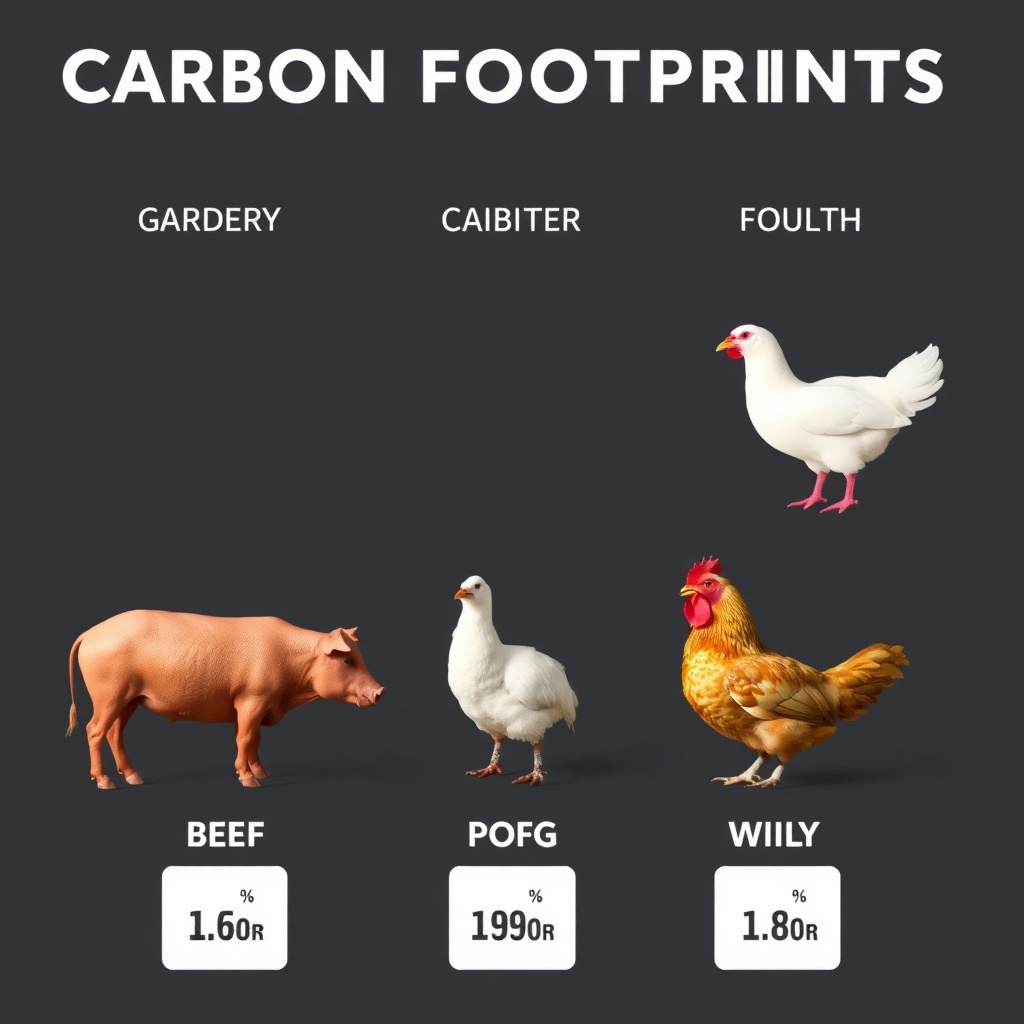
| Type of Meat | Carbon Footprint (kg CO2e/kg) |
|---|---|
| Beef | 27.0 |
| Pork | 12.1 |
| Poultry | 6.9 |
Sustainable Practices in Meat Production
Adopting sustainable practices in meat production can help reduce the carbon footprint of the livestock industry. Strategies such as improving feed efficiency, implementing methane digesters to capture emissions, and promoting regenerative agriculture can lower greenhouse gas emissions and promote environmental stewardship.
Regional Comparison
- US: The United States has made progress in reducing emissions from the livestock sector through technological advancements and sustainable farming practices.
- EU: The European Union has stringent regulations in place to limit greenhouse gas emissions from meat production and promote sustainability.
- China: China is the world’s largest consumer of pork, leading to significant environmental challenges related to meat production.
- India: In India, traditional livestock farming practices coexist with modern industrial methods, presenting a unique set of environmental considerations.
Related guides: How Toyota and Stellantis Are Helping Scale Flying Taxi Mass Production, Carbon Footprint Of Plastic Packaging and Carbon Footprint Of Remote Work.
Frequently Asked Questions
How does meat production contribute to climate change?
Meat production contributes to climate change through the release of greenhouse gases such as methane and nitrous oxide from livestock digestive processes and manure management.
What are some sustainable practices in meat production?
Sustainable practices in meat production include improving feed efficiency, implementing methane capture technologies, and promoting regenerative agriculture.
Are there differences in the carbon footprint of different types of meat?
Yes, different types of meat have varying carbon footprints based on factors such as feed efficiency, animal digestion processes, and manure management practices.
How can individuals reduce their carbon footprint from meat consumption?
Individuals can reduce their carbon footprint from meat consumption by choosing sustainably sourced meats, reducing overall meat consumption, and incorporating plant-based proteins into their diets.
TAGS: meat production, carbon emissions, sustainable agriculture, environmental impact, livestock industry
Related Posts



1 Comment
The impact of meat production on our carbon footprint is eye-opening. Time to make more sustainable choices!
Leave a Comment
Your comment will be published after it has been approved. Please send comments that do not contain slang words.