
The Rise of Green Data Centers: 4 Sustainable Solutions for Cloud Computing
Updated September 2, 2026 · 4 min read
Green data centers are facilities engineered to deliver computing power while minimizing energy waste, water use, and carbon output — a category that has gone from a niche efficiency play to a front-line climate issue as AI training and inference workloads push global data center electricity demand toward 4-9% of total consumption by 2030 in recent IEA projections. The short answer: green data centers combine efficient cooling, renewable power sourcing, and smarter hardware utilization to cut the carbon cost of every compute cycle.
- Cooling can be 30-40% of a data center’s total energy draw — liquid and immersion cooling cut this dramatically versus legacy air cooling.
- Power Usage Effectiveness (PUE) is the industry’s core efficiency metric; top green facilities hit 1.1-1.2 versus a 1.5-2.0 industry average for older sites.
- Renewable energy sourcing (on-site solar, wind PPAs, and increasingly nuclear power purchase agreements) matters as much as hardware efficiency.
- AI-specific GPU clusters run far hotter and denser than traditional server racks, forcing a shift toward liquid cooling almost by necessity.
Why Green Data Centers Became a Climate Flashpoint
For most of the cloud-computing era, data centers were a relatively quiet corner of the climate conversation — steady growth, steady efficiency gains, manageable footprint. Generative AI changed that curve. Training a large language model can consume gigawatt-hours of electricity, and inference — answering the billions of queries these models now handle daily — adds a continuous, compounding load. Utilities in Virginia, Ireland, and parts of the Nordics have all reported data centers becoming their single largest new source of demand growth, and grid operators are now factoring hyperscale campuses into multi-year capacity planning the way they once did for heavy industry.
Cooling technology comparison
| Cooling method | Typical PUE contribution | Best fit | Water use |
|---|---|---|---|
| Legacy air cooling (CRAC/CRAH) | High (PUE 1.5-2.0) | Older, low-density facilities | Low-moderate |
| Free-air / economizer cooling | Moderate (PUE 1.2-1.4) | Cool climates, moderate density | Low |
| Direct liquid cooling (cold plates) | Low (PUE 1.1-1.25) | High-density AI/GPU racks | Low, closed-loop |
| Immersion cooling | Lowest (PUE ~1.03-1.1) | Extreme-density AI clusters | Very low, closed-loop |
Renewable energy sourcing strategies
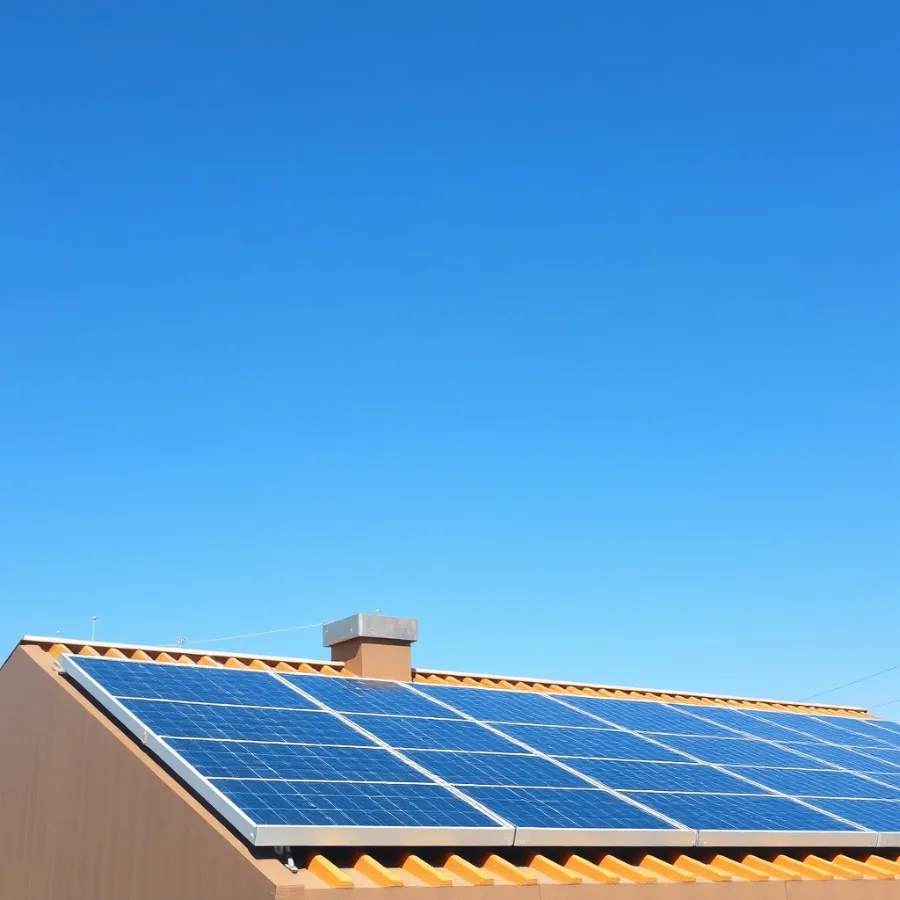
Efficient hardware only solves half the equation — the other half is where the electrons come from. Hyperscalers increasingly stack several sourcing strategies at once: long-term power purchase agreements (PPAs) with new wind and solar farms, on-site solar for a fraction of load, battery storage to smooth intermittency, and — increasingly, as AI load growth outpaces renewable buildout speed — nuclear PPAs with existing or restarting reactors and small modular reactor (SMR) development deals. None of these alone fully decarbonizes a 24/7 AI campus; the honest picture is a transition still in progress, with grid-mix carbon intensity varying enormously by region and time of day.
Efficiency metrics that actually matter
PUE (Power Usage Effectiveness) — total facility power divided by IT equipment power — remains the headline number, but it only measures overhead, not whether the underlying grid electricity is clean. WUE (Water Usage Effectiveness) has become equally important as liquid cooling and evaporative cooling both draw on local water supplies, a growing friction point in drought-prone regions hosting new campuses. Reading both metrics together gives a far more honest picture than PUE alone.
What’s next for data center sustainability
Expect three trends to accelerate: waste-heat reuse (piping data center heat into district heating networks, already common in parts of Scandinavia), on-site or co-located nuclear and SMR deals to guarantee firm clean capacity for AI campuses, and hardware-level efficiency gains (denser chips doing more compute per watt) partially offsetting demand growth even as total AI workload keeps climbing.
small modular reactors is worth a closer look for the full picture.
geothermal power for AI datacenters is worth a closer look for the full picture.
the carbon footprint of streaming video is worth a closer look for the full picture.
the carbon footprint of data centers is worth a closer look for the full picture.
Sources and Further Reading
AI training and inference are also a major driver of this demand — see how ChatGPT increased data center power demand for the fuller picture.
Curious why nuclear specifically? See our deeper look at why tech giants are turning to nuclear energy.
What makes a data center ‘green’?
A green data center minimizes energy waste through efficient cooling and hardware utilization, sources a meaningful share of its power from renewables or other low-carbon generation, and manages water use responsibly — usually measured via PUE and WUE metrics.
How much energy do AI data centers use?
Estimates vary, but AI-specific data center electricity demand is one of the fastest-growing categories of global electricity consumption, with recent projections putting total data center electricity use at roughly 4-9% of global demand by 2030 as AI training and inference scale up.
What is PUE and what’s a good score?
PUE (Power Usage Effectiveness) is total facility energy divided by IT equipment energy. A PUE of 1.0 would mean zero overhead. Legacy facilities often run 1.5-2.0; modern green facilities with liquid or immersion cooling target 1.1 or lower.
Why is liquid cooling replacing air cooling?
AI GPU clusters run far denser and hotter than traditional server racks. Air cooling struggles to remove that heat efficiently at scale, so liquid cooling (cold plates) and immersion cooling have become close to necessary for high-density AI infrastructure.
Do renewable-powered data centers still use fossil electricity?
Often yes, at least part of the time. Most facilities draw from a regional grid whose carbon intensity varies by hour; PPAs and on-site generation offset this on an annual accounting basis rather than guaranteeing 24/7 carbon-free power at every moment.
Is nuclear power becoming common for data centers?
Yes — as AI load growth has outpaced renewable buildout speed in some regions, several major operators have signed power purchase agreements tied to existing nuclear plants or small modular reactor development to secure firm, round-the-clock clean capacity.
Related Posts


Leave a Comment
Your comment will be published after it has been approved. Please send comments that do not contain slang words.