
Circular Economy Engineering Explained
Updated September 1, 2026 · 3 min read
- Circular economy engineering is a real, growing discipline: the global market hit $578 billion in 2026, growing at 11.6% CAGR.
- The EU’s actual circular material use rate is only 12.2% as of 2024 — the 2030 target is to double it to 23.2%, showing how far there still is to go.
- Design for Disassembly (DfD) is the core engineering methodology: designing products to come apart cleanly for reuse, refurbishment, and material recovery, not just recycling after the fact.
- The gap between countries is enormous — Netherlands leads at 32.7% circularity, while Romania sits at just 1.3%, showing this is as much a policy/infrastructure problem as an engineering one.
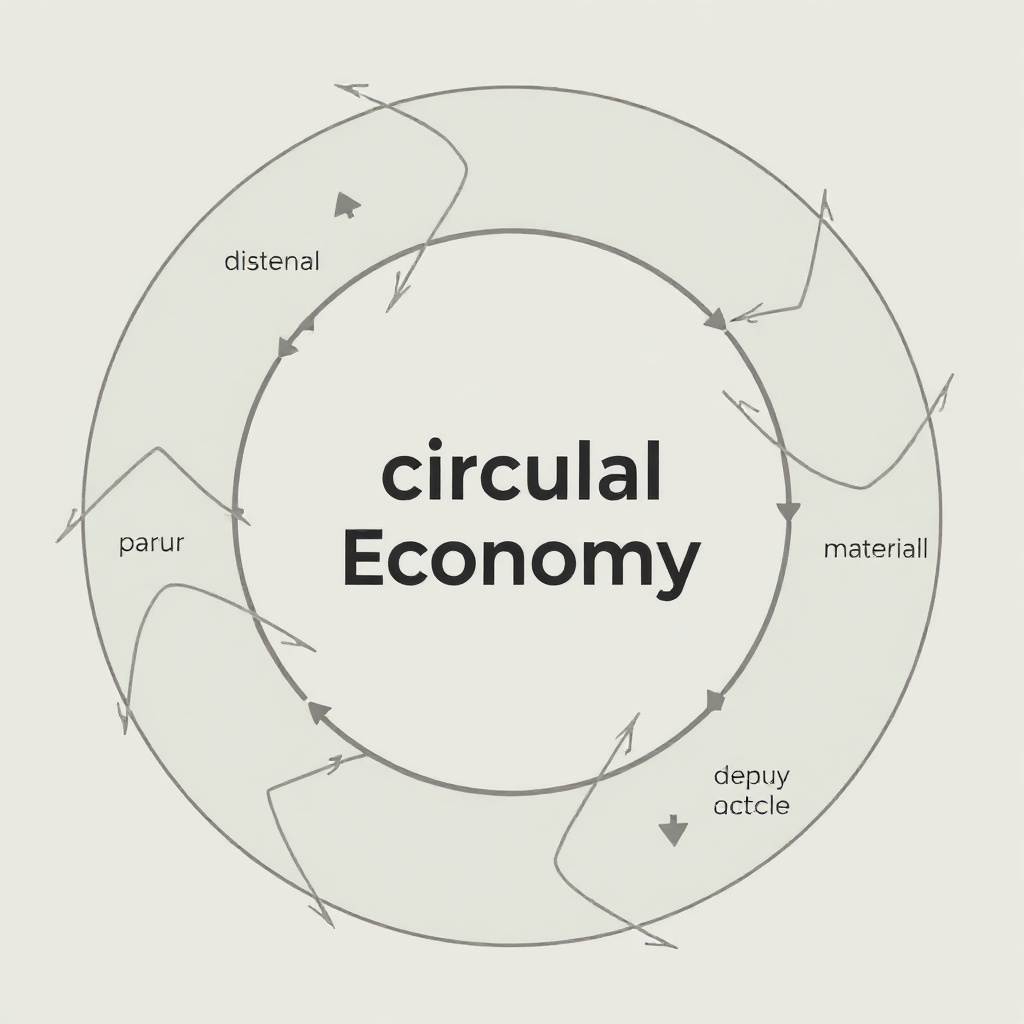
Circular economy engineering is the design discipline behind building products, buildings, and systems so materials can be recovered and reused rather than discarded — and in 2026 it’s a genuine $578 billion global market growing at 11.6% CAGR, not just a sustainability buzzword. The honest gap: the EU’s actual circular material use rate sits at just 12.2%, with a 2030 target to double it to 23.2%.
The Core Engineering Method: Design for Disassembly
| Principle | What it means |
|---|---|
| Design for Disassembly (DfD) | Products engineered to come apart cleanly, without destroying components, for reuse or refurbishment |
| Material passports | Documentation tracking what materials are in a product/building, enabling future recovery |
| Design-for-deconstruction (buildings) | Turns buildings into “material banks” that can be recovered when demolished or renovated |
This shifts the engineering question from “how do we recycle this after it’s waste” to “how do we design this so it never becomes waste in the first place” — a fundamentally different starting point than traditional recycling infrastructure.
The Real EU Circularity Numbers
| Country/Region | 2024 circularity rate |
|---|---|
| Netherlands (highest) | 32.7% |
| Belgium | 22.7% |
| Italy | 21.6% |
| EU average | 12.2% |
| Romania (lowest) | 1.3% |
The 25x gap between the Netherlands and Romania shows this isn’t purely an engineering-capability problem — it’s also about infrastructure, policy, and market maturity, which is why the EU’s action plan targets policy-level change (doubling the rate to 23.2% by 2030) alongside engineering practice.
Where DfD Is Being Applied Today
| Sector | Application |
|---|---|
| Construction (AEC industry) | Rising adoption driven by waste-minimization policies; buildings designed as future “material banks” |
| Product manufacturing | Components designed for clean separation, avoiding destructive disassembly |
| Robotics/automation research | Energy-aware robotic disassembly systems being actively researched for scaling material recovery |
Why the Growth Rate Matters

An 11.6% CAGR market growth alongside a still-low 12.2% actual EU circularity rate tells an important story: investment and market activity are scaling faster than actual material circularity outcomes — a common pattern in emerging sustainability sectors, where financial momentum precedes measurable systemic change.
One-Minute Recap
- Global circular economy market: $578B in 2026, growing 11.6% CAGR.
- EU actual circular material use rate: only 12.2% (2024) — 2030 target is 23.2%.
- Core method: Design for Disassembly (DfD) — engineering products/buildings to come apart cleanly for reuse.
- Huge country gap: Netherlands 32.7% vs. Romania 1.3% — as much a policy problem as an engineering one.
green engineering principles is worth a closer look for the full picture.
What is circular economy engineering?
The design discipline focused on building products, buildings, and systems so materials can be recovered and reused, using methods like Design for Disassembly (DfD) and material passports, rather than designing for eventual disposal.
How big is the circular economy market?
The global circular economy market reached $578.09 billion in 2026, up from $517.79 billion in 2025, growing at an 11.6% compound annual growth rate.
What is the EU’s actual circular material use rate?
12.2% as of 2024 — the EU’s Circular Economy Action Plan targets doubling this to 23.2% by 2030.
What is Design for Disassembly (DfD)?
An engineering approach where products are designed to come apart cleanly without destroying components, enabling reuse, refurbishment, and material recovery — a core methodology of circular economy engineering.
Which countries lead in circular economy adoption?
The Netherlands leads the EU at 32.7% circularity (2024), followed by Belgium (22.7%) and Italy (21.6%), while Romania trails at just 1.3% — a roughly 25x gap between leaders and laggards.
Is circular economy engineering used in construction?
Yes, increasingly — design-for-deconstruction approaches and material passports are turning buildings into recoverable ‘material banks,’ driven by rising waste-minimization policy pressure in the AEC (architecture, engineering, construction) industry.
Sources and Further Reading
Related Posts


Leave a Comment
Your comment will be published after it has been approved. Please send comments that do not contain slang words.