
Deforestation and Carbon Emissions: The Real Numbers
Updated September 2, 2026 · 2 min read
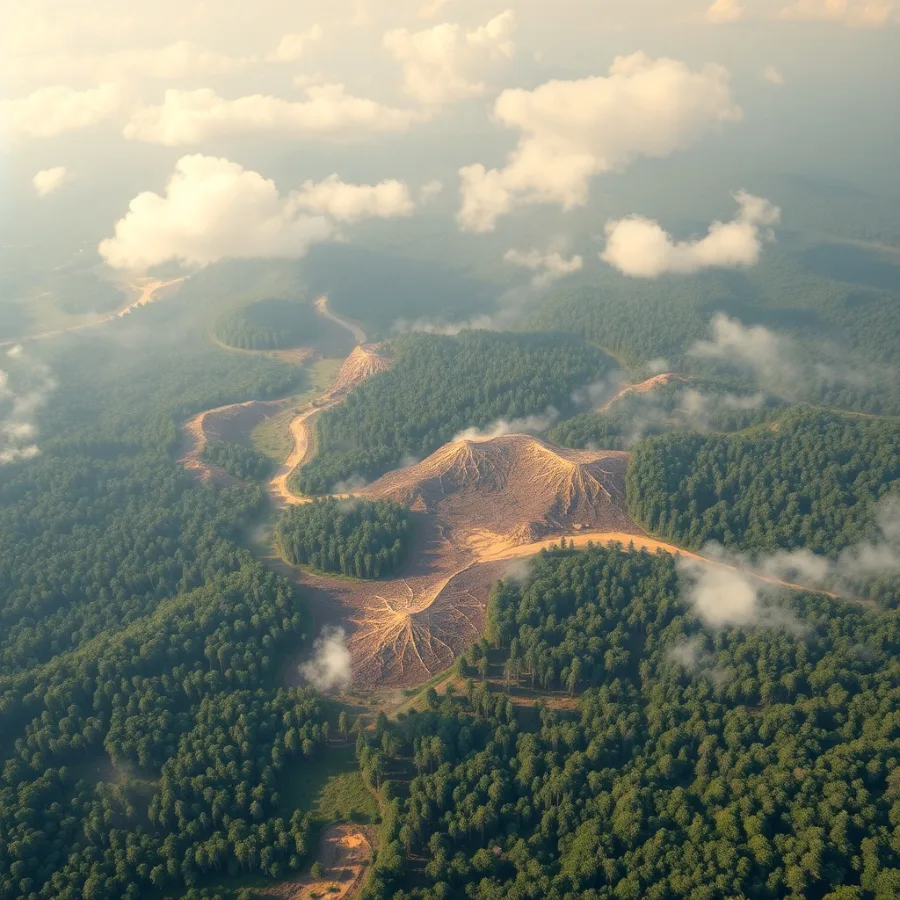
Deforestation and carbon emissions are connected in two compounding ways: cutting or burning a forest releases the carbon it had stored, often over decades or centuries, directly into the atmosphere, and the loss also removes a natural carbon sink that would have kept absorbing CO2 going forward — meaning deforestation both adds emissions today and reduces the planet’s future capacity to remove them.
- Deforestation accounts for a meaningful share of global greenhouse gas emissions, generally estimated around 10%, comparable to entire countries’ total emissions.
- Tropical deforestation matters disproportionately because tropical forests store more carbon per hectare and are being cleared faster than temperate or boreal forests.
- Agricultural expansion (cattle ranching, soy, palm oil) drives most deforestation globally, not logging for wood products as many assume.
- Reforestation and forest protection can reverse some of this, but regrowth takes decades to recapture what an old-growth forest held, and doesn’t fully replace primary forest’s carbon density.
Deforestation and Carbon Emissions: The Two-Part Cost
| Effect | What happens | Why it compounds |
|---|---|---|
| Direct release | Stored carbon in trees/soil released via burning or decomposition | Immediate emissions addition |
| Lost future absorption | Forest can no longer absorb future CO2 | Reduces long-term carbon sink capacity |
Why tropical deforestation matters most
Tropical forests store considerably more carbon per hectare than temperate or boreal forests, thanks to dense biomass and rich soil carbon, and they’re also being cleared at a faster rate — making tropical deforestation, particularly in the Amazon, Congo Basin, and Southeast Asia, a disproportionately large contributor to global deforestation emissions relative to forest loss in other regions.
What’s actually driving deforestation
Contrary to a common assumption, logging for timber and wood products is not the primary driver of global deforestation — agricultural expansion is. Cattle ranching, soy cultivation (much of it for animal feed), and palm oil plantations collectively account for the majority of tropical deforestation, meaning global food and commodity supply chains are more directly connected to forest loss than most consumers realize when they think about deforestation’s causes.
Can reforestation actually reverse this?
Reforestation and forest protection genuinely help, but with real limits: regrowing forest takes decades to recapture the carbon an old-growth forest held, and even mature regrowth typically doesn’t match primary forest’s original carbon density or biodiversity. This is why forest protection (preventing deforestation in the first place) is generally considered a higher-leverage climate action than reforestation alone — avoiding the loss beats trying to recreate it later.
Sources and Further Reading
How much does deforestation contribute to global emissions?
Deforestation is generally estimated to account for around 10% of global greenhouse gas emissions, comparable to the total emissions of major industrialized countries, through both direct carbon release and lost future carbon absorption.
What is the main cause of deforestation?
Agricultural expansion, particularly cattle ranching, soy cultivation, and palm oil plantations, drives the majority of tropical deforestation globally, not logging for timber and wood products as commonly assumed.
Why does tropical deforestation matter more than other regions?
Tropical forests store considerably more carbon per hectare than temperate or boreal forests and are being cleared at a faster rate, making regions like the Amazon and Congo Basin disproportionately significant to global deforestation emissions.
Can planting new trees undo deforestation’s carbon impact?
Partially, and slowly — regrowing forest takes decades to recapture what an old-growth forest held, and even mature regrowth typically doesn’t fully match primary forest’s original carbon density, making forest protection generally more effective than reforestation alone.
Does deforestation only affect current emissions?
No — it also reduces the forest’s future capacity to absorb CO2, meaning deforestation both adds emissions immediately and permanently removes a carbon sink that would have kept absorbing emissions going forward.
Is deforestation connected to food supply chains?
Yes, directly — cattle ranching, soy (much of it for animal feed), and palm oil collectively drive most tropical deforestation, connecting global food and commodity supply chains to forest loss more than most consumers realize.
Related Posts



Leave a Comment
Your comment will be published after it has been approved. Please send comments that do not contain slang words.