
Carbon Zero vs Net Zero (2026): The Real Difference Explained

Updated September 1, 2026 · 4 min read
Last updated: September 1, 2026
Quick answer: Carbon zero means producing literally zero carbon emissions from an activity — no offsets, no accounting tricks, just genuinely not emitting. Net zero is the more common and more achievable goal: emissions still occur, but are balanced by removals or offsets elsewhere to reach a net total of zero. For transportation specifically, an EV driving on a 100% renewable grid is close to carbon zero; an EV on a mixed grid, or a gas car paired with offsets, is operating on a net-zero model instead.
Key takeaways
- Carbon zero = literally no emissions produced; net zero = emissions balanced by removals/offsets to a net total of zero.
- Net zero is achievable today at scale; true carbon zero requires either zero-emission activities or a 100% clean energy source behind them.
- For driving specifically, an EV on a clean grid gets closest to carbon zero; gasoline vehicles can only reach net zero, and only through offsetting.
- Most corporate and national climate targets use “net zero,” not “carbon zero,” because it’s the realistically achievable framework.
Carbon Zero vs Net Zero: The Actual Difference

| Carbon Zero | Net Zero | |
|---|---|---|
| Definition | Zero emissions actually produced | Emissions produced but balanced by removals/offsets |
| Mechanism | Eliminate the emission source entirely | Emit, then remove or offset an equal amount |
| Achievability today | Only for genuinely zero-emission activities | Achievable across almost any activity, with enough offsetting |
| Common use | Rare — describes a specific zero-emission technology or process | Standard framework for corporate/national climate targets |
| Example | An EV charged entirely by on-site solar | A airline buying carbon credits to offset flight emissions |
The distinction matters because the terms get used loosely in marketing — “carbon zero” sometimes gets applied to what is actually a net-zero (offset-based) claim, which overstates how directly clean the underlying activity is.
What Carbon Zero Looks Like for Transportation
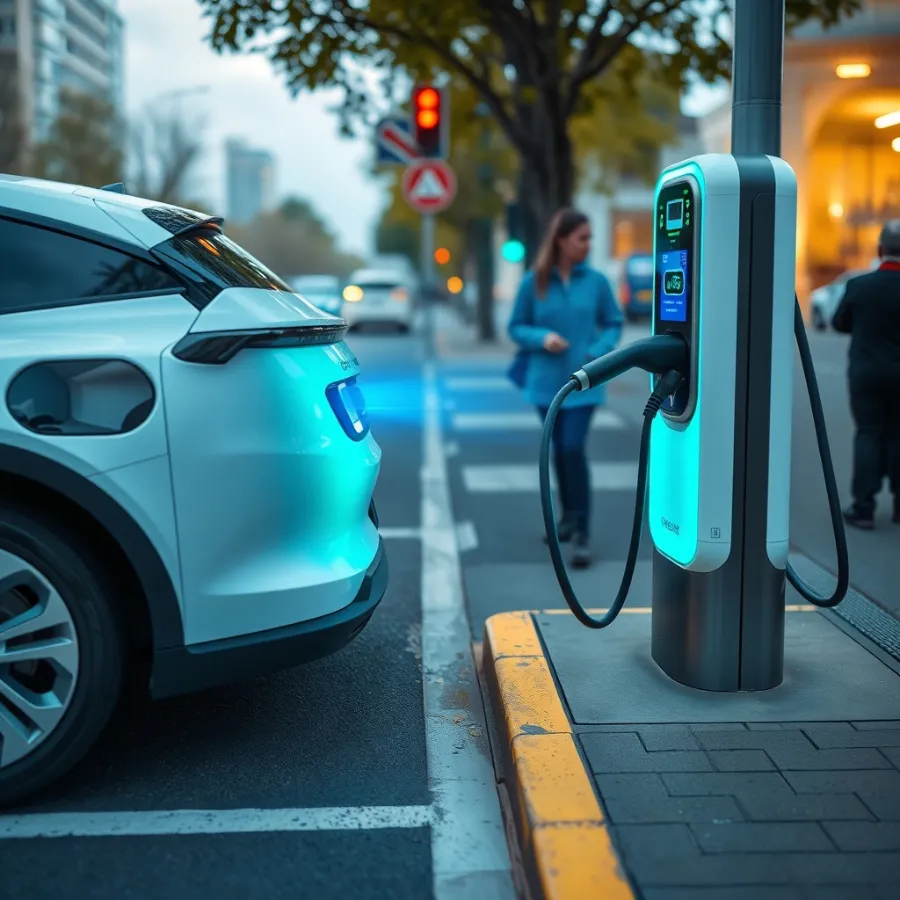
Getting genuinely close to carbon zero driving requires solving two separate problems at once:
- The vehicle itself must produce zero direct emissions — an EV qualifies (no tailpipe emissions at all); a hybrid or efficient gas car does not, no matter how efficient.
- The electricity charging it must also be genuinely clean — pairing the EV with home solar or a verified 100%-renewable grid connection, not just an average grid mix. Our clean energy charging guide covers the practical paths to this second piece.
An EV on an average US grid mix is NOT carbon zero — it has genuinely low emissions (far below a gas car, as covered in our EV emissions and renewable energy guide), but some emissions still occur upstream at the power plant. True carbon zero driving is achievable, but it requires the specific solar-plus-EV combination, not an EV alone.
Why Almost Everyone Targets Net Zero Instead

Carbon zero is a demanding, narrow target — it only applies cleanly to activities with a genuinely zero-emission path available. Most of the economy (manufacturing, aviation, heavy industry, and even much of transportation) doesn’t have a fully zero-emission option yet, which is why national governments, corporations, and most climate frameworks target net zero instead: a realistic, achievable goal that allows unavoidable emissions to be balanced by verified removals or offsets. This is not a lesser or “cheating” goal — it’s the honest, achievable framework for an economy that can’t eliminate every emission source overnight, while carbon zero remains the aspirational end-state for individual activities where it’s genuinely possible today.
Carbon Zero vs Net Zero FAQ
Making the claim credible takes more than a label \u2014 see what carbon neutral certification actually verifies.
affordable carbon zero tech is worth a closer look for the full picture.
Is carbon zero the same as net zero?
No – carbon zero means literally zero emissions produced, while net zero means emissions occur but are balanced by removals or offsets to reach a net total of zero. Net zero is the more common and currently achievable framework.
Can driving actually be carbon zero?
Yes, but it requires both an EV (zero tailpipe emissions) AND genuinely clean electricity charging it, such as home solar. An EV on an average grid mix is very low-emission but not technically carbon zero.
Why do companies say net zero instead of carbon zero?
Because net zero is realistically achievable across almost any activity through offsetting, while carbon zero only applies cleanly to activities with a genuine zero-emission path – which most of the economy doesn’t have yet.
Is a gas car with carbon offsets carbon zero?
No – it’s net zero at best. The car still produces real tailpipe emissions; offsetting balances the accounting but doesn’t make the driving itself emission-free, which is the defining difference between the two terms.
Is net zero a weaker goal than carbon zero?
Not necessarily weaker, just more broadly achievable – it’s the honest framework for an economy where most activities can’t eliminate emissions entirely yet, while carbon zero remains the aspirational target for specific activities where it’s genuinely possible.
What EV setup gets closest to carbon zero?
An EV paired with home solar generation, ideally sized to cover most of your typical charging load. This combination avoids both tailpipe emissions and upstream grid emissions, getting closer to true carbon zero than any single piece alone.
Related Guides on ZeroCarbonDrive
- Clean energy charging — the practical paths to true carbon zero driving
- EV emissions and renewable energy — why an EV is low-carbon even without solar
- Carbon offset transportation — the net-zero mechanism explained
Sources and Further Reading
Related Posts



Leave a Comment
Your comment will be published after it has been approved. Please send comments that do not contain slang words.