
Innovations in rail transportation
Updated September 2, 2026 · 3 min read
- Rail transportation innovations center on electrification — electric locomotives emit roughly half the CO2 per passenger-mile of diesel ones (0.134 vs 0.280 lb).
- Rail emissions vary hugely by power source: France’s nuclear-powered Eurostar hits 6g CO2e/passenger-km, versus 40-80g for grid-dependent US Amtrak routes.
- Rail beats cars decisively on medium distances — about an 80% emissions cut versus petrol cars on comparable routes.
- Rail loses its advantage over long-haul flights above roughly 700 miles, where efficient single-aisle jets can match or beat diesel rail per passenger.
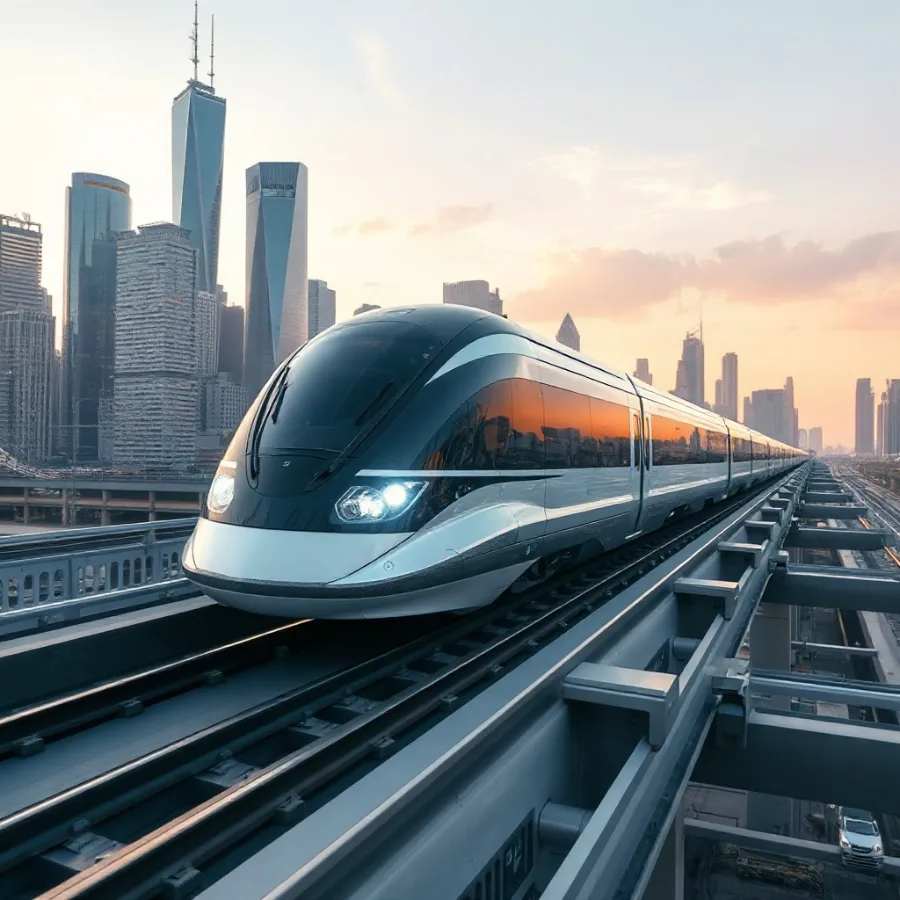
The biggest rail transportation innovations aren’t exotic new train designs — they’re electrification and clean power sourcing. An electric locomotive emits roughly half the CO2 per passenger-mile of a diesel one, and the gap widens dramatically further when the electricity itself comes from a clean grid.
The Emissions Numbers, Mode by Mode
| Mode / route | CO2 per passenger-km |
|---|---|
| Eurostar (France, ~66% nuclear grid) | ~6g |
| UK national rail | ~40g |
| US Amtrak, Northeast Corridor | ~40g |
| US Amtrak, coal-dependent regions | ~80g |
| Petrol car (comparable trip) | ~192g |
The pattern is clear: rail’s climate advantage isn’t automatic — it depends heavily on how the electricity (or diesel) powering the train is generated. A nuclear- or renewable-heavy grid makes rail dramatically cleaner than a coal-heavy one.
Diesel vs. Electric Locomotives
| Locomotive type | CO2 per passenger-mile |
|---|---|
| Diesel | 0.280 lb |
| Electric | 0.134 lb |
Electrifying a diesel rail line roughly halves its per-passenger emissions before even accounting for how clean the electricity source is — meaning electrification is close to a guaranteed win, while the electricity’s cleanliness determines how big a win it actually is.
Where Rail Beats Cars and Planes — and Where It Doesn’t
| Comparison | Result |
|---|---|
| Rail vs. car, medium distance | Rail cuts emissions by roughly 80% |
| Rail vs. short-haul flight | Rail generally wins clearly (~1/5 the emissions of air travel per the EPA/PMC studies) |
| Rail vs. long-haul flight (700+ miles) | Efficient single-aisle jets can match or beat diesel rail per passenger |
What This Means for Rail Investment Priorities
The data suggests two clear priorities: electrify remaining diesel rail lines first (a near-guaranteed emissions win), and pair that electrification with cleaner grid power where possible, since the France-vs-coal-region gap shows the electricity source matters as much as the electrification itself. For routes competing directly with short-haul flights, rail’s advantage is large enough that mode-shift alone — getting travelers onto existing rail rather than building new capacity — is often the highest-leverage move.
One-Minute Recap
- Electric locomotives emit about half the CO2 per passenger-mile of diesel ones.
- Clean-grid rail (Eurostar, ~6g/km) crushes coal-grid rail (~80g/km) — the power source matters as much as the train.
- Rail beats cars by roughly 80% and short-haul flights clearly; long-haul flights (700+ miles) can match or beat diesel rail.
- Electrifying remaining diesel lines is one of the highest-confidence emissions wins available in transportation.
Related guides: Electric Vehicle Motor Types, Hyperloop Technology Progress
Are electric trains really cleaner than diesel trains?
Yes. Electric locomotives emit roughly half the CO2 per passenger-mile of diesel locomotives (0.134 lb vs 0.280 lb), and the advantage grows further when the electricity comes from a clean grid.
Is rail always cleaner than driving?
For medium-distance trips, yes — rail typically cuts emissions by around 80% compared to a petrol car covering the same route.
Is rail cleaner than flying?
For short-haul flights, rail is clearly cleaner, roughly a fifth of air travel’s per-passenger emissions. For long-haul flights over about 700 miles, efficient jets can match or beat diesel rail per passenger.
Why do different rail systems have such different emissions?
It comes down to the power source. France’s Eurostar runs on a roughly 66% nuclear grid and hits about 6g CO2e/passenger-km, while US Amtrak routes in coal-dependent regions run closer to 80g — the same technology, very different grid cleanliness.
What’s the single biggest rail transportation innovation for emissions?
Electrification of remaining diesel rail lines, combined with sourcing that electricity from a cleaner grid — this combination roughly halves emissions from the locomotive change alone, then improves further with grid cleanliness.
Does rail electrification require new track?
Not necessarily — many electrification projects add overhead catenary wires or third rail to existing diesel lines rather than building entirely new rail corridors.
Sources and Further Reading
Related Posts

Leave a Comment
Your comment will be published after it has been approved. Please send comments that do not contain slang words.